



How 'China Plus One' Became a Global Manufacturing Lifeline
Discover how the China Plus One strategy drives manufacturing diversification, boosts supply chain resilience, and reshapes global supply chain strategy.
200+ buyers trust Torg for sourcing







Manufacturing used to feel predictable for some firms. They sourced from China, production scaled, and global shipping filled the gaps. But then reality hit harder than expected. Trade tensions, shutdowns, and increased labor costs exposed how fragile a single-country dependency can be. Many executives found themselves asking, “What happens if our main factory stops for even a week?”
That is why supply chain resilience is now a part of business survival. Businesses are rethinking global supply chain management and looking for a diversification strategy that doesn't disrupt what already works. This may be due to the rise of the China Plus One strategy, whereby companies can keep production in the country but expand into another market. The rationale behind this is risk reduction, gaining flexibility, enhancing the manufacturing supply chain, and most importantly, building a global supply chain strategy that will not be shaken by the next geopolitical shift.
What is the China Plus One Strategy?
The China Plus One strategy is a global sourcing and manufacturing diversification approach designed to reduce dependency on a single country. Instead of producing everything in China, companies keep part of their manufacturing base there while expanding operations to another country, often in Vietnam, India, Thailand, or Mexico.
This strategy helps businesses spread production risk, balance costs, and strengthen supply chain resilience. In other words, it’s not about replacing China but about adding flexibility to global manufacturing networks.
Why does this matter? Even though China remains a reliable production hub, unpredictable disruptions from natural disasters and shipping delays to regulatory shifts can easily halt the entire pipeline. Diversifying through China Plus One allows companies to stay agile, maintain supply flow, and ensure products reach the market on time, no matter what happens.
Why Companies Are Adopting the China Plus One Strategy
Companies don't just wake up and decide to diversify. The market changed, the costs shifted, policies tightened, and the leaders realized very well that depending on just one country for manufacturing is not really practical for the long-term.
Rising Production and Labor Costs in China
China is no longer the most cost-effective country for production. The labor costs have increased, and so have the costs of energy and compliance. Comparisons with other countries forced manufacturers to see how far apart costs were. These days, Vietnam and India felt more reasonable, at least for the most labor-intensive production. That desire for headroom to make price adjustments without squeezing margins is forcing companies to look for alternative hubs.
Trade Tensions Between the U.S. and China

The changing dynamics between China and the U.S. added another layer of uncertainty. Tariffs change, regulations tend to shift, and suddenly shipping costs hit a lot harder than anticipated. Some firms began to study trade policies more than product innovation. To avoid getting caught in the political crossfire, companies turn to China Plus One and reduce exposure. It’s a way to protect competitiveness when geopolitical moves hit the manufacturing supply chain.
Need for Supply Chain Resilience and Risk Management
One factory shutdown can send ripples around the world. Companies know this from the lockdowns. Lead times stretched, orders stalled, and teams scrambled. Today, leaders prize supply chain resilience as highly as cost savings. Rather than rely on one location, manufacturers spread out production so that a single disruption doesn't freeze the whole. In other words, it is also a kind of protection and supply chain risk management for the companies themselves.
Government Incentives in Alternative Markets
China plus one countries like India, Vietnam, Malaysia, and Mexico are actively encouraging manufacturers to their shores. They offer benefits such as tax breaks, duty exemptions on machinery, and speedier clearances to set up businesses. These incentives reduce the cost of establishing operations and decrease the time it takes to set up. When a government reduces friction, companies feel more confident in moving part of their production there.
Key Benefits of the China Plus One Strategy
Companies want fewer surprises and problems. And shifting a part of their production outside China gives them more control, more options, and room to adjust when markets change.
Diversifying Production and Minimizing Risks
Spreading their production across countries reduces exposure to shutdowns, natural disasters, and policy changes. Instead of scrambling for backup suppliers, companies already have manufacturing alternatives ready. This approach strengthens supply chain resilience because operations don't pause when one location hits a roadblock. Diversification gives breathing room, and breathing room means stability. In short, fewer emergencies and more predictability.
Reducing Dependency on a Single Supply Source
It was now perceived as riskier to have the entire manufacturing supply chain rely on one country. A company should not be held hostage by just one port closure or a shift in regulations. Using the China Plus One framework, companies spread production, reduce reliance on one region, and keep orders churning. Even as one hub slows down, others can still pick up the pace.
Access to New Consumer Markets in Asia
Expanding production into Southeast Asia opens more than factory space; it opens doors to growing consumer markets as countries within ASEAN continue to rise in spending power. Companies producing closer to these markets reduce shipping time, build economic partnerships, and reach new customers faster. These ASEAN manufacturing opportunities result in smart global manufacturing combined with long-term regional growth.
Improved Cost Optimization and Logistics Flexibility
Costs do not remain static as freight rates jump, and even ports can become congested. Having several manufacturing hubs permits companies to choose the most efficient route. They are able to move their production when labor costs rise or shift orders when logistics get messy. This makes the management of global supply chains stronger, as it keeps operations agile instead of being locked into one route.
Top Alternative Destinations for Manufacturing
Companies considering the China Plus One strategy are not just randomly choosing any new location. They look into labor costs, logistics, and workforce capability, among many factors, also including how quickly a country can support growth. Every destination brings its strengths and plays a different role in manufacturing diversification.
India
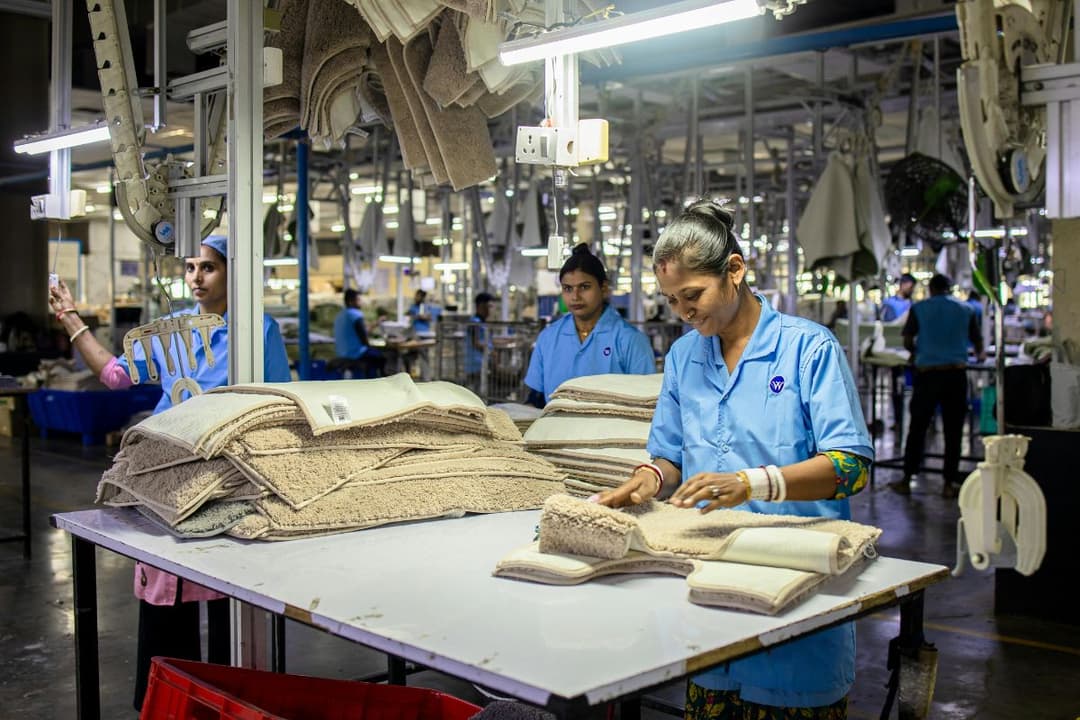
India is gaining attention for a simple reason: it's easier to get things done. The government proactively encourages foreign manufacturers through programs like Make in India, which helps reduce paperwork and setup delays. Labor costs are competitive, and the workforce has a good depth of technical and engineering skills. Apple, Foxconn, and Samsung have moved part of their production here. At present, it is expected that electronics, automotive assembly, pharmaceuticals, and industrial machinery manufacturing, among other segments, will drive further growth in India's manufacturing sector and more companies will take notice.
Vietnam
Vietnam always figures among the first alternatives that companies consider in their supply chain under the China Plus One strategy. Geographically, it is close to China so the sourcing part is easier to achieve. On top of that, trade agreements like RCEP and CPTPP reduce tariffs, thus keeping exports in control. The major areas in which the country does well are textiles, footwear, electronics, consumer goods, and furniture. Even major brands like Nike, Intel, and Adidas have already set up large-scale operations here.
Indonesia
Indonesia may not be at the top of boardroom list suggestions, but when it comes to numbers, companies reconsider the opportunity. Aside from Indonesia industrial growth, the country boasts natural resources, a large population, and increasing consumer demand. The country does particularly well for automotive components, electronics, batteries, and household goods. Plus, the government continues improving ports and special industrial zones to support manufacturing relocation.
Thailand
Thailand has a lot to offer for manufacturers who want predictability and minimum learning curves. With decades of experience in export manufacturing, processes and supply networks are matured. The major sectors are automotive, electronics, machinery, and food processing. Well-developed roads, ports, and industrial parks make setup faster and smoother. For many companies, Thailand manufacturing base feels dependable and stable, qualities that decision-makers value.
Malaysia
For companies requiring precision and technology-driven production, Malaysia is the right choice. Its labor force includes highly skilled semiconductor and electronics workers, while policies are also in place to encourage innovation. Also, Malaysia's clean-room manufacturing capabilities make it suited for high-tech industries. When a company requires strict quality control, Malaysia electronics production frequently ranks near the top of the shortlist.
Mexico
Mexico is gaining speed, particularly for those companies that serve North America. Due to Mexico nearshoring and the USMCA agreement, delivery to U.S. markets is now within days, not weeks. Freight costs are quite stable, and the overlapping time zone facilitates coordination. The core industries for Mexico are automotive, appliances, medical devices, aerospace, and consumer goods. This country strengthens global supply chain management without requiring companies to relocate halfway across the world.
China Plus One Company Examples
Some companies moved early. Others followed when disruptions became too costly. Either way, these real examples show how the China Plus One strategy isn't theoretical as it's already starting to shape decisions on where to locate within global supply chain strategy.
Apple
Apple began shifting certain iPhone production stages to India as part of its broader China plus one strategy. This would contribute to India manufacturing growth and decrease dependence on a single geography. Vietnam does the assembling for AirPods and other accessories, which further strengthens Apple's global supply chain strategy. The company continues manufacturing in China; however, adding new locations helps create more agility within the supply chain and facilitates easier management of risk factors. Apple partly proves that diversification doesn't have to mean abandoning China. It just means spreading capacity intelligently.
Samsung
Samsung invested early in Vietnam, eventually making the country a primary Vietnam manufacturing hub for smartphone production. The decision reflects a clear China plus one model, spreading risk across multiple locations instead of clustering operations in one country. Vietnam offered cost advantages, accessible labor, and stable export conditions. Samsung’s approach shows how a global manufacturing strategy can evolve gradually. Production still stays in China, but additional capacity is built elsewhere to improve resilience. Evidently, diversification supports agility during uncertain market shifts.
Nike
Nike diversified its footwear production to Indonesia and Vietnam. Like others, it is to lessen its reliance on China and to still maintain access to skilled labor. This move aligns with their manufacturing diversification strategy which then enables Nike to respond to changes in costs, shifts in labor, or unexpected disruptions. Similarly, using multiple alternative manufacturing hubs helps Nike manage geopolitical supply chain risks. The company still collaborates with Chinese suppliers; at the same time, spreading the production creates a safety cushion. Nike’s moves illustrate well how outsourcing production can be flexible rather than reactive.
Foxconn
Foxconn makes electronics for many of the biggest brands. It started moving pieces of its assembly lines to India and searching for capacity in Mexico. This move solidifies supply chain robustness in response to the pressures of geopolitical risk mitigation due to global trade friction. The company still has a massive presence in China, but this China plus one approach allows flexibility and supports future growth. Manufacturing dispersed enables Foxconn to create a smoother, more reliable manufacturing supply chain.
Policy And Trade Factors for China Plus One
Policies do matter. Sometimes, they matter more than cost advantages. The acceleration of China plus one trend was partly because of risk concerns, but also because governments reshaped trade rules, investment incentives, and market access. Changes like these make global supply chain strategy decisions more dynamic and allow space to maneuver for companies.
Impact of Regional Trade Pacts: RCEP, CPTPP, IPEF
Agreements such as RCEP, CPTPP, and IPEF all improve regional economic integration by further facilitating market access and reducing tariffs. The companies that have adapted to China plus one policy get easier entry to new markets without constantly renegotiating export terms. Quite clearly, these agreements support manufacturing in Asia through the harmonization of customs procedures and reduction of trade barriers. These agreements will also enable businesses to develop an agile global manufacturing strategy to make cross-border production setups smooth and less expensive.
U.S. and EU Reshoring Incentives

Both the US and EU are encouraging reshoring in order to reduce dependence on China and lessen geopolitical supply chain risk. Incentives include subsidies for semiconductor plants, tax credits, and rapid permitting for companies considering manufacturing relocation. The push is partial economic decoupling from China, and mainly for strategic industries such as energy, defense, and electronics. To put it simply, they want production close to consumers, increasing the stability and resilience of their supply chains.
Tax Breaks and Subsidies in Emerging Manufacturing Hubs
Some nations like India, Vietnam, Indonesia, and Mexico even offer tax cuts, import-duty exemptions, and easier business registration. These incentives attract firms exploring outsourcing production or new assembly plants. The idea is pretty straightforward: make it more affordable to move. In doing so, governments dangle sweeteners to attract investment from companies embracing the China-plus-one approach. It's a win-win, too, because the strategy can be a gateway to job creation, infrastructure development, and trade diversification for the mutual benefit of investors and host nations alike.
Role of ESG and Sustainability Standards
Where companies build factories is influenced by ESG requirements. Ethical sourcing, low emission, and fair labor standards are now expected by buyers. A China plus one framework is adopted by manufacturers so that production is shifted towards countries that align with modern-day ESG standards. It shows the way international business increasingly incorporates sustainability and responsible growth. It is easier for companies adopting ESG practices to get financing, access developed markets, and also meet emerging expectations on related regulations.
Challenges of Implementing China Plus One
China Plus One sounds straightforward on paper, yet the transition takes effort. Once companies begin shifting production, the real challenges surface, from logistics to quality control.
Complex Supply Chain Restructuring
Moving part of the supply chain to a second country isn’t just a location change. It means rebuilding the strategic sourcing structure from scratch. New contracts, new compliance rules, and new logistics routes must be aligned. It takes time to validate suppliers and integrate them into planning systems. Basically, restructuring demands patience and detailed coordination across teams.
Infrastructure and Logistics Gaps in New Markets
Alternative hubs may sound exciting, but some just aren't ready for large-scale movement of goods. Roads, ports, and warehousing aren't always optimized and this impacts delivery speed. Companies often find that lead times are longer than anticipated. It becomes part of the transition to adjust to new rhythms in logistics. Not every growing market can instantly match China's well-established manufacturing supply chain.
Quality Control and Workforce Training Issues
A new location also means new workforce, different processes, and a fresh learning curve. Companies need to train people, set up testing standards, and monitor output until it improves in consistency. Quality control becomes hands-on. Even with experience, diversification in manufacturing requires constant oversight so that the finished products from different sites will always match the same level of quality.
Balancing Efficiency with Cost and Reliability
Less expensive labor does not always equate to a smoother production process. Companies that are using China plus one strategy for supply chain are actually measuring more than cost. They also assess competency, proximity of suppliers, and responsiveness. Everything must link up for efficiency. The trick is finding that balance where cost savings don't compromise on reliability, allowing the supply chain to be agile and dependable.
Future Outlook of Global Supply Chains
The future of global manufacturing is shifting toward distributed production. And most enterprises are looking for flexibility, not dependency. That's why strategies should ride the wave and evolve as well as global conditions tend to constantly change.
Rise of the "China Plus Many" Strategy
The next stage of the China plus one strategy is becoming “China Plus Many,” where companies spread operations across multiple countries, not just one. Companies, instead of relying on one backup location, diversify into several regions to further strengthen supply chain diversification. This model helps reduce the exposure to geopolitical disruption. Basically, it creates wider room for adjustments when conditions change. With this, companies have more control, more options, and evidently, better supply chain resilience.
Increasing Regionalization and Nearshoring Trends
Nearshoring brings production closer to the important consumer markets, reducing the transit time and logistics uncertainty. For instance, nearshoring to Mexico allows for faster delivery to North America. Companies adopt regional manufacturing to enhance supply chain agility while decreasing reliance on extended shipping routes. It is a practical move that goes in line with global supply chain strategy and enables cost management. Somehow, shorter routes equal fewer risks and smoother operations.
Role of AI and Automation in Distributed Manufacturing
AI is becoming a core part of modern factories. It improves forecasting, tracks supplier performance, and detects issues before they slow production. Automation and robotics also help reduce labor-based cost differences between countries. This makes distributed manufacturing more realistic, since companies can maintain consistent quality across regions. AI fuels faster decisions and supports smarter manufacturing diversification.
Predictions for 2030
In 2030, China will remain a predominant force in manufacturing, but the production map will surely look more spread out. Southeast Asia will have grown into a strong manufacturing ecosystem supported by regional trade agreements. Diversification will be part of an international business strategy rather than a backup plan and multiple sourcing hubs will be common to manage geopolitical supply chain risks.
Conclusion
The China Plus One strategy is becoming the new normal. Major companies and small businesses have seen enough disruption to realize that relying on a single manufacturing location isn’t worth the risk. One policy change, a delayed shipment, or a sudden shutdown can ripple across the entire business. Instead of reacting to problems, companies are choosing manufacturing diversification to prevent them.
China remains a key partner. No one is rewriting decades of supply chain advantages overnight. However, adding new hubs like India, Vietnam, Mexico, or others gives companies room to maneuver when necessary. It creates supply chain resilience without walking away from China’s strengths.
The shift is just practical as leaders want stability, better cost control, and flexibility to move production when needed. That’s what a strong global supply chain strategy looks like today: distributed, adaptable, and prepared.
Request a Bulk Order Quote
Simple ordering, transparent pricing, delivered straight to your door