



Nearshoring vs. Offshoring: What’s Best for Business?
Nearshoring vs. offshoring—what’s the smarter choice? Learn the pros, cons, and strategies to optimize your manufacturing and strengthen your supply chain.
200+ buyers trust Torg for sourcing







Selecting between nearshoring vs offshoring in manufacturing isn't a decision made lightly. Businesses are balancing increasing labor costs, supply chain issues, and trade pacts that change nearly overnight. A few managers view offshoring to a far-off nation as the "lower cost" route, particularly when labor costs are lower and manufacturing centers are already established. But then again, there are costs to be hidden, cultural hurdles, and lengthy delivery times to erode those savings. In contrast, nearshoring to a proximate nation like Mexico or Poland seems more secure, primarily due to identical time zones, comparative cultures, and shorter supply chains. You receive real time cooperation and fewer barriers to communication, but at the expense of somewhat higher costs.
This article deconstructs nearshoring vs offshoring supply chain options, from cost reduction and logistics to risk management and regional benefits, providing you with the clarity to plan wiser business operations.
What Is Nearshoring in Supply Chain?
Nearshoring simply refers to relocating production or business processes to a country that is close at hand, as opposed to shipping all of it off to some far-away location. Rather than having to depend on a remote nation half a world away, firms seek out partners in closer proximity. The attraction is straightforward: physical closeness, time zone compatibility, and easier communication. Several firms have discovered that nearshore outsourcing strategy can improve quality, lower transportation costs, and create a more stable supply chain.
Examples of Nearshoring
- Mexican manufacturing nearshore is the preferred choice for U.S. manufacturers, particularly in the automotive supply chain.
- Nearshoring Eastern Europe supply chain is suitable for Western Europe, with Poland, Hungary, and Romania providing skilled labor and reduced logistics expenses.
- Nearshoring Turkey EU supply chain is prevalent in textiles, clothing, and electronics.
- Latin America nearshoring (Colombia, Costa Rica, Brazil) is becoming popular for consumer products and electronics, though sometimes infrastructure is patchy.
Advantages of Nearshoring
- Same time zone or almost the same in nearshoring locations means fewer differences in time zones and easier scheduling. That is a plus for teams accustomed to late-night calls with offshore destinations.
- Cultural affinity tends to make communication barriers fewer and misunderstandings a smaller issue.
- Lower logistics expenses due to short transportation routes and shorter shipping times.
- Flexibility and resilience, as nearshoring operations have the ability to move fast in response to changing demand.
- Improved protection of intellectual property, which is a concern many businesses have when doing business in offshore nations.
Disadvantages of Nearshoring
- Increased cost of labor relative to Asian nations where labor costs remain low.
- Restricted talent pool in some industries, particularly where there is high demand for skilled workers or necessary skills.
- Lack of infrastructure, particularly in specific regions of Latin America, can drain supply chain velocity.
- Local laws and regulatory changes sometimes create new obstacles for future employees, outsourced workers, or long-term investments.
What Is Offshoring in Supply Chain?
Offshoring is essentially when a firm transfers its manufacturing, software engineering, or business functions to another country. More often than not, that would be offshore destinations in Asia, where cost of operations and labor charges are much lower. Most companies do it to save money, grow faster, or access an enormous pool of talent that doesn't exist back home. Chinese, Vietnamese, Indian, and Philippine offshore companies have been at the heart of international supply chain outsourcing models for decades.
Why? Reduced production costs are the clear attraction. Offshoring also provides access to expert skills, such as semiconductor manufacturing or bulk apparel supply chain outsourcing. Offshore nations already have mature ecosystems in place, so it is more convenient for many companies to tap into established supply chain infrastructures.
Examples of Offshoring
- China supply chain offshoring remains prevalent in electronics, toys, and consumer products, even with increasing wages.
- Vietnam supply chain outsourcing is particularly prevalent in apparel, shoes, and electronics.
- India offshoring of the supply chain is renowned for IT services, software programming, and technical labor in engineering.
- Philippines manufacturing outsourcing encompasses electronics assembly, call centers, and business processes.
- Bangladesh apparel supply chain is the world's largest textile cluster that draws international fashion firms.
Advantages of Offshoring
- Lower cost is the largest benefit. Offshore nations have labor costs significantly lower than the nearshore or onshore outsourcing destinations.
- Specialized skills abound. Consider software programming in India or chip-making in Asian nations.
- Scalability is simpler as the offshore team may be increased quickly due to a vast pool of competent employees.
- Well-established supply chains are already in place in offshore destinations, which renders offshoring operations less expensive for most companies.
Disadvantages of Offshoring
- Time differences render real time coordination more difficult. Coordination of work tends to span unusual hours.
- Language barriers and cultural differences can lead to miscommunication or prolonged decision-making.
- Global supply chain disruptions such as trade wars, shipping delays, or unexpected tariffs render it unpredictable.
- Intellectual property issues are more prevalent in offshore nations with less stringent enforcement of host country laws.
- Hidden costs of offshoring appear in extended lead times, increased inventory carrying costs, and knotty logistics.
✨ Nearshoring offers speed. Offshoring offers scale. Which works for your business? Torg helps you connect with suppliers in both regions. Sign up now to explore options, negotiate smarter, and build a supply chain that fits your goals without compromising on cost or quality.
Request a Bulk Order Quote
Simple ordering, transparent pricing, delivered straight to your door
Nearshoring vs Offshoring: A Detailed Comparison
When companies are looking at nearshoring compared to offshoring, they're really attempting to balance cost savings against resilience. Offshoring to a distant country can lower labor cost and access specialist talent, but adds time zone differences, cultural barriers, and global supply chain risk. Nearshoring, on the other hand, depends on proximity, same time zones, and fewer communication barriers. In some way, the compromise always boils down to: do you want the most expensive production costs or a responsive supply chain that minimizes disruption?
Geographic Proximity
Nearshoring involves selecting a nearby country. That proximity makes things like executive travel, factory inspections, or team training so much simpler. You can hop on a short flight rather than planning a week-long trip across the globe. Offshore countries, such as most Asian nations, are more distant. That distance adds not just time but also more expensive shipping and more complicated planning.
Transportation & Logistics Costs
Nearshoring logistics typically are less expensive. Goods travel more quickly on trucks or short-haul ships, and freight costs go down. Offshoring logistics rely on seaborne transportation over long distances. Freight increases, lead times get longer, and businesses have to hold extra inventory in order to fill gaps. Logistics costs nearshoring vs offshoring have the potential to be a showstopper for businesses attempting to cut costs without causing bottlenecks.
Risk Management & Resilience
Global supply chain risks are evident when you’re far away. Offshoring operations are vulnerable to trade wars, sudden tariffs, or even port congestion. A single delay in a foreign country can ripple across business operations worldwide. Nearshoring operations, however, offer more control. Companies can adapt quickly to demand, and supply chain risk management feels easier when disruptions are closer to home country.
Speed to Market
Nearshoring is good for supply chain agility. Sharing the same time zone, or at least being close together, facilitates real time coordination between teams. Coordination of work is easier, and lead times are reduced. That means new products are on the shelves quicker. Offshoring operations, with cultural and time differences, typically takes longer.
Cost Efficiency
Here is the grand trade-off. Offshore production brings the obvious benefit of lower cost. Labor prices in offshore nations remain lower than in nearshore nations. That's why offshore teams and offshore manufacturing centers continue to be used by most companies. Nearshore manufacturing advantages are not always centered on labor economies. Instead, they're focused on avoiding hidden costs, avoiding shipping delays, and protecting intellectual property. In some fashion, the "greater cost" of nearshoring nets out when you factor in resilience and less surprises.
Cost Comparison: Nearshoring vs Offshoring
At first glance, nearshoring vs offshoring cost comparison seems like a straightforward math equation. Offshore nations market cheap labor, and nearshore nations are just down the road but appear more expensive per unit. But scratch beneath the surface, and it's not simply a matter of per-hour costs. You need to consider freight, tariffs, customs delays, and even how much inventory you're obliged to hold. Essentially, cost is more complex than most businesses appreciate at the beginning.
Direct Labor Cost Differences
Offshore nations in Asia remain at the forefront of inexpensive labor, but the gap is no longer as great. For instance, garment workers in Bangladesh are likely to make $1–$2 an hour, while Vietnam straddles the $3–$4 per hour mark. Take that and compare it with nearshore alternatives such as Mexico, where labor costs $5–$7 an hour, or Eastern Europe, frequently $6–$9 an hour.
Now, that is a gap on paper, certainly. But companies soon discover those "dirt cheap" overseas wages don't remain cheap when you factor freight, tariffs, and inventory costs in. Essentially, nearshoring labor is slightly more costly in the initial outlay but might level out once the entire scenario is taken into consideration.
Shipping & Freight Costs
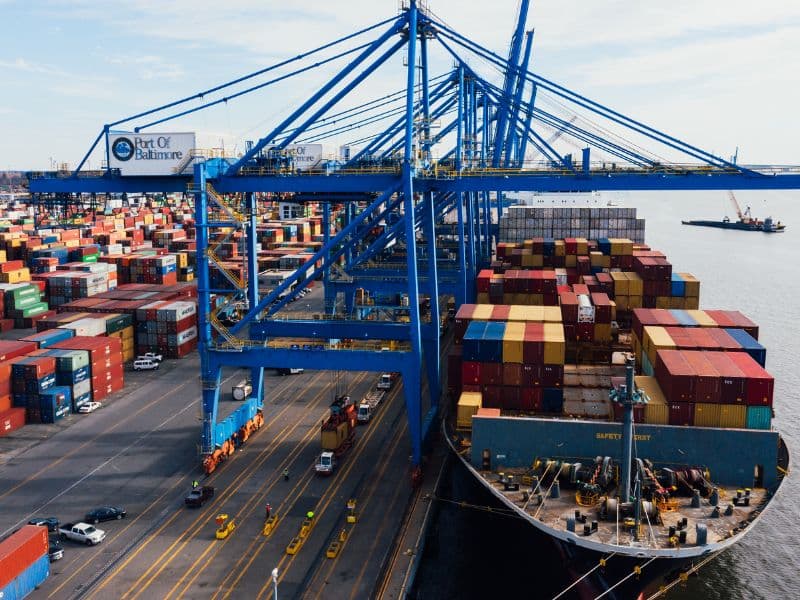
This is where nearshoring proves its prowess. A truckload from Mexico to Texas might be $1,500–$2,500 and take 3–5 days. To the U.S. West Coast, an ocean container from Asia would be $6,000–$8,000 or more with fuel surcharges and takes 4–6 weeks.
So although offshore labor may be less expensive, shipping those products can chew through savings in a hurry. Consider a medium-sized electronics firm requiring consistent shipments, waiting weeks and paying four times as much for freight is a big thing.
Tariffs, Customs & Trade Agreement Impacts
This is one of those "fine print" expenses folks tend to overlook. In USMCA, U.S. businesses exporting to or importing from Mexico or Canada frequently pay no tariffs at all, saving thousands per shipment. Eastern European companies exporting to the EU also get a lift from customs unions, keeping expenses low.
Offshore, however? That's a risk. Trade wars can slap on 10–25% tariffs in an instant. Take, for example, some Chinese imports during U.S.–China trade tensions, which made what appeared to be a bargain a headache.
Inventory Carrying Costs
Consider this: offshoring translates into longer lead times, so you must inventory more goods "just in case." For a mid-sized furniture importer, that could result in carrying 20–30% more inventory at a cost of anywhere from $50,000 to $200,000 annually based on warehouse capacity.
With nearshoring, goods can travel in days rather than weeks. That is, businesses can run on slimmer inventory and reduce carrying costs. Essentially, less capital is being tied up in something that is in a warehouse.
Hidden & Risk-Adjusted Costs
This is where the hidden math comes into play. Offshoring tends to carry IP risks, cultural backgrounds, and slower fixes. Let's say a design defect appears on a product made offshore. It might take weeks to fix it and tens of thousands in delay costs. Nearshoring? The same defect might be fixed within days for pennies on the dollar.
So sure, nearshoring may seem more expensive when you initially equate hourly pay rates. But if you include less risk, quicker repairs, and fewer communication glitches, the bottom-line cost difference begins to appear more even or sometimes even lower overall.
When to Choose Nearshoring vs Offshoring
There are businesses that pursue each penny of savings, and others simply desire dependability and quickness. It comes down to what is most important to your business like efficiency in costs, flexibility, or robustness. Let's drill it further.
Companies Prioritizing Cost Efficiency
If the priority is simply to maintain production costs as low as possible, offshoring would typically be the default. Consider fashion brands that produce millions of units or electronics companies requiring enormous production facilities. Offshore nations in Asia continue to provide the lowest direct labor cost and massive scalability. Essentially, if price per unit is the most important thing, offshoring is difficult to match.
Companies Prioritizing Supply Chain Agility
Now, if you’re in a market where customer demand changes quickly like fast fashion, consumer electronics, or even auto parts, nearshoring makes more sense. This is where you'll benefit from speed to market, real time collaboration, and shorter supply chains. These things matter more than rock-bottom wages as nearshoring helps reduce disruptions and allows businesses to adapt faster.
Hybrid Supply Chain Models
Some businesses don't even opt for one or the other. They opt for a combination—offshoring for significant cost savings, nearshoring for flexibility, and even onshore outsourcing for important or sensitive production. This blended, or multi-shoring approach, diversifies risk and off-sets costs. And recently, friendshoring supply chain tactics—shifting production to politically aligned nations—have also picked up pace as a fall-back against international tensions.
Regional vs Global Supply Chains
Local supply chains in North America and Europe rely significantly on nearshoring. It keeps it close, fluid, and less vulnerable to global shock. Global supply chains, however, remain anchored to offshore clusters for volume and low cost. So, an American auto parts maker might nearshore to Mexico, but a global consumer electronics giant might maintain its anchor in China or Vietnam.
Nearshoring Destinations
All nearshore countries are not equal. Some nations are particularly notable due to their proximity, trade advantages, or niche industries they have perfected over the years. Let's dissect some of the most popular options and why companies continue to return to them.
Mexico
Mexico nearshore manufacturing is the initial destination for most U.S. businesses, and it's easy to see why. Geographic closeness in itself makes it desirable since products can travel over the border in days rather than weeks. Throw into the mix the USMCA trade agreement, and savings from tariffs make the numbers even more attractive. Mexico's most powerful nearshoring strength is in the automotive supply chain, but electronics, aerospace, and medical devices also do very well. And with the shared time zone with the U.S., real time collaboration becomes a heck of a lot easier.
Eastern Europe
Poland, Hungary, and Romania have made inroads in Western European nearshoring strategies. Poland outsourcing manufacturing is favored due to its skilled workers, robust IT industry, and consistent infrastructure. Hungary supply chain nearshore for automotives and electronics is efficient, while Romania offers competitive labor rates and cultural similarities. These nations are not merely lower-cost substitutes but can be reached within a day to enable same-day travel as well as enhanced collaboration between teams.
Turkey
Nearshoring Turkey EU supply chain has been gathering steam, particularly for textiles, apparel, and electronics. Turkey has the advantage of being in a singular position, quite literally connecting Europe and Asia. That allows products to deliver to European markets rapidly, sometimes in a matter of days. The nation also has centuries-old experience in textiles and apparel production and is thus a natural fit for brands seeking top-quality but cost-effective production. Electronics and home appliances are some of the other emerging sectors, owing to Turkey's industrial base.
Latin America
Colombia, Costa Rica, and Brazil are emerging stars of the nearshoring discussion. Colombia has demonstrated growth in consumer products and textiles, while Costa Rica is known for medical device assembly and electronics assembly. Brazil, with its huge local market, provides a solid foundation for consumer products and automotive supply lines. That being said, it can be a little spotty in terms of infrastructure within the region, which does cause delays occasionally. However, the promise of savings and less reliance on Asia keeps Latin America in the nearshoring frame.
Offshoring Destinations
When one hears the word offshoring, some offshore locations always come to mind. That's not a coincidence. They have developed full-fledged economies around providing services to multinational corporations, whether in manufacturing, software, or back office operations. Let's examine the leaders and why they remain so popular.
China
It’s often said that “everything can be made in China” — and for good reason. China remains at the heart of offshore manufacturing. From electronics to toys to consumer products, the volume here cannot be beat. Factories are gigantic, supply chains are established, and specialized labor for semiconductor production and electronics assembly is ubiquitous. Yet today, firms must contend with increasing labor costs and increasing China supply chain risk associated with trade tensions, tariffs, and local regulations. Nevertheless, if high-volume production at velocity is what you desire, China is still a heavyweight.
Vietnam
Vietnam is a popular choice for apparel supply chain offshoring. Its specialty is footwear, apparel, and textiles but electronics assembly is also thriving. Many consider Vietnam to be a "China plus one" solution to diversity away from a sole offshore site. The labor is still relatively inexpensive, although wages have been increasing. But the good thing is its geographic proximity to other Asian countries as it's able to fit smoothly into regional supply chains.
India
India is not all about manufacturing. It's a global IT services, software development, and business process leader. Indian companies leverage a huge talent pool of trained workers by offshoring to India. From operating a development team, customer support, or back-office processes, India's attractions are very obvious. The cost of labor is less than in nearshore nations, but time zone issues may be problematic for real-time collaboration.
Philippines
The Philippines has established a business niche in outsourcing operations. Customer call centers and customer support are the best-known, but electronics supply chain offshoring and assembly are increasing as well. Cultural affinity with Western nations facilitates communication somewhat, although time zone compatibility can still be a challenge. For those seeking outsourced employees with high English literacy, the Philippines is the destination of choice.
Bangladesh
Bangladesh is a behemoth in the textile supply chain. Low costs of operation and an enormous skilled workforce have made it one of the biggest textile-exporting hubs globally. Some companies prefer Bangladesh if cost-cutting is their main focus. Infrastructure is, however, weaker than other offshore nations, and international supply chain risks such as shipping delays can add layers of complexity. Nevertheless, for simple apparel production at scale, it's difficult to surpass.
Regional Trade Agreements & Their Impact
Trade agreements never receive the center stage but quietly influence how offshoring and nearshoring occur. They impact tariffs, logistics expenses, and even intellectual property rights protections. Essentially, they can either break or make supply chain choices.
USMCA
The United States–Mexico–Canada Agreement has made nearshoring across North America a lot more appealing. Nearshoring USMCA benefits go beyond just tariff reductions. It also strengthens intellectual property protection, which is huge for industries like software development and electronics. Add smoother customs processes and reduced red tape, and you’ve got faster cross-border logistics. For U.S. companies working with Mexico manufacturing nearshore, this trade deal evidently cuts both costs and headaches.
EU Customs Union
The EU customs union supply chain is like having one huge domestic market for European companies. Goods can travel across borders without tariffs or bothersome customs inspections. That's why nearshoring operations in Eastern Europe (Poland manufacturing outsourcing or Hungary supply chain nearshore) just click. Geographical proximity is already a good thing, but this union makes transportation and delivery quicker still. For most companies, it just makes life easier.
ASEAN Trade Bloc
The ASEAN free trade zone, incorporating Vietnam, Thailand, and Indonesia, is a huge destination for offshoring strategy. Businesses relying on ASEAN supply chain outsourcing enjoy lower tariffs in the region, standardized trade principles, and an increasing talent pool. Vietnam, specifically, has used this to enhance its position in garment and electronics production. For businesses weighing costs and supply chain stability, ASEAN integration is one more efficiency boost.
Trends in Supply Chain Outsourcing
Supply chains do not stand still. They flex, stretch, and flex to what is going on in the world, whether that is politics, technological advancements, or global warming issues. In 2025, there are a few trends more dominant than others.
Rise of Friendshoring
Friendshoring supply chain tactics are all about shifting production to nations with similar political and economic values. Businesses seek stability, and depending on places with unstable relations is a gamble. Take the case of U.S. companies, which are looking toward Mexico or Eastern Europe over traditional destinations like China. It's not merely about security but predictability. When governments are like-minded, disruptions in trade are easier to prevent to some extent.
Growth of Regional Supply Chains
Another significant change is the rise of regional value chains. Rather than importing from halfway around the globe, firms are locating within North America, the EU, or ASEAN. It just makes sense: shorter distances ensure quicker delivery and fewer shipping holdups. In North America, USMCA facilitates nearshoring. Within the EU, the customs union ensures goods move freely across borders. And within ASEAN, cooperation among nations such as Vietnam and Thailand enhances supply chain resilience strategy. Essentially, regionalization is emerging as the new globalization.
Digital Tools
Technology has made outsourcing in supply chain management much less stressful. Consider remote collaboration platforms, real-time visibility dashboards, and time zone alignment tools. They allow teams from different continents to collaborate as if they're in the same office. Apparently, more effective digital tools enhance coordination with offshore teams. It's not ideal as time differences can still be challenging, but the communication gap narrowed much compared to five or ten years ago.
ESG-Driven Supply Chain Design
Then comes sustainability. Businesses don't just care about cost anymore; they care about effect. ESG-influenced supply chain strategy compels many businesses to opt for nearshoring due to its environmental advantage. The ESG benefits of nearshoring are fairly obvious: reduced transport distances, lower carbon footprint, and more transparent labor conditions in many cases. For serious ESG-driven brands, this is a given.
Conclusion
The whole debate of nearshoring vs offshoring isn’t really about choosing one forever but about balance. Businesses in 2025 are now seeing that what works for one industry may not work for another. Offshoring still shines when you’re chasing low labor costs and massive production capacity, especially in places like Vietnam or India. But nearshoring just makes sense when speed, agility, and fewer logistics headaches matter more.
Some firms even combine the two, building hybrid supply chain structures where the high-volume items are offshore and time-sensitive or specialty items remain nearshore. Somehow, they are the best of both worlds. At the end of the day, the "right" step is a matter of strategy, resiliency goals, and risk tolerance. Long-term value is not so much about cost but rather on stability, flexibility, and better decisions.
FAQs
What is nearshoring in supply chain management?
Nearshoring in supply chain management is the shifting of manufacturing or services to a geographically adjacent country. It lessens the shipping expense, decreases delivery time, and improves work coordination. U.S. companies, for instance, are nearshore Mexico supply chain, while European companies nearshore to Poland or Hungary to enhance supply chain responsiveness.
What is offshoring in supply chain management?
Offshoring is the practice of transferring operations to a foreign nation, usually in Asia, to reduce labor costs and tap into larger pools of workers. For example, several firms offshore garment manufacturing to Bangladesh or electronics assembly to Vietnam, where labor is cheaper but infrastructure and supply chains are already set up.
Is nearshoring better than offshoring?
It is company objective-dependent. Nearshoring provides speed, alignment with culture, and less disruption and thus serves for time-critical industries. Offshoring is still ideal for cost reduction and mass production. For instance, automotive parts suppliers nearshore to Mexico, and coding services are through India supply chain offshoring by software companies for economy.
How does nearshoring impact shipping costs?
Nearshoring logistics save shipping expenses by circumventing lengthy sea freight and utilizing road or rail. A Mexican truckload into Texas takes days and is cheaper than a container from China. The lower distances also translate to less fuel consumption and fewer carbon emissions.