



15 Best German Chocolate Brands Loved Worldwide (2025)
Discover 15 beloved German chocolate brands—from Milka to Hachez—covering pricing tips, unique features, and what makes German chocolate truly stand out.
200+ buyers trust Torg for sourcing






Chocolate is a medium of communication. German chocolate brands are the perfect example of that as they are depicting the past of precise production, trusted sourcing, and flavors that retain their consistency. Importers, wholesalers, and shop owners are in the search of products that can attract attention without making wild risks and chocolate brands in Germany are delivering that balance. Everybody knows Milka, Ritter Sport, and other famous German chocolate brands because they're familiar. At the same time, there are luxury German chocolate brands that can mesmerize you with the complexity of their cocoa, nougat, or marzipan layers.
In case you are deciding which German chocolate companies to collaborate with, this roster of best German chocolate brands might be the way to find what is suitable for your shelf, your buyers, and your margins.
The History of German Chocolate
The history of chocolate in Germany started in the early 19th century when taste makers all over Europe were trying new recipes with cocoa and sugar. As cocoa beans were being shipped to Europe, artisans in German-speaking regions took the raw ingredient and turned it into neat, long-lasting bars by combining their tradition of careful tempering and less sugar content — very different from the sugar-overloaded sweets that were developed in other places.
Over time, chocolatiers gradually mixed cocoa with the local ingredients: nuts, marzipan, nougat, and in the end, they refined the milk chocolate with subtle touches. That combination of continental cocoa tradition + German precision was what went down as the basis for the chocolate German brands people celebrate now.
Growth of Domestic Brands and Influence Abroad
By the end of the 19th century and the beginning of the 20th century, small factories were producing bars that locals referred to as “better” — more cocoa, less bitterness, smoother melt. After the world wars, German chocolate companies did not stop their efforts of quality even though the cocoa supply was scarce. That perseverance in quality was the reason why domestic brands became known international brands.
In the wake of the mid-20th century, the bars from Germany became more accessible across Europe and other parts of the world due to tourism and trade. For many chocoholics, the typical German chocolate bar brand is often associated with a quality: stable, harmonious, with variety of flavors going from smooth milk and almond-nougat to classic bitter cocoa.
Leadership and Craftsmanship in the Modern Times
Nowadays, German chocolate manufactures are still evolving. Some have managed to stay as a small family business deep into the history, while others have become big international players. And yet, the common feature is still there: an absolute commitment to flavor, consistency, and tradition. That heritage is what gives the consumers of today the assurance that when you choose a bar from one of the top German chocolate brands, it is not only marketing — there’s a history of craftsmanship.
15 Best German Chocolate Brands
The following are 15 German chocolate brand names that are not only famous in the home country but also worldwide. They not only differ in flavors but also in their histories and specialties — from nougat to marzipan, from affordable to expensive.
1. Milka
Milka may be the most internationally known of German chocolate brands and can be found in supermarkets and convenience stores almost everywhere. Milka is recognized for its distinctive purple packaging and mild milk-chocolate taste. The brand presents a uniform, creamy bar which both casual snackers and chocolate fanatics can appreciate. Also, many people first associate Milka with their childhood memories. It ranks highly for its ease of consumption — the texture is velvety, the flavor is not overly sweet and it can be consumed either alone or with a hot drink.
2. Ritter Sport
Compact, square, and colorful: that’s Ritter Sport. This German brand chocolate maker revolutionized the idea that chocolate could be handy, shareable, and playful. Ritter Sport bars often come packed with nuts, marzipan, cornflakes, or fruit and consistently deliver good cocoa balance with variety. For people who like a reliable chocolate brand that doesn’t shy from experimentation, Ritter Sport remains a top pick.
3. Hachez
Hachez offers an "adult" chocolate experience, recognized for its choice of refined dark chocolates mostly in the range of 70%–85% cocoa. The brand usually uses deep cocoa notes rather than the sugary ones and is the ideal option for those who genuinely love dark chocolate. Being one in the luxury German chocolate brands list, Hachez normally goes to great lengths to emphasize the source of the cocoa and the slow process of making chocolate — something to entice consumers looking for subtle flavor nuances.
4. Trumpf
Specializing in filled chocolates — nougat, marzipan, praline — Trumpf is a source for richer, more indulgent experiences. Their bars and small-format chocolates frequently feature crunchy nuts or a smooth nut-nougat center. As a brand of German chocolate bars known for its richness, Trumpf is the brand that attracts those who convert chocolate into dessert instead of a snack.
5. Storck
Mainly known for their confectionery products (such as licorice and toffee) Storck is also producing chocolate bars and seasonal specialties. Even if it is not always as high-end as other luxury German chocolate brands, Storck provides the comfort and a familiar flavor — occasionally with a twist as crisped rice or caramel. Perfect for consumers who are looking for simple, affordable treats and less about the complex cocoa notes.
6. Niederegger
While the marzipan is their globally popular product, Niederegger also provides other sweet treats like marzipan-filled chocolate bars that harmonize almond-sweet marzipan with creamy German chocolate. Almond lovers and nutty sweet enthusiasts will find that Niederegger’s bars fill a gap in the market — ideal for those who like sweet-savory combination. Being a more specialized German chocolate nougat-adjacent brand, it is remarkable among the nut/chocolate hybrid choices.
7. Sarotti
Sarotti's history is rooted in the 19th century and at one time, it was the brand that mainly supplied the German chocolate market. Their chocolate bars are remembered with fondness by many Germans and used to span a broad range of milk chocolate, dark, hazelnut, and seasonal flavors. Even though Sarotti does not have the majority of the space on shelves globally, it is still loved in Germany and by those who value traditional German chocolate.
8. Schogetten
Schogetten makes chocolate less serious and more fun with its uniquely packaged pieces that can be easily snapped off one, two, or several bars. Their flavor assortment includes milk with wafer, dark-nougat, and fruit-infused bars. Being a German brand that is quite balanced in terms of fun and quality, Schogetten is often underrated but definitely a brand to discover.
9. Moser Roth
Moser Roth is a go-to for dark chocolates with a minimum of 70% cocoa content, sometimes complemented with sea salt, chili, or other gourmet infusions and can be frequently found in gourmet shops and premium grocery aisles. If there is anyone who wishes to venture the world beyond sweet milk chocolate, Moser Roth leads the way to complexity and connoisseurship.
10. Lindt Germany
Despite Lindt's Swiss heritage, the German operation has also made its own name. In Germany, Lindt is the go-to name for luxury chocolate gifts namely truffles, pralines, and limited-time releases that dominate store shelves, especially at Christmas and Easter time. Lindt Germany has been developing more recently, producing sugar-reduced versions and even plant-based options as a way to follow consumer preferences. It's a prestige brand that remains relevant.
11. Wawi/Stollwerck
Wawi (Waldenbucher) and Stollwerck were once different entities, but later, the two companies merged and still continue to make bars that have a touch of tradition and diversity. This brand, with its extensive range of flavors from milk-hazelnut to dark with a high percentage of cocoa, is a great fit for people who are looking for a dependable daily chocolate that has better quality than a generic one. It's essentially a tribute to the classic German chocolate's way of life: tasty flavor, simple packaging, affordable price.
12. Merci
Merci is one of the most recognized German chocolate brands in gift-oriented retail. You see it often in sleek, elegant packaging designed for sharing, “thank yous,” and corporate gifting. Each box includes individually wrapped bars in assorted flavors, from milk almond to dark mousse. Retailers appreciate how well Merci performs during seasonal peaks because customers already trust the brand German chocolate quality and presentation. It brings a smooth melt, balanced sweetness, and steady demand.
13. Reber
Reber stands out for its famous Mozart-themed chocolates, wrapped in rich red and gold with a premium feel. This German chocolate brand focuses on marzipan, praline, and layered nougat that attract chocolate buyers who enjoy indulgent textures. It consistently performs in gifting and tourist markets, offering luxury German chocolate with strong heritage, visual appeal, and reliable demand for retailers wanting something refined.
14. Baur
Baur stands for traditional German chocolate with the flavors that are familiar and comforting. The brand features the most common milk chocolate, hazelnuts, and clean ingredient profiles that attract the everyday consumers. Although less known globally than some German chocolate brands, Baur provides authenticity, local quality, and reasonable prices. A good choice for retailers who want an easily recognizable German chocolate brand that is dependable and doesn't rely on full-blown marketing.
15. Friedel
Friedel offers a wide mix of fun flavors, holiday chocolates, and playful seasonal shapes. This makes the brand a strong seller during festive periods when consumers want variety and themed designs. As a German brand chocolate option positioned in the mid-price range, Friedel often includes nougat, cookies, or nut-filled bars for added texture. Retailers appreciate the versatility — standard-format bars year-round, plus novelty items that drive impulse purchases. It’s reliable, colorful, and easy to place across different product displays.
Best Private Label & White Label German Chocolate Companies
Private label chocolate is growing because many buyers want unique offerings without setting up factories. Germany has long-standing expertise, trusted quality, and strong certifications. So, who can help build your own German brand chocolate line?
1. Heinerle-Berggold Schokoladen GmbH
Heinerle-Berggold is a well-known German chocolate company, famous for pralines, nougat treats, and festive sweets. They support private label ranges for retailers wanting something seasonal or premium. Their production is reliable and their delivery schedules are also respected. The company blends long-time craft and modern equipment, making them a practical partner when building a German chocolate nougat line under your own branding.
2. Milchwerke Ingolstadt-Thalmässing (Goldmilch)
Goldmilch specializes in milk, cream powders, and key dairy ingredients used by many chocolate German brands. Those building private label chocolates often rely on their smooth, clean flavors. The company works closely with manufacturers to ensure consistent texture, which matters for milk chocolate quality. Buyers value a partner that focuses on base materials, because every German chocolate bar brand starts with dependable foundations.
3. Chocolate & More Delights
Chocolate & More Delights creates artisan chocolate, spreads, and seasonal specialties using organic cocoa and fair-trade practices. They help retailers launch private label chocolate lines aimed at environmentally conscious shoppers. You can request unique flavors or stick with classic options like milk, dark, or nut variations. Their flexibility supports businesses wanting strong storytelling, clean ingredients, and a chocolate brand customers can trust.
4. Johannes Lühders KG
Johannes Lühders has been crafting confections since 1909, offering vegan gummies, ginger sweets, and traditional treats. If you want plant-based private label products, they give you options that fit today’s market. Though not a typical German chocolate bar brand, their portfolio complements chocolate assortments. They offer clean-label options, nature-derived flavorings, and retailer-friendly solutions to attract the health-conscious consumer segments.
5. Krüger GmbH & Co. KG
Krüger is a major German food company producing chocolates, beverages, and nutrition products in various countries. The private label or white label buyers of Krüger are those who want mass production, dependable supply, and well-known quality. Their infrastructure supports large orders, diverse packaging, and brand extensions. For retailers entering the best German chocolate brands category with confidence, Krüger offers serious production power.
Featured wholesale products

Dark Chocolate Tablet 100g
€1.02

Milk Chocolate Tablet 100g
€0.90

Peanut chocolate nut bar 40g
€0.78

Chocolate Chip Cookies 200g
€1.44
Wholesale German Chocolate Prices
Wholesale pricing matters when margins decide whether a product stays or goes. Buyers want strong demand, yet predictable costs. German chocolate companies, especially those with export experience, tend to give clear structures. Though prices shift with cocoa supply, packaging choices, and order size, here’s a simple breakdown for 2025:
Mainstream german chocolate brands (Milka, Ritter Sport)
- Rough estimate: €4–€6 per kg (10–50 kg orders)
- Best for high-volume sourcing, and shelves needing familiar names
- Milk chocolate, hazelnut, or dark slightly affect the range
Mid-tier chocolate german brands (Storck, Schogetten, Wawi)
- Rough estimate: €6–€8 per kg
- Better ingredient mix, still affordable, and often good for multipacks
- Great for retailers wanting value without dropping to lowest cost
Luxury german chocolate brands (Hachez, Moser Roth, artisanal makers)
- Rough estimate: €10–€18 per kg
- Higher cocoa percentages, single-origin bars, or gift-driven packaging
- Good fit for premium shops and private label upgrades
Marzipan and nougat specialty lines (Niederegger, Trumpf)
- Rough estimate: €9–€15 per kg
- Fillings, almonds, and layered textures increase cost
- Often strong during holiday peaks or tourist traffic
Importers outside Europe should, of course, calculate freight, customs, and storage. Some brands help with logistics, and others leave sourcing teams to handle it. Buying more volume usually lowers the per-kilogram cost, though no one wants slow-moving stock. The trick is balancing demand, shelf life, and storytelling behind each German chocolate bar brand.
What Makes German Chocolate Special?
German chocolate earns attention through flavor, heritage, and dependable standards. Retail buyers notice how it delivers enjoyment without complications, which helps sales stay steady across seasons.
Balanced Cocoa-to-Sugar Ratio
German chocolate focuses on flavor balance, so each bite feels smooth and pleasant from start to finish. The cocoa leads and the sweetness supports the flavor instead of overwhelming it. That balance helps many brands of German chocolate build loyal customers because people appreciate chocolate that feels enjoyable, creamy, and rich enough to remember.
Variety Across Textures and Fillings
Variety is what makes products still appealing and retailers have the option of combining both simple and playful products. In a way, customers are asking for hazelnuts or nougat, but at the same time, they pick up the regular milk chocolate for their comfort. The best German chocolate brands are aware of these changes, providing such textures that are very attractive on the shelf and flavors that are recognizable, yet still enjoyable.
Tradition + Innovation
Long-standing techniques guide quality, yet new ideas spark excitement. German chocolatiers respect history, while still changing fillings, shapes, and cocoa sourcing. When a German brand of chocolate blends both, buyers get dependable taste with fresh twists. That mix helps shops offer products that carry a story and feel current at the same time.
Consistency and Quality Control
Customers remember when chocolate tastes the same each time, and Germany protects that consistency well. Strong testing, careful tempering, and ingredient standards support reliability throughout the year. Retailers benefit from fewer issues, smoother restocking, and trust that remains strong with repeat shoppers who want their favorite bars to deliver familiar delight.
Affordability Across Tiers
Budgets differ, so flexibility matters. German brands of chocolate span affordable treats to higher-end options, giving retailers room to build strong assortments. That range welcomes everyone, encouraging shoppers to browse longer, and return when they want to upgrade or restock. The value holds steady, keeping both stores and customers happy with what they choose.
How to Source German Chocolate Wholesale with Torg
Finding wholesale partners for German chocolate brands can take hours, sometimes days. Torg makes the process quicker because the platform connects verified food and beverage suppliers with buyers who know what they want. Whether you’re interested in the best chocolate from Germany or unique products from a smaller German brand of chocolate, Torg gives you direct access to the right people.
Below is how the process works:
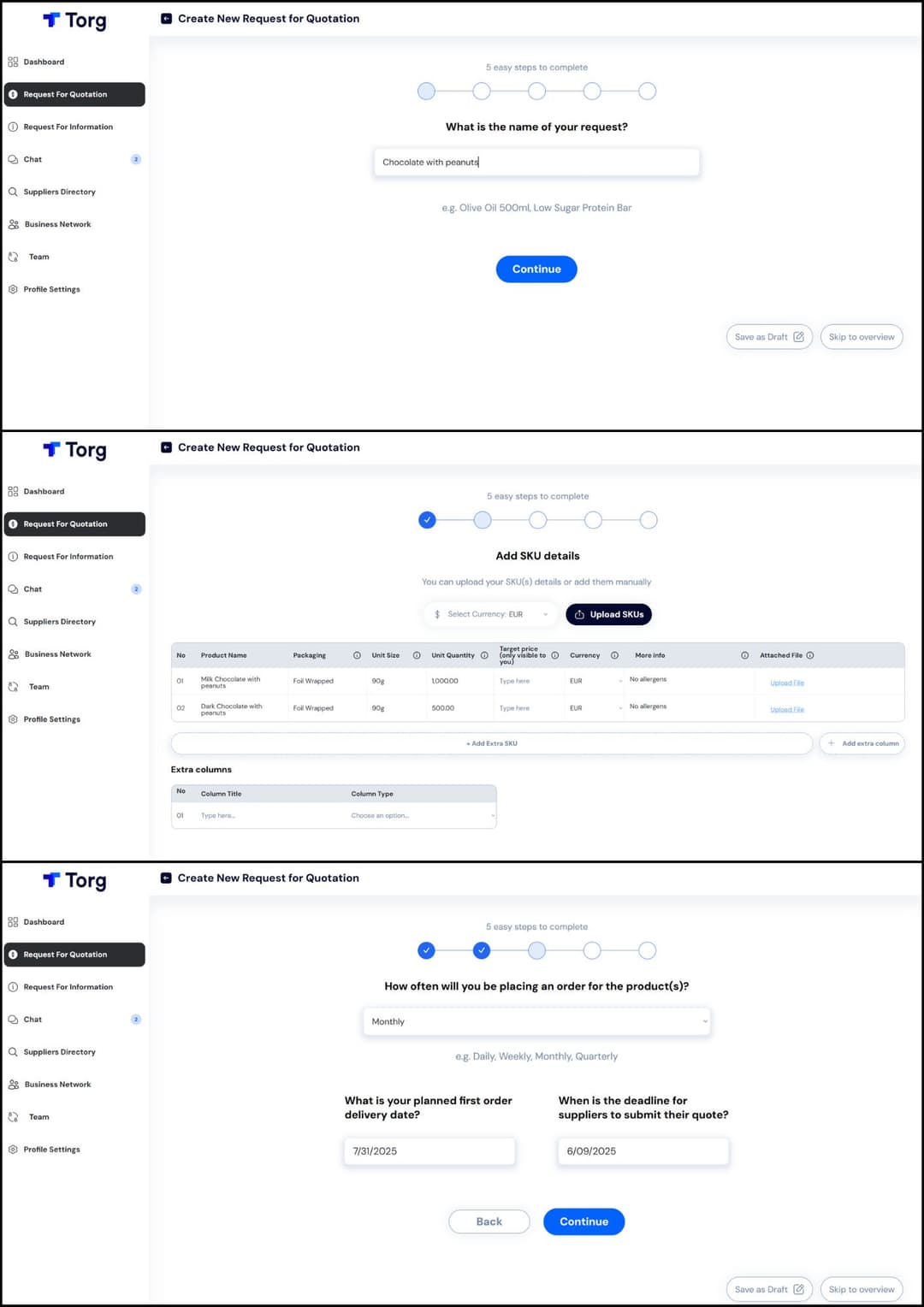
1. Inform Sophia What You're Looking For
Sign up and search for keywords such as "German chocolate" or "peanut chocolate." Our AI sourcing agent, Sophia, will locate suppliers that fit.
2. Browse Detailed Supplier Profiles
Sophia lays out a list of suppliers, along with information to assist you in determining who works for you.
3. Fill Out a Quick Form
Provide some basics such as how regularly you will order, when you would like your initial shipment, and your lead time for supplier quotes.
4. Set Your Specific Preferences
Select label types (Private Label, White Label), regions for suppliers, payment terms, and any product information you require.
5. Add Additional Notes or Attachments
Need to delegate the request to another team member or add an NDA? You can do that here.
6. Manually Explore the Supplier Database
You can also get into Torg's enormous supplier database (more than 150,000 globally) and narrow down to the ideal match at your own pace.
🍫 Ready to find the best German chocolate suppliers in minutes? Submit your request for a quote (RFQ) on Torg today and let us connect you with the perfect partners.
Request a Bulk Order Quote
Simple ordering, transparent pricing, delivered straight to your door
Top Certifications to Look for When Sourcing German Chocolate
Certifications are a great way for consumers to have an idea of what they are buying. Things that matter such as quality, safety, and eco-friendly sourcing are really important when you are trying to win the customers’ trust. There are retailers whose main focus is on the flavor, however, for some consumers, labels can be the reason for refusal. So, what should be your checking points before making a huge purchase of German chocolates?
- Fairtrade, Rainforest Alliance, or UTZ: These labels show cocoa is sourced with fair labor and sustainable farming. Many premium German chocolate bars brand options highlight these values, because more shoppers care about where their chocolate begins.
- Organic (EU-Organic or “Bio”): Helpful when consumers avoid pesticides or unnecessary additives. Organic certification keeps things clean, and gives retailers a clear selling point.
- EU Food Safety, HACCP, and Allergen Standards: Safety is the main concern. These certifications are proof that the ingredients, the packaging, and the labeling are conforming to the set of strict regulations. Typically, importers who are located outside the EU make this a prerequisite for the easy transportation of products.
- Kosher or Halal: Certain regions demand compatibility with cultural or religious diets. Some suppliers prepare chocolate under these guidelines, supporting broader market reach.
- Single-Origin and Traceability Programs: Such labels are attractive to consumers interested in the detailed background of a product. They open up the avenue for the story, disclose the process, and assure that each bar has a real and authentic source.
Monitoring certifications meticulously is one of the ways your German chocolate sourcing strategy can be effective. Besides securing margins, you gain trust, and provide the products which comply with the increasing requirements of wholesalers, retailers, and the customers.
German Chocolate Market Trends for Buyers in 2025
The chocolate market is changing fast and Germany is in the middle of it. Consumers are looking for stories, values, and innovation in every bar. German chocolate companies are responding and the trends for 2025 show exactly where the market is going.
1. Sustainability
More and more customers want to know where their chocolate comes from and how it’s made. Certifications like Fairtrade and Rainforest Alliance have shifted from being just labels to becoming powerful marketing tools. Retailers and brands that prioritize sustainable sourcing of German chocolate not only build trust but also attract repeat customers who are willing to pay 10–15% more for products that align with their values.
2. Vegan and Plant-Based Options
Veggie isn't here today, gone tomorrow. In 2025, sales of vegan chocolate in Europe will grow by almost 12%. German chocolate makers are leading the way, developing oat-milk and almond bars that match the creaminess of milk bars. Shoppers who stock these on their shelves access a rapidly expanding, health-focussed marketplace.
3. Eco-Friendly Packaging
Packaging thick with plastic is falling behind. Compostable wraps, paper boxes, and even edible packaging trials are on the rise. For foreign buyers, making eco-friendly chocolate also saves import duties in some parts of the world where green packaging is encouraged, and thus it is a savvy as well as sustainable option.
4. Regional Flavors
German brands are going local to differentiate internationally. Consider Black Forest cherry, mulled wine spice, or marzipan pralines as flavors that incorporate tradition while providing international consumers with something new. For consumers, these local variations are convenient icebreakers and make seasonal ranges more appealing to consumers outside their region.
Conclusion
One can say German chocolate is still a sought-after product, and so retailers, buyers, and distributors are the winners of this situation. Choosing trustworthy German chocolate brands results in products with high recognition, good quality, and a storytelling approach that facilitates the movement of the product from the shelf. The category is still profitable as it is able to reach the everyday shoppers, gift buyers, and premium consumers all at the same time. As the consumer preference shifts towards traceable cocoa, clean labels, and an occasional indulgence, the sourcing partners who innovate while still respecting tradition will be the ones to get noticed. If you keep a close watch on certifications, logistics support, and private label opportunities, you will be ahead of the market that continues to grow.