



Good Manufacturing Practices (GMP) in the Food Industry
Learn how Good Manufacturing Practices (GMP) ensure food safety and quality. Discover best practices, benefits, and how to work with GMP-certified suppliers.
200+ buyers trust Torg for sourcing







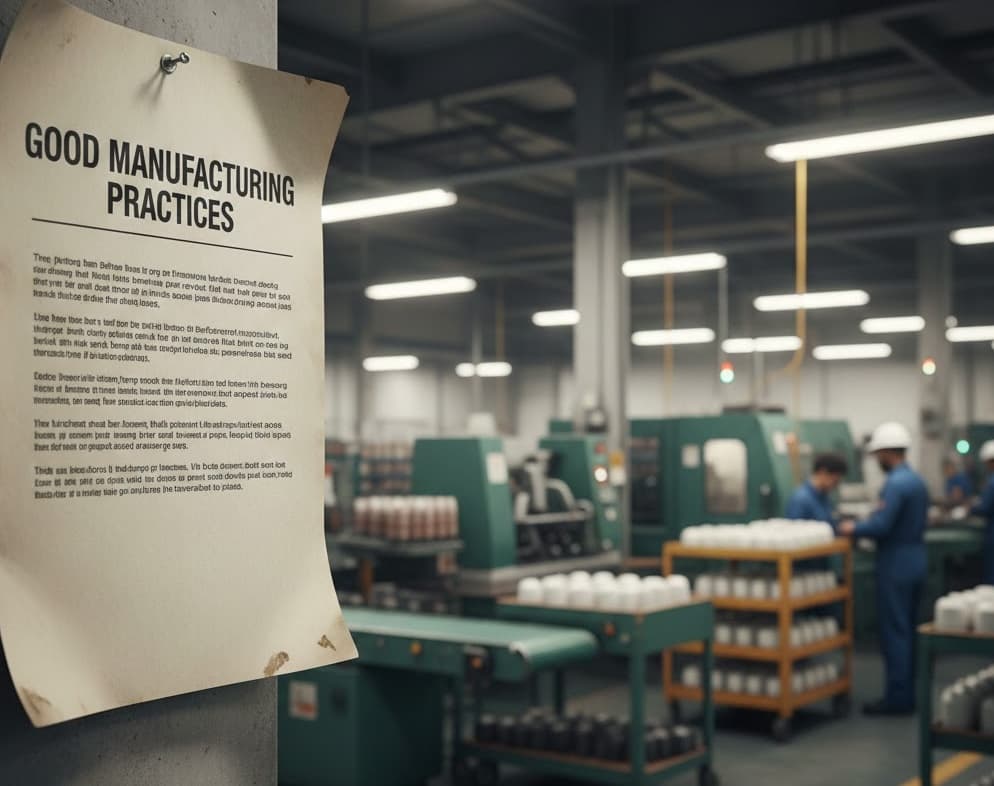
If you work with food whether you produce it, package it, or inspect it you’ve probably heard of GMP. But it’s not just industry talk. It’s the foundation of how safe clean food is made.
Good Manufacturing Practices are simple rules that keep food business operations on track. Rules like how staff clean up how equipment is used, how raw ingredients are handled, and how the final product is stored and labelled keep your customers safe from contamination and your business from fines, closure, or damage to your reputation.
GMP is not some nice-to-have by the food industry regulations but a must, and it helps make it happen every day. Whether you are prepping for an inspection, exporting into new markets, or just trying to run tighter, this article will break down what GMP really means, what it includes, and how to make it work in your operation.
What are Good Manufacturing Practices (GMP)?
Good Manufacturing Practices (GMP) are a set of internationally recognized regulations and guidelines that ensure food products are consistently produced, processed, and controlled to meet strict quality and safety standards.
In the food industry, GMP plays a vital role in preventing contamination, maintaining product quality, and protecting consumer health throughout the entire supply chain—from raw ingredients to packaged goods.
Why GMP Is Important in Food Manufacturing
GMP sets the baseline for food safety and hygiene. It governs every detail of production, including:
- How employees wash their hands and wear protective clothing.
- How raw materials are stored and handled.
- How equipment is cleaned, sanitized, and maintained.
- How finished products are labeled, packaged, and traced after leaving the facility.
These are not optional practices. They form the foundation of food safety standards.
When GMP standards are not followed, risks increase significantly:
- Contamination (biological, chemical, or physical hazards).
- Mislabeled or mispackaged products.
- Spoiled or unsafe merchandise reaching consumers.
If you’re a buyer, working with GMP-certified suppliers means more than compliance, it guarantees quality, safety, and reliability in every product you source. Don’t take chances with your supply chain.
👉 Buy safe, high-quality GMP-certified food products wholesale from Torg and give your business a trusted edge in global markets.
Featured wholesale products

Pasta Sauce Tomato Basil 400g
€1.02

Green Pesto - Premium 180g
€1.13

Chocolate cereals 400g
€1.56

Energy Drink 330ml
€1.02
Key Components of GMP in the Food Industry
GMP in food industry does more than fill out checklists. They create a culture of responsibility by which food safety is not only one department's concern but rather everyone's. Let's discuss the areas that are most important.
Personnel Hygiene and Training
Your staff are your greatest strength or your weakest link. GMP in food industry means that hygiene training is not an option. They have to know how personal hygiene, dress, and even minor conditions can bring significant hazards.
It's not so much about distributing a hairnet. It's about discipline on a daily basis: clean hands, clean equipment, clear procedures. Regular habits can be reinforced by ongoing training. When everybody views hygiene as a communal responsibility, you prevent problems at their source.
Premises and Facility Design
Your facility design directly affects food safety standards. GMP requires an intelligent, straight-line flow from where raw material is introduced to where finished product is shipped out. Why? Because meandering layouts or common areas can enhance contamination threats.
All the details matter: non-flecking walls, unclogged drains, adequate lighting, and regulated airflow. Even the orientation of employee movement is important. Creating safety in the first place makes compliance simpler and production more efficient.
Equipment and Utensils
Machines are not necessary to be luxurious. They simply need to be safe, strong, and clean. Food industry GMP requires all equipment and tools to be made of food-grade substances and to be maintained in good order.
If your mixer blade rusts or your scale misreads, you’ve got a real problem. That’s why routine inspections, cleaning logs, and calibration records are essential. This isn’t overkill at all. It’s basic food production quality control.
Raw Material Handling and Storage
What you put in determines what you get out. GMP dictates that raw materials be procured from qualified suppliers and inspected on receipt for quality and safety. That's not all because how you store them is as critical.
Are you storing dry goods away from water? Are you tracking cold storage temperatures daily? Are you rotating inventory correctly to avoid spoilage? That's the degree of watchfulness GMP insists.
Production Controls and Documentation
There is no mystery in your process. GMP calls for instant documentation of all production information such as ingredients used, batch duration, cooking temperature, who performed what, and when.
Such visibility allows you to track, trace, and solve problems quickly. It's also the way you insulate yourself from inspections or consumer complaints. If it's not put on paper, it did not occur. GMP does not allow for assumptions.
Cleaning and Sanitation
Sanitation is not just wiping everything down at the end of the day. GMP requires written cleaning schedules that indicate what is being cleaned, how it is being cleaned, with what chemicals, and by whom. These are required to be revised every single time.
But don't stop with the checklist. Check it. Swab tests and surface checks let you know if your process is really working. This is one of the building blocks of food safety standards and something that inspectors will first look for.
Quality Control and Assurance
Quality control is more than finding errors. It's stopping them from occurring in the first place. GMP requires frequent checks during food production quality control including weights, temperatures, labeling correct, and microbial analysis.
Your QA crew meanwhile should serve as gatekeepers, i.e., checking records, double-checking logs, and withholding anything that is not up to your standards. It's this multilayered supervision that prevents mistakes from falling through the gaps.
Traceability and Recall Systems
Any food business hates a recall, but you'd better be prepared for one. GMP demands complete traceability systems that trace every ingredient from the supplier to the shelf. When something does go wrong, you have to be able to track down the affected batches at once.
A good recall plan stops the damage to your customers and your reputation. It's not simply correcting errors. It's demonstrating that your business prioritizes food safety, even when things go wrong.
Benefits of Implementing GMP in the Food Industry
Good Manufacturing Practices (GMP) are not merely a regulatory hurdle to overcome. To food industry businesses, they're an intelligent investment that enhances food safety, increases efficiency, and insulates your brand in the long term. Here's how implementing GMP actually serves your operations:
Ensures Food Safety and Hygiene
This is where GMP starts and where it matters most. With good food hygiene practices you reduce the risk of contamination at every stage. That means safer products, longer shelf life, and fewer surprises in the form of spoilage or food poisoning.
It’s not just about passing inspections. It’s about making food safety part of the normal way of doing business. GMP enables your staff to do the right thing, every time, without second-guessing.
Builds Consumer Trust
Consumers see when a company pays attention to the details. When you deliver clean, well-packaged, and correctly labelled products, consumers trust your brand. That trust isn’t based on advertising. It’s based on reliability.
Over time, this credibility puts your company ahead of the pack in competitive markets, particularly when shoppers are comparing labels and looking for indications of quality and responsibility.
Reduces Product Recalls and Legal Issues
Remind me, recalls aren't cheap, they tarnish your reputation. GMP allows you to install systems that identify problems early on, before they reach the door.
From batch traceability to quality inspections, GMP provides visibility throughout the supply chain. And if something goes awry, you'll have the documentation and traceability to correct it quickly, with minimal impact.
Enhances Operational Efficiency
GMP isn't just about safety, it's also about operating a tighter ship. Having processes standardized takes the guesswork out of things. Regular cleaning schedules eliminate unexpected downtime. Good recordkeeping eliminates rework and confusion on the production floor.
By minimizing waste, ensuring consistency, and simplifying workflows, GMP keeps your facility smoother and more profitable. You spend less time repairing issues and more time increasing what succeeds.
How to Get GMP Certified?
Obtaining GMP certification isn't something to do as a formality, it's the way to tell customers and business partners that your activities comply with strict, internationally accepted GMP standards. The procedure requires time and energy, but once accomplished, it's a huge asset to your company. This is how the procedure actually works:
- Gap analysis: Begin by evaluating where you are and where you should be. A true gap analysis takes a deep look at your existing systems, equipment, and documentation to identify any gaps from meeting GMP requirements. This is not a scan done on the surface, it's an in-depth analysis of how your facility actually functions on a daily basis.
- Implementation: This is where the hard work happens. You’ll need to write Standard Operating Procedures (SOPs), set cleaning schedules, train staff, and build record keeping systems. Every process, from handwashing to packaging, needs to be defined and documented. If it’s not written down, it doesn’t exist in the eyes of auditors.
- Internal audits: Before you call in a third-party, you’ll want to audit your own work. Internal audits allow you to find gaps in your process, whether missing documentation, equipment problems, or staff not following procedures. It’s the dress rehearsal that catches the little errors before they become big failures.
- Third-party inspection: When you're ready, it's time to hire an accredited certifying agency. Inspectors will walk through everything, your documents, your process, and even your employees' comprehension of procedures. This is serious business. They'll tour your plant, ask difficult questions, and get down to the nitty-gritty.
- Certification issuance: If everything passes, you’ll get your GMP certification, usually good for one to three years. It’s more than just a piece of paper on your wall; it’s proof your facility runs with discipline, care, and safety top of mind.
- Ongoing audits: GMP certification is not for life. You’ll need to do surveillance audits (usually every year) to keep your certification. These audits will make sure you’re not falling back into old habits and your systems are up to current GMP standards.
🚀 Join Torg today and put your GMP certification to work by reaching thousands of qualified buyers who prioritize compliance and food safety.
GMP vs HACCP: What's the Difference
GMP and HACCP tend to be used interchangeably, but they are not the same and understanding the difference is important if you're going to operate a clean, compliant, and effective food business.
Good Manufacturing Practices (GMP) are your starting point. They address the fundamentals: how your building is arranged, how clean it is, how your employees receive raw material, how frequently you sanitize equipment, and how you record everything. Conceptualize GMP as the playbook for maintaining a clean environment, consistent processes, and responsible people. If you're falling short of meeting GMP standards, you're asking to be contaminated before you even get product on the assembly line.
HACCP is more invasive, though. It's really all about finding critical control points in your real process where food safety hazards can arise such as raw meat temperatures, cross-contamination in packaging, or allergen exposure. When you've determined those hazards, HACCP makes you implement control measures, keep track of them closely, and implement corrective action when things go wrong.
The main distinction? GMP is about prevention on the systems level, whereas HACCP targets individual, quantifiable hazards within your production process. GMP gets your facility safe in the first place; HACCP bullet-proofs your process.
Here's the bottom line: you can't construct a genuine HACCP plan on an unstable GMP foundation. If your cleaning schedules, SOPs, or your food hygiene practices are not solid, HACCP won't help you. Most certified facilities operate both because collectively, they provide you with complete coverage from the ground level.
Common Challenges in GMP Compliance
Achieving GMP isn't so much about ticking a box, it's about transforming the way your team works, thinks, and documents each step. Even veteran companies hit the snag. Here's what commonly happens:
Lack of Staff Training
You can have tightly sealed SOPs, but if your staff doesn't know how to implement them (or worse, doesn't care) they're useless paper. Turnover is high in food manufacturing, and training gets sacrificed in the haste to get the shifts covered.
You correct this by integrating training into operations, not a single PowerPoint. All new employees should receive hands-on onboarding, and your regulars should receive brief monthly reminders. The intention is consistency. If your staff can't describe your food hygiene practices or recordkeeping policies without checking a manual, something's amiss.
Inadequate Documentation
This is where a lot of companies fall flat during audits. Missing batch records. Dates filled in after the fact. Paper logs with coffee stains and gaps. GMP documentation isn’t about looking good, it’s your proof that you’re doing things right, every day.
To stay ahead of it, integrate real-time bookkeeping into your day-to-day activities. Technology is a help, but it's not going to eliminate bad habits. Be firm: if it's not being recorded at the time it occurs, it didn't occur.
Poor Maintenance and Pest Control
Damaged floors, dripping ceilings, broken exhaust fans, these are not trivial matters. They're entry points for contamination. So are pests. Without an ongoing pest control plan, you're risking your product and your license.
Maintenance is not something you plan to do "when there's time." GMP requires anticipatory maintenance, so review logs each week and correct problems before they become major issues. Leave your calendar uncluttered for inspections and have your pest control partner come by on a regular basis, not only when you notice droppings.
Cultural Resistance to Procedural Change
This one’s tricky. Sometimes, the biggest challenge isn’t technical, it’s your own people. “We’ve always done it this way” is a phrase you’ll hear a lot, especially from seasoned workers. New procedures feel like extra steps. People cut corners. Habits don’t change overnight.
Fixing this starts at the top. When leadership treats GMP as non-negotiable (not as red tape but as part of the company’s DNA) teams start to take it seriously. If you want people to care, show them that you do. Build GMP into your daily walk-throughs, your team meetings, and your feedback loops.
FAQs
1. What is the difference between GMP and GHP?
GMP (Good Manufacturing Practices) focus on ensuring products are consistently produced with quality and safety standards, covering processes, equipment, and documentation. GHP (Good Hygiene Practices) emphasize hygiene in food handling—cleanliness, sanitation, and personal hygiene—to prevent contamination.
2. How long does GMP certification last?
GMP certification typically lasts 1 to 3 years, depending on the certification body, industry, and local regulations. Companies must undergo regular audits and renewals to maintain compliance, ensuring their manufacturing processes consistently meet current food safety and quality standards.
3. Can a small food business apply GMP?
Yes, a small food business can apply GMP. In fact, GMP is essential for businesses of all sizes to ensure food safety, hygiene, and compliance. By following Good Manufacturing Practices, small food producers can reduce contamination risks, build customer trust, and meet regulatory requirements.
4. Is GMP mandatory for exports?
Yes, GMP is often mandatory for food exports. Many countries require exporters to comply with Good Manufacturing Practices to ensure safety, quality, and traceability. Having GMP certification not only meets legal requirements but also boosts credibility and market access in global trade.
5. What happens during a GMP audit?
During a GMP audit, inspectors evaluate whether a facility follows Good Manufacturing Practices. They review documentation, inspect production areas, check equipment maintenance, assess hygiene practices, and interview staff. The goal is to identify gaps, ensure compliance, and verify product safety and quality.
Request a Bulk Order Quote
Simple ordering, transparent pricing, delivered straight to your door