



Hospitality Procurement: How to Cut Costs & Improve Quality
Discover essential strategies for effective hospitality procurement to enhance efficiency and cost-effectiveness. Read the article for actionable insights.

200+ buyers trust Torg for sourcing







In the competitive world of hospitality, efficient procurement is key to maintaining quality while keeping costs under control. From hotels and restaurants to event venues and resorts, every decision made in the supply chain can impact guest satisfaction and the bottom line. Hospitality procurement involves much more than just buying goods—it requires strategic sourcing, reliable supplier relationships, and smart inventory management.
In this article, we’ll explore how businesses in the hospitality sector can streamline their procurement processes, reduce expenses, and enhance the quality of their offerings without compromising on service. Let’s dive into practical tips and strategies that drive real results.
What Is Hospitality Procurement?
Hospitality procurement refers to the process of sourcing, purchasing, and managing the goods and services required for the day-to-day operations of hospitality businesses such as hotels, restaurants, resorts, and catering companies. This includes everything from food and beverages to furniture, linens, kitchen equipment, toiletries, and cleaning supplies.
Effective procurement in hospitality ensures that the right products are available at the right time, in the right quantity and quality—while also optimizing costs and maintaining supplier relationships. It plays a crucial role in delivering consistent guest experiences, controlling operational expenses, and supporting sustainability and brand standards across hospitality operations.
Types of Procurement in Hospitality
Not all purchasing in the hospitality sector looks the same. Some items are used daily, others are long-term investments. Let’s break down the main types of procurement activities you’ll find in a hospitality business.
Direct Procurement
Direct procurement involves sourcing items that are essential to delivering services directly to guests. This includes food and beverages, linens, toiletries, and other consumables used daily in hotels, restaurants, and other hospitality settings. These purchases directly impact the customer experience and require consistent quality and timely delivery.
Ready to streamline your direct procurement and secure top-quality food, beverages, and supplies for your hospitality business? Discover how Torg connects you with trusted private label suppliers across Europe—ensuring the best products at the best prices, right when you need them. Start sourcing smarter today with Torg!
Indirect Procurement
Indirect procurement covers goods and services that support operations but aren’t directly consumed by guests. Examples include office supplies, cleaning equipment, IT systems, and marketing services. While not guest-facing, these purchases are vital for smooth internal operations and employee efficiency.
CapEx Procurement
CapEx procurement refers to investments in long-term assets such as furniture, kitchen equipment, HVAC systems, or renovations. These purchases are typically high-value and infrequent, requiring strategic planning, vendor vetting, and sometimes bidding processes. They have a lasting impact on the property and guest experience.
OpEx Procurement
OpEx procurement involves recurring purchases that keep daily operations running, such as utility services, laundry, maintenance supplies, and subscription-based software. Unlike CapEx, these are ongoing expenses that need tight budget control and supplier reliability to manage cash flow efficiently.
What Does a Hospitality Procurement Manager Do?
If you're considering a career as a hospitality procurement manager, you're looking at a dynamic and strategic role that’s essential to the smooth operation of hotels, restaurants, resorts, and other service-based businesses. As a procurement manager, your job is to ensure that the organization gets the best value for its purchases—without compromising on quality or guest experience.
Your responsibilities would typically include:
- Get the best suppliers – They seek out suppliers who can provide high quality products, remain consistent, and get orders to them on time. If a supplier falls through, they're the first to hear and respond.
- Create smart plans – Whether it's pursuing cost savings or securing competitive advantage, they create procurement plans that align with business objectives.
- Monitor delivery timelines and product quality – A delayed delivery or a poor run of goods can derail operations. They monitor closely on timelines and quality control to maintain pace.
- Make sense of procurement numbers – Numbers speak. They dive into procurement numbers to discover where the business can spend wiser and enhance cost effectiveness.
- Manage contracts and compliance – They oversee all the nitty-gritty of supplier contracts, ensuring everyone follows the rules.
- Partner with other departments – Whether collaborating with chefs on seasonal menus, or coordinating with finance on budget constraints, they work together to ensure procurement supports the entire guest experience.
To succeed in this role, you'll need a mix of analytical thinking, negotiation skills, attention to detail, and a strong understanding of hospitality operations. It's a career that offers both responsibility and the opportunity to make a real impact on guest satisfaction and business profitability.
What Are FF&E and OS&E in Hospitality
In the hospitality industry, the terms FF&E and OS&E are commonly used during procurement, especially in hotel openings, renovations, or refurbishments. Understanding these categories is essential for effective planning, budgeting, and sourcing.
FF&E: Furniture, Fixtures & Equipment
FF&E includes all movable items that are not part of the building's structure but are essential for guest comfort and operational functionality. These are typically larger, long-term assets purchased during the setup or major renovation of a property. Examples include:
- Beds, chairs, sofas, and tables
- Lighting fixtures and lamps
- Televisions and minibars
- Reception desks and décor
- Fitness equipment
FF&E items are usually considered capital expenditures (CapEx) and have a longer lifecycle.
OS&E: Operating Supplies & Equipment
OS&E refers to the everyday operational items that staff and guests use regularly. These are generally smaller, consumable, or frequently replaced items that support day-to-day operations. Examples include:
- Linens, towels, and uniforms
- Kitchenware, glassware, and cutlery
- Housekeeping supplies and toiletries
- Office supplies and service trays
- Cleaning tools and guestroom amenities
OS&E items fall under operational expenditures (OpEx) and require ongoing procurement.
Together, FF&E and OS&E form the backbone of a fully functional and guest-ready hospitality environment. Understanding the difference helps procurement professionals manage budgets, prioritize orders, and ensure timely delivery of essential items.
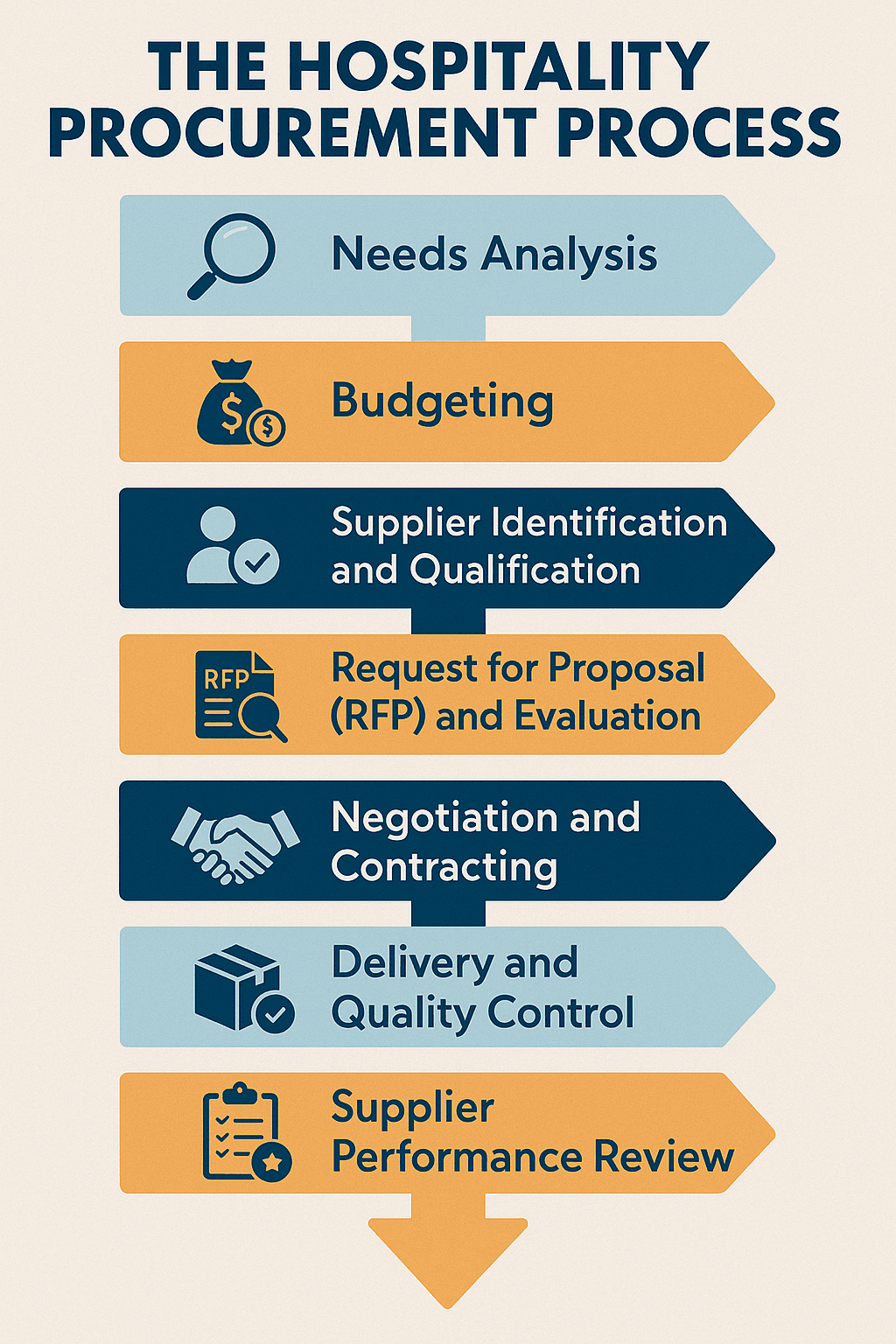
The Hospitality Procurement Process
So, how does the procurement cycle in hotels, resorts, etc. look like? Maintaining smooth operations, low costs, and satisfied guests is the primary focus here. This is how robust hospitality procurement practices take place, step by step.
1. Needs Analysis
What does your hotel truly need at the moment? Is housekeeping short on linens? Are kitchen staff struggling with out-of-date equipment? Excellent procurement management begins by asking the right individuals and noticing supply gaps before they impact the guest experience.
2. Budgeting
How do you purchase what's required without exceeding budgets? This process is all about intelligent cost management. You'll examine total spend, budget around rising costs, and have a buffer to shift if there are market shifts or supply chain disruptions.
3. Supplier Identification and Qualification
You can't simply choose the lowest-cost supplier and wish for the best. In this case, supplier management is about homework like looking for sound delivery schedules, quality control, responsible sourcing, and a vendor's capability to provide a consistent supply when it matters.
4. Request for Proposal (RFP) and Evaluation
When you issue an RFP, it's not merely a price battle. You are considering the big picture, i.e., supplier relationships, flexibility, and whether they appreciate your brand's standards. Right procurement strategies balance value against merely the figures.
5. Negotiation and Contracting
Now's the time to call in those strong negotiation skills. Procurement experts lock down competitive pricing, construct clear supplier agreements, and establish terms that keep everyone in check. A good bargain isn't only about price. It's about mastery.
6. Delivery and Quality Control
When products arrive, do they meet expectations? Your quality control processes kick in here. Even with a great contract, mistakes happen, so it’s important to closely monitor deliveries and have risk management before they reach the guest.
7. Supplier Performance Review
How did that supplier actually do? Are they hitting delivery targets? Are products always high quality? This review process facilitates ongoing improvement, reinforces supplier performance, and provides your procurement team with the insight necessary to make wiser decisions next time.
Key Challenges in Hospitality Procurement
All hospitality companies must encounter some universal challenges in procurement. What are the biggest obstacles, and how can procurement best practices assist in overcoming them?
Seasonal Demand & Supply Chain Fluctuations
Did you see how disrupted holiday periods or regional events cause supply chain issues? Unexpected surges in demand have the potential to lead to delays or shortages. That's why procurement teams must plan carefully and maintain safety stock to prevent disruption.
Sustainability and ESG Compliance
Are your visitors requesting greener alternatives? Most travelers now look up to hotels to be environmentally friendly. Laying down such expectations would require embracing sustainable procurement, selecting suppliers that embrace such expectations, and reducing waste.
Cost Control Under Inflation
With the cost of materials, fuel, and labor increasing, maintaining cost control seems more challenging than ever before. That's where strategic sourcing and the establishment of long-term, reliable supplier relationships become essential in keeping costs under control while ensuring quality.
Vendor Reliability and Quality Consistency
Ever had a supplier disappoint you with sub-standard products? Regardless of whether it's linens or fresh produce, quality inconsistency betrays customer satisfaction. That is why quality control procedures and periodic supplier audits and vendor management are a must to maintain high standards.
What is E-Procurement in Hospitality?
E-procurement in hospitality refers to the use of digital platforms and online tools to manage the purchasing process for hotels, resorts, restaurants, and other hospitality businesses. It replaces traditional, manual methods like paper-based orders, emails, or phone calls with streamlined, automated systems that enhance efficiency, accuracy, and cost control.
Why does this matter? Well, with real-time procurement data, your staff can track inventory management levels closely and prevent last-minute rushes or supply chain accidents. It also simplifies negotiating contracts, which controls costs and enhances supplier relationships.
Bottom line, e-procurement keeps hospitality companies organized, eliminates errors due to manual processes, and maintains quality control tight, all of which equals better operational efficiency and more satisfied guests.
Master hospitality procurement with proven strategies that boost purchasing power, efficiency, and cut costs. Let Torg connect you with trusted suppliers to streamline your sourcing process. Start optimizing your procurement today, sign up now and transform how your hospitality business sources essentials!
Best Strategies for Procurement in Hospitality
Having procurement correct can make managing hotels and resorts so much simpler. These simple tips save you money, maintain quality, and save you headaches, ensuring your operations are smooth and your visitors are content.
Centralize Procurement Across Properties
Ever see how shopping in bulk saves a bundle? When hospitality groups consolidate their buys, they're offered better prices, maintain product quality consistent, and manage suppliers more efficiently at all locations. It's all smart work, not hard work, and keeping things uniform everywhere.
Segment Your Procurement Categories
Why do everything the same way? Segmenting procurement into categories such as FF&E, OS&E, food, and procurement services allows specialists to work on their areas of expertise. This method aligns purchases with actual needs, which makes sourcing more acute and efficient by category.
Adopt E-Procurement Platforms
Still buried under paper work? E-procurement software reduces admin work, easily tracks orders, and provides data insights. Consider it a virtual assistant that identifies issues quickly and uncovers saving possibilities before you know it.
Focus on Local and Sustainable Sourcing
Have people begun inquiring about sustainable alternatives? Local suppliers reduce shipping expenses and benefit your local community. And it's a draw for environmentally-conscious guests and travelers, making your hotel unique in a competitive landscape.
Leverage Data & Spend Analytics
Do you actually know where your money is spent? With data analytics, you can identify costly items, review if suppliers are delivering timely, and monitor purchasing habits. It's having a clever assistant looking out for you to manage costs more effectively.
Plan for Supply Chain Resilience
Remember the supply chaos in COVID, nobody wishes to experience it again. Having alternative suppliers, dual sourcing, and flexible contracts keeps you ready. When unexpected holdups occur, your hotel continues to operate without pandemonium. It's all about being stocked, steady, and ahead of the game.
Sustainable Procurement in Hospitality
Why is "sustainable procurement" such big news in hospitality all of a sudden? It's not for fun—today's hotels must buy products that are better for the environment and responsibly made. This involves selecting vendors who reduce waste, don't use plastic packaging, and have low carbon footprints.
But it's not just about shopping for green things. It's about verifying where things come from and ensuring that suppliers adhere to ethical standards. This assists hotels to develop in a sustainable way, rather than pursuing quick gains.
Also, guests pay attention. More and more millennials and Gen Z visitors prefer to stay at hotels that are concerned with the environment. Even corporate travelers expect hotels to be sustainable. So, being mindful of sustainable procurement isn't only beneficial to the environment, it's beneficial for business as well. Have you considered how environmentally friendly your hotel's sourcing actually is?
Hospitality Procurement Trends in 2025
What's trending in hospitality procurement this year? A couple of exciting changes are revolutionizing the game for hotels and resorts:
- AI-Powered Forecasting: Ever dream of knowing exactly what supplies you'll require? AI technology now examines real-time occupancy, weather, and events to assist in smarter buying planning, so you're never left scrambling.
- Blockchain for Transparency: How can you be sure where your products truly originate from? Blockchain technology follows each transaction in the supply chain, reducing fraud and providing you with unmistakable evidence of authenticity.
- Green Mandates: Are environmental regulations making you question your suppliers? New rules mean procurement teams have to pay more attention to green sourcing to keep guests and regulators satisfied.
- Integrated Tech Stacks: Sick of juggling multiple systems? Now, procurement, inventory, and accounting systems seamlessly integrate, minimizing time and errors.
- Strategic Partnerships: Is it more efficient to continue to change suppliers or establish long-term relationships? Today, long-term relationships with proven, innovative suppliers are what ensure hassle-free operations and quality you can count on.
Conclusion
Wondering how procurement fits into running a hotel or resort today? It’s no longer just about placing orders. Now, smart sourcing powered by data and technology can make a huge difference. Whether you’re handling big projects or juggling supplies for multiple locations, having the right procurement strategy is key.
What's truly important? Developing strong relationships with your suppliers, monitoring costs, and being flexible when issues arise. These actions save you money and satisfy guests.
In such a competitive hospitality landscape, good procurement is not just a cost cutter, but a means to deliver experiences that really stick in guests' minds. So why delay? Begin elevating your procurement strategy now to be ahead of the game in 2025 and beyond.
Request a Bulk Order Quote
Simple ordering, transparent pricing, delivered straight to your door