



Waffle Market 2026: Small Growth, Big Opportunity
Explore the global waffle market’s growth, supply-chain insights, consumer trends, and top suppliers for retailers, distributors and wholesalers in 2026.
200+ buyers trust Torg for sourcing







You know how waffles mysteriously found their way into every nook and cranny of the globe? From hotel breakfast buffets to corner convenience stores, they've become one of those "everyday indulgences" that people just go ahead and purchase without a second thought. The market is expanding, quietly but consistently, and that's where the appeal lies. Retailers, distributors, and wholesalers are recognizing real possibilities here, not hype, but consistent demand. In this piece, we’ll break down where the waffle industry stands, what’s driving it, who’s shaping it, and why 2026 might be the year to finally take waffles seriously as a scalable, trade-ready product line.
The Waffle Market Overview
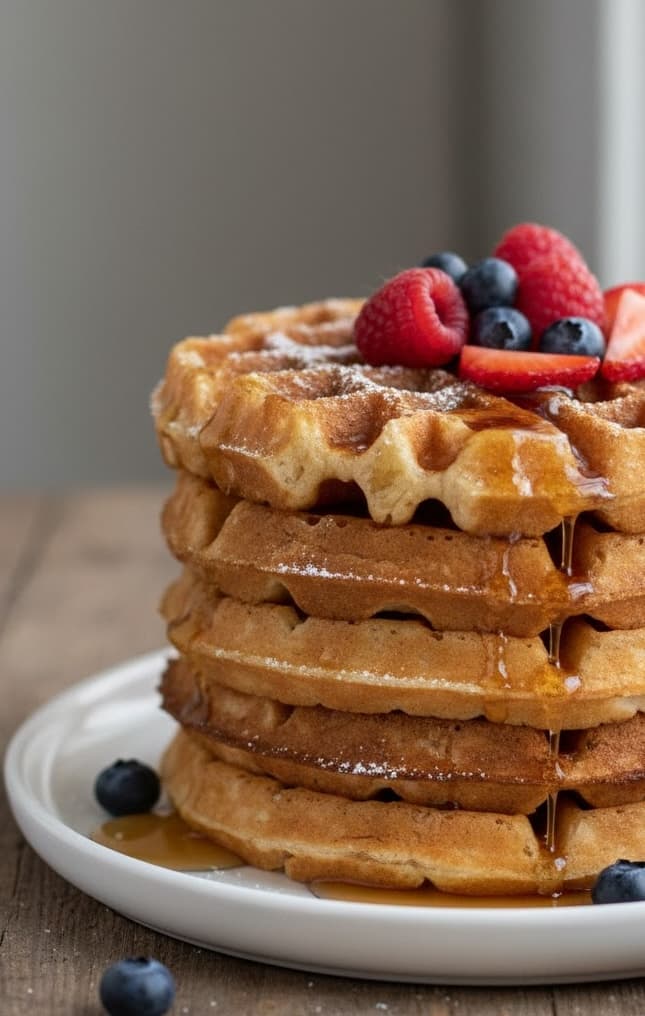
To be real, waffles aren't really a trend that's bursting on the scene. But look at the numbers, and they tell an interesting story as waffles are moving from a niche treat into a steady, expanding category. In 2026, the global waffle market is expected to sit at roughly USD 2.49 billion, then gradually build momentum toward about USD 4.3 billion by 2035. That path reflects a 6.4% annual growth rate, driven less by novelty and more by wider availability, easier formats, and repeat consumption across retail, foodservice, and ready-to-eat channels.
So really, if you're in retail, distribution, or wholesale, this is not a "get rich quick" market. It's a "steady as you go" kind of marketplace. That's the beauty of this category. Products flow, people purchase them, and shelves never remain full for long.
Market Segmentation
You can cut the waffle market a couple of ways depending on what's important to your business.
- By product form: plain, chocolate-coated, filled, or frozen.
- By distribution channel: hypermarkets, supermarkets, convenience stores, cafés, hotels, or online channels.
- By end-use: institutional versus household consumption. Think frozen waffles at home and cooked waffles in QSRs or hotels.
- By ingredient or health-format: gluten-free, protein-enhanced, or "on-the-go" forms. The high-protein waffle segment is also already establishing its own niche.
All these are relevant because consumers and stores are able to customize their sourcing to satisfy demand by channel and geography as one-size-fits-all is not here.

Let’s dig into the actual numbers around who’s making waffles, who’s buying them, and where the big trade flows lie. This is especially useful if you’re sourcing, distributing or retailing, knowing the geography matters.
Producers
- The United States leads the pack in production, generating approximately 2.8 million tons, or roughly 34% of the global production. China comes second with a production of approximately 1.1 million tons, and India ranks third at approximately 495,000 tons, approximately 5.9% of worldwide share.
- These three constitute the premier production bases, with Europe also being a strong contributor to export-capable manufacturing. For distributors or importers shipping to Asia, Latin America, or smaller markets, supplies from these core regions are sensible, but prices, tariffs, and supply dependability will vary from one trade lane to the next.
Exporters
- The key exporters of waffles and wafers are Poland, Italy and Germany. The three together accounted for nearly 39% of global export value.
- The top exporter countries are Poland, Turkey, and Italy in volume/value
This means for a distributor or buyer: if you’re looking for steady supply, the “European cluster” (Poland/Italy/Germany) is strong, though lead times, shipping and costs will vary outside Europe.
Importers
When it comes to imports, the United States still takes the lead — bringing in around 146,000 tons of waffles and wafers in 2024 alone, according to recent data. Right behind are Germany with roughly 91,000 tons and the UK at about 86,000 tons.
In value terms, the U.S. imported close to USD 1 billion, while the UK reached about USD 553 million and Germany USD 521 million. Updated trade data from WITS shows that previously, U.S. imports of “sweet biscuits, waffles, and wafers” were worth around USD 3.17 billion, translating to about 823,000 tons of product — a clear sign of how strong demand remains in major Western markets.
Growth & Regional Trends
- In terms of consumption: the U.S. consumption is approx 2.9 million tons (≈ 35% of global consumption) for waffles & wafers.
- Per capita in the U.S.: approximately 8.7 kg per capita for waffles & wafers.
Whereas, other nations such as China and India are developing more rapidly: China's volume growth ~+2.8% annually, India ~+3.2% annually from 2013 to 2024.
Supply Chain & Trade Realities

- Cold-chain logistics is a piece of the puzzle as well. Frozen waffles can't be thrown on a standard truck, they require temperature consistency. Good news? Today, many regions have upped their game. Cold storage capacity is projected to grow 25% by 2030, reaching over 1,100 million m³ globally, with Asia Pacific—especially Southeast Asia and China—driving most of the expansion. That's enabling smaller wholesalers to enter frozen categories without huge risks.
- Supply chains are calmer going into 2026. After volatility in production and transport over the past two years, global logistics show signs of easing, with manufacturers limiting new purchases and capacity under-utilized — a quieter start to the year than many expected.
- Sourcing decisions are getting more deliberate. Ingredient buyers are spreading risk by working with fewer, more reliable partners and adjusting origins to soften cost shocks and keep supply steady as trade conditions stay fluid.
- Planning tools move closer to day-to-day operations. Manufacturers lean more on live data and predictive systems to spot delays early, fine-tune orders, and keep quality and delivery on track without overcorrecting.
- Demand patterns now guide stock levels. Convenience-led formats influence how much gets produced and when, pushing teams to refresh forecasts often and manage inventory in shorter, tighter cycles instead of long-range guesses.
What's Driving End-Customers and Trends That Matter

They don't buy waffles just for breakfast anymore. They purchase them because they're convenient, delicious, and sort of comforting. That's what's driving the market these days.
Convenience and On-the-Go Culture
Nobody's got time any more. Most folks don't have time to cook, let alone start breakfast from the beginning. And that's where waffles step in and fill the void. They're ready for you, frozen or toasted, microwaved or decorated. Pretty much, they cover the "grab-and-go" lifestyle.
Frozen waffles are expanding primarily because individuals are looking for convenience breakfasts that do not have to compromise on flavor. Retailers and distributors are aware of it as well. Items that require minimal preparation and remain visually appealing on retail shelves (such as pre-topped or individually wrapped waffles) sell faster.
Flavor, Format Innovation & Premiumisation
Taste buds are evolving, and consumers are trying. The simple waffle has some stiff competition these days. Consider Belgian, Liege-style, or chocolate- and cream-filled. And then there's the gluten-free and protein-packed ones riding in hot.
This "premium but better-for-me" concept is where the cash is coming in. Right now, high-protein waffles are picking up serious momentum and North America is the lead, but India's market is catching up quickly. Retailers are already blurring the lines, placing regular and premium lines alongside each other. It's about providing choice, indulgence to some, clean labels to others.
Growth of Café/Brunch Culture and Social Dining
You’ve probably noticed it too, that waffles have gone way beyond breakfast plates. Cafés, brunch spots, dessert chains, even hotels, everyone’s got a version of it. People love that “brunch feel,” and waffles are right in the middle of it.
To wholesalers and foodservice distributors, that is an open door. Selling waffles to cafés or restaurants is not merely bulk supply but selling that comfort-food aspect. Simply stated, think dual channels: retail shelf space and foodservice menus. That is where the growth is waiting.
Recent Developments and Opportunities
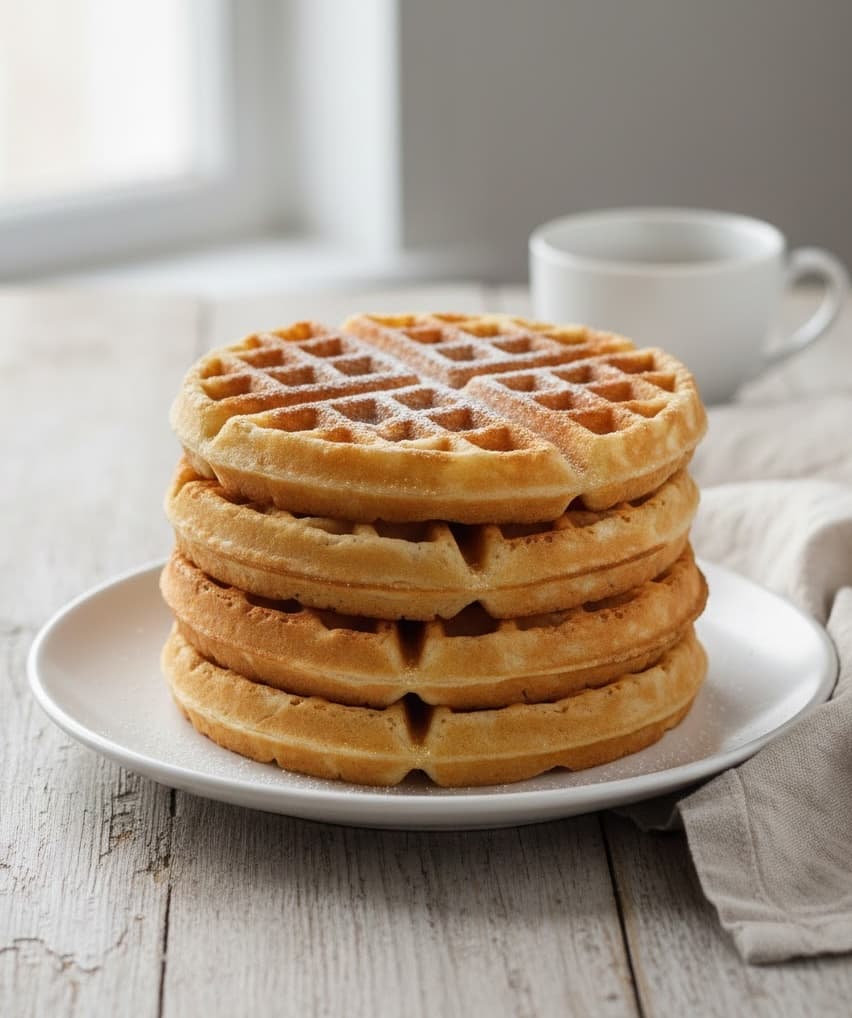
Take a glance around you, the category of waffles no longer seems stuck. It's stealthily reinventing itself. There are new flavors, new geographies, more intelligent packaging, somehow waffles just continue to appear on more menu boards and store shelves.
Emerging Markets Stepping Up
Growth is not just coming from the traditional players anymore. The map’s shifting again. Look east at India, Indonesia, and Thailand. They’re driving the wave, not just riding it. Frozen breakfasts, once a Western convenience, now land on plates across Asia-Pacific faster than anyone expected. Scotts International says the climb won’t slow until 2030. And down in Latin America? The story echoes as cities trade morning rituals for ready-to-eat comfort, blending speed with habit in a way that feels strangely natural.
Health-Driven and Functional Formats
Waffles are also getting their health glow-up. Market.us predicts the energy and protein waffle category to continue expanding at about 6.2% CAGR by 2034, primarily due to fitness-conscious consumers. There is evident traction for gluten-free and plant-based forms as well, small brands are borrowing from the snack-bar trend and moving over to breakfast shelves.
Smart Packaging & Shelf Appeal
Since 2023, the box itself has started telling a new story. Not just what’s inside, but how it’s wrapped, how it leaves, how it returns to the earth. Compostable. Recyclable. Words that used to sound idealistic now sit on boardroom tables like strategy. Single-serve packs slip into vending machines and corner shops, quietly reshaping convenience. Paper laminates and flexible films are stepping in, not just to wrap food, but to stretch time and shrink waste.
Digital & Omnichannel Sales
Not a surprise that waffles have made it online. Subscription snack boxes and grocery apps are transforming the way individuals purchase regular breakfast staples. Online grocery sales, according to Statista, are expanding with a compound annual growth rate (CAGR) of 9.72% from 2025 to 2030, pushing the market’s estimated value to around US$1.50 trillion by 2030. Certain companies now offer bundle pricing or monthly waffle sets delivered directly to consumers, which distributors can easily support through direct fulfillment partnerships.
Efficiency and Sustainability
Margins nowadays are thinner than a waffle crisp. Every cent counts, every deal stretched to its edge. The real winners aren’t just selling, they’re locking in. Buyers who tie down long-term supplier or co-manufacturing contracts for private-label waffles aren’t just playing it safe; they’re playing it smart. Inflation may rattle ingredients, but steady hands hold the line. Cold-chain optimization (savings without sacrificing minimal spoilage) is one growth area of emphasis.
Torg's Top Waffle Supplier Picks

1. WAFFLEMEISTER – USA
Wafflemeister remains simple with true Belgian waffles hand-made in small batches according to a family recipe that has remained whole for decades. Liege and toasting waffles are sold to cafés and grocery chains across the U.S. They focus on real ingredients, uniform taste, and flexible supply agreements to retail and foodservice.
2. WAFELBAKKERIJ DIMABEL – Belgium
Based in Belgium, Wafelbakkerij Dimabel produces everything from classic to organic, vegan, and protein-enriched waffles. They supply to retailers, catering companies, and private labels all over Europe. They specialize in quality versus quantity, with attention to cleaner labels and recipe customization. It's the type of supplier designed for long-term B2B partnership.
3. CRISBISS SWEETS & SNACKS GMBH – Germany
Germany's Crisbiss Sweets & Snacks GmbH produces snackable waffles that strike sweet and savory chords with waffle bites, sticks, pillows, and even mini cones. They have a modern production setup but one that is anchored on traditional methods. Retailers enjoy doing business with them because they provide consistency, good packaging, and fresh flavor innovation.
Final Thoughts
The waffle industry, in some way, just continues to evolve. It's not blowing up, but it's consistent and that's why it's interesting. From frozen packages in supermarket aisles to gym protein-packed waffles, the market is fragmenting quickly. For distributors, buyers, and retailers, the key is balance: combine mass sellers with specialty items. Essentially, observe where people consume and how they consume. Those who get going early, secure good suppliers, and follow changing habits will maintain their shelves flowing. That's it: good waffles, good timing, steady growth.
Request a Bulk Order Quote
Simple ordering, transparent pricing, delivered straight to your door