



Global Pesto Market 2026: Premium Demand on the Rise
Explore how the global pesto market is evolving through new flavors, sustainable sourcing, and innovation driving growth across regions from 2026 to 2030.
200+ buyers trust Torg for sourcing







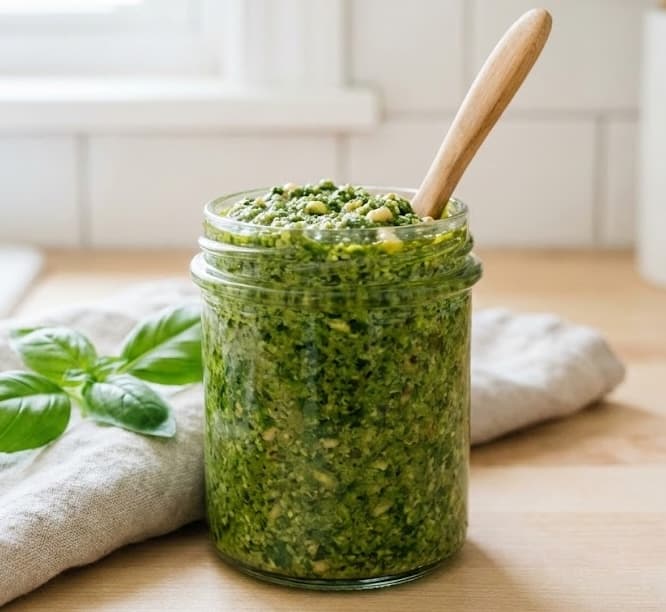
Pesto didn't exactly come out of nowhere. But it's been a pretty consistent takeover of menus, shelves, & countertops worldwide. You can see it now at all sorts of places, from small Italian delis to supermarket chains. Everyone's clamoring to get their hands on a jar of that green, herby sauce. But why? What's causing this humble simple mixture of basil, oil, nuts, and cheese to become a global hit once more? For buyers, retailers, and distributors, understanding this shift is huge and should be paid attention to. In the next sections, we’ll break down what’s really driving the pesto market, who’s leading the charge, and where the biggest opportunities are hiding in 2026 and beyond.
The Global Pesto Market Landscape
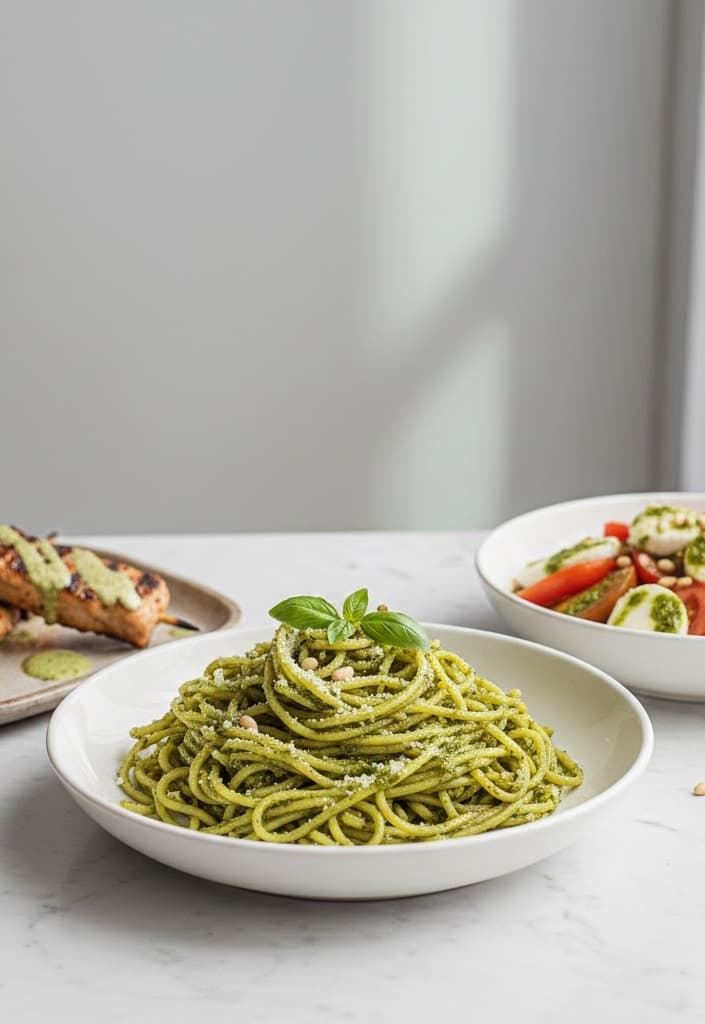
Market outlooks suggest pesto keeps gaining ground as the decade progresses. With the global pesto sauces market estimated near USD 3.07 billion in 2025 and growth tracking around 5.8% annually, the category is expected to move into the USD 3.25–3.3 billion range in 2026 if current momentum holds.
That projection rests on pesto staying in regular rotation, helped by its everyday ease of use, familiar flavor profile, and wider presence across shelves and menus as pasta and ready-meal consumption continues to edge upward globally.
Regional Insights & Top Producer Countries
Europe — Italy still leads, but watch the pressure points
- Market role: Italy is undoubtedly the top hub for pesto. You can spot traditional brands, protected types of basil, and huge export quantities. Looking at the trade figures from June 2024 - May 2025, Italy alone supplied a massive 71% of worldwide shipments of pesto sauce exports, putting them well out in front as the major exporter. And guess what, the US is the top market for all that pesto.
- Prices & Volatility: Italian pesto export pricing still shows notable swings, though recent reported ranges are a bit tighter than prior years, roughly USD 6.77–13.61 per kg, reflecting ongoing variability driven by ingredient costs and shifting international demand structures.
- Supply risk: Broader commodity reporting indicates olive oil prices rose sharply due to difficult Europe harvests and climate impact, which feeds directly into pesto input costs and contributes to ongoing risk for margin management in pesto product lines.
North America — large import volumes, solid retail demand
- Import concentration: The United States represents the largest single import market for pesto shipments during the June 2024–May 2025 period, absorbing about 81% of documented import shipments according to the trade snapshot of pesto sauce trade flows. That makes the U.S into one of the key export markets for pesto and a major driver of demand for branded and private-label lines.
- Retail vs foodservice: The retail shelves have been holding their own but foodservice has suddenly become much more important, with restaurants, cloud kitchens, and meal prep manufacturers turning to commercial pesto for convenience and to ensure consistency in their products. That's a steady 2026 indicator from market monitors.
Asia–Pacific — most rapid growth potential, localized manufacturing increasing
- Growth indicator: China, Japan, and Southeast Asia demand is picking up pace as consumers experiment with Western flavors and incomes increase. Market studies point to Asia as a leading growth market for basil/pesto categories. Businesses are importing finished jars and establishing regional bottling in order to reduce costs.
- Trade pattern: European manufacturers export concentrates or semi-manufactured pesto to Asia, where it is completed, jarred, and distributed by local co-packers. That minimizes freight and tariff effects but demands close QC and traceability of ingredients.
Latin America, Middle East & Africa — underpenetrated, high upside
- Market condition (2026): These regions still offer “underpenetrated, high upside” prospects for pesto, but 2025–26 growth will hinge on local pricing strategies, expanded retail presence, and alignment with evolving taste preferences rather than quick, broad adoption.
Supply & Trade Snapshot
- Olive oil supply is reshaping input costs. A strong 2025–26 harvest in non-EU producers, notably Tunisia, is increasing available bulk olive oil, which can ease one of pesto’s largest cost pressures — yet production remains uneven across Spain, Italy, and Greece, so landed olive oil prices will vary by origin and contract timing.
- Basil remains the wild card for margins. Basil supply and processed basil extracts are seeing rising commercial demand, and the ingredient is weather-sensitive; that combination keeps fresh and extract prices volatile, which directly affects pesto formulation costs unless buyers lock volumes or accept alternative blends.
- Demand growth meets logistics friction — plan for both. Pesto market forecasts show steady growth, yet expanding SKUs, chilled handling needs for some formats, and tighter packaging and freight markets mean suppliers who offer flexible pack sizes, reliable lead times, and multi-origin oil and herb sourcing will be advantaged in 2026.
Market Segmentation
We can segment the pesto market into useful slices. Following is a more granular breakdown of how the category splits and information to back these divisions.
By Variant / Type
- Classic Basil Pesto is still the leading flavor. It supports many brands' core offers.
- Sun-Dried Tomato / Red Pesto is on the rise, as consumers seek out a more intense, sweeter taste profile.
- Green Herb Blends (spinach, kale, arugula blends) are cutting into niche space, particularly in marketplaces desiring "more greens."
- Nut-Free / Seed-Based / Vegan Versions are gaining quickly, especially where nut allergies or plant-based eating is increasing.
In most reports, "other types" (excluding basil) exhibit higher growth rates. For instance, the Research & Markets report quotes that the market will increase by USD 1.11 billion during the 2024–2029 timeframe for all pesto varieties.
By End-User / Channel
This axis distinguishes by which route pesto ends up on the table (or in the kitchen).
- Retail (Home / Grocery / Online): This is normally the largest segment. Breaking it down with tech firms like Technavio's analysis that the biggest markets for pesto are "Retail" and "Food service".
- Foodservice (Restaurants, Cafes, Catering, Institutional kitchens): This is the segment that's growing big time. MarketResearchFuture says that the foodservice segment would be a staggering 1.32 billion by 2032, and that's with a lot of growth that's pretty impressive.
- Specialty / Deli / Gourmet Stores: These sell premium, small-batch, artisanal pesto to upscale consumers.
- Supermarkets / hypermarkets in 2023 controlled the greatest percentage of retail pesto channel revenue in many markets through their extensive coverage and shelf presence. Online sales are also on the rise; customers more and more purchase pesto from online stores for convenience.
By Packaging Format
The packaging of pesto drives cost, shelf life, shipping, and consumer attractiveness.
- Glass Jars / Glass Bottles: Often drive revenue share. Glass is still the biggest revenue within packaging forms.
- PET / Plastic / Plastic Tubs: Lighter weight, less prone to breakage, less expensive to ship. Most mainstream and mass-market pestos utilize these.
- Pouches / Flexible Packaging: It's no surprise these are getting more popular, they just make sense for convenience, lower shipping costs, & being portable.
- Cans / Metal: Less usual for pesto but may feature in bulk or industrial versions.
- Cartons / Aseptic Packs: In development or specialty application (particularly when shelf stability during preservation is paramount).
In a single Technavio report, the packaging segmentation is clearly: glass bottles, PET, cans, pouches, cartons. Also, in the context of the wider sauces & condiments market, the glass segment held more than 46% share of packaging revenues for sauces/dressings/condiments in the previous years. That must be good for pesto, being a subsegment of that, given glass's premium image.
By Positioning / Nature
This axis looks at quality, ingredient requirements, and brand message.
- Conventional / Standard: The mainstream line.
- Organic / Natural / Clean-Label: You can see a real shift here. Consumers are getting more and more keen on having fewer additives, familiar stuff, and third party certification. In MarketResearchFuture segmentation, the organic segment will take share over time.
- Artisanal/Premium/Boutique: For this category, people want the small batch, old-fashioned methods, and a compelling story or two to go with it.
- Private Labels: There's been a lot of retailers introducing their own-brand pesto, often made in collaboration with a co-manufacturer.
In some predictions, the organic or clean-label segment will grow at a higher rate than conventional lines. For instance, MRFuture indicates that in 2023, organic pesto already held some 25% share, aiming for 35% by 2032.
How Did Pesto Become Popular?
Pesto's transition from Liguria to the rest of the planet wasn't random. A number of evident forces drove it along: travel, restaurants, media, convenience, and evolving diets.
Consumer Behavior & Culinary Adventurism
Individuals travel more and consume more international food. They spot a plate in a Milan cafe, taste the sauce, and attempt to replicate the same in the comfort of their homes. That interest overflows into foodservice and retailing. Menu trends indicate pesto has a consistent appearance on plates: roughly 15% of restaurants have a pesto item included in their menu universe, says food-trend analysis. When customers order "pesto pasta" or "pesto on pizza," restaurants oblige. That consumer demand propels jars off shelves as well. Convenience, Time
Pressure & Flavor
Pesto saves time. In tight-labor, thin-margin kitchens, a prepared pesto saves prep time and ensures consistent flavor. Restaurants and cloud kitchens employ prepared pestos to accelerate service without sacrificing a "fresh" taste. Retail consumers enjoy the same convenience; a jar allows you to dress up a meal in seconds.
Established brands introduced vegan and "no-heat" pesto lines to scoop up consumers seeking speed and new formats. Barilla's launch of its vegan pesto is evidence that mainstream brands view pesto as a conduit for innovation.
Clean-Label & Health Appeal
Do consumers desire fewer ingredients? Yes. Clean-label is important. Pesto's essential which are basil, garlic, nuts, and oil are simple to describe in a jar. That's compelling when shoppers scan labels for "natural" and "familiar" ingredients. Vegan and nut-free options push reach even farther (allergy-friendly and plant-based consumers, too). Market observers track growth in plant-translated pesto with the evolution of diets and clean-label preferences.
Premium / Gourmet Positioning
Pesto suits "gourmet" nicely. Small-scale producers sell locality e.g. "Ligurian basil," "cold-pressed," "hand-blended", and fetch higher shelf prices. Wholesalers and retailers can play a tiered game: standard jar for mass consumers, specialty glass jar for discerning consumers. That premium play pays for margins. Briefly, pesto can be a commodity and luxury good simultaneously.
Recent Developments and Advances in the Pesto Market
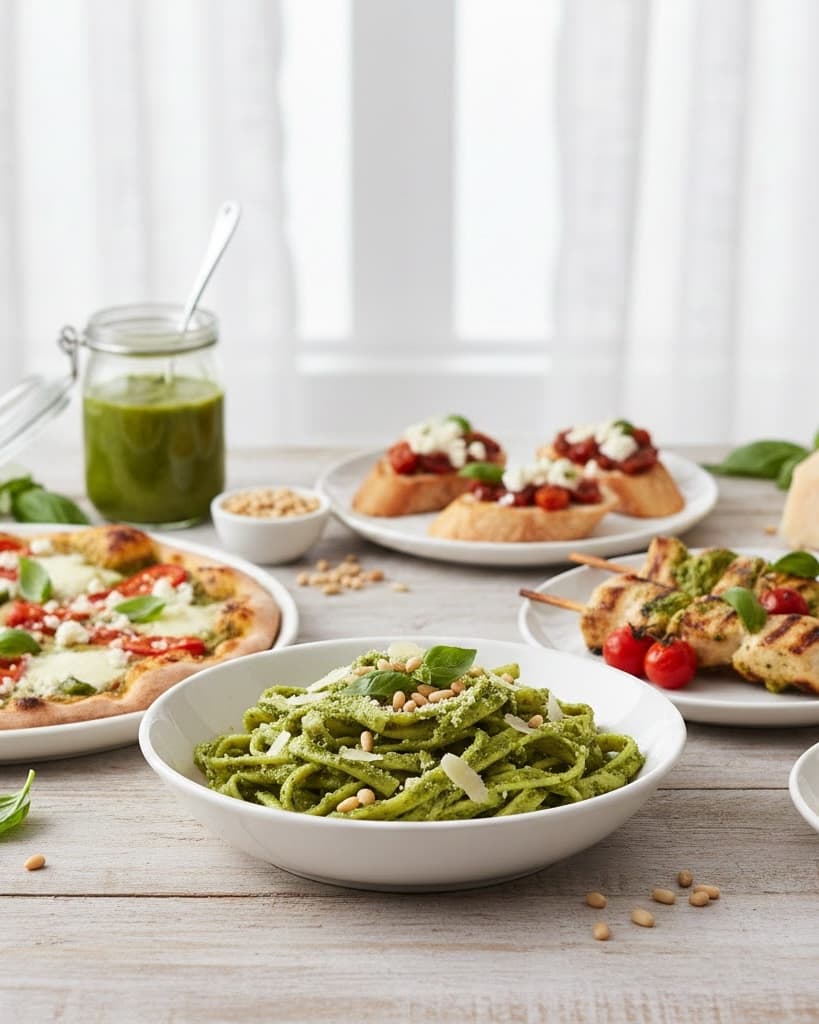
The pesto category is anything but stuck in the past. There's new product offerings, pack ideas, tech solutions, and brand changes are breaking the rules. Let's take a walk through some of the main plays.
Flavor Extensions & Hybrid Blends
Traditional basil still dominates. But brands are diversifying. We're now used to seeing kale-pistachio, spinach-pumpkin seed, beetroot pesto, and herb blends that feature microgreens or regional greens. Why? To differentiate on the shelf and resonate with regional flavor.
Barilla, for instance, launched three new lines of pesto (Creamy Tomato, Sweet & Spicy Pepper, and Vegan) in 2024 and those rolls scaled up in 2025, growing further to 2026. Those options represent their wager on flavor variety. They also point out that brands think customers want more than "just basil."
Vegan / Dairy-Free Lines
One of the more overt changes: eliminating cheese. Brands are turning to nut blends, soaked nuts, seeds, or nutritional yeast to create creaminess. Barilla's vegan pesto (introduced towards the end of 2024) is a prime example. The ingredients are said to include 35.6% basil, olive oil, and cashews instead of cheese. That move opens pesto up to allergen-sensitive and plant-based markets. It further enhances appeal in markets where dairy is costly or less desirable.
Sauces That Don't Need to Be Heated
Another breakthrough: pesto that you don't need to heat. Ready-to-use jars. "Just open and stir" type. Barilla sells its new offerings as "no heating necessary," which suits busy meals and foodservice kitchens equally well. That eliminates a hurdle: less preparation, fewer steps. For many home cooks and chefs, that's a lot.
Shelf-Stable, High-Barrier Packaging
To preserve pesto for longer (no adding preservatives) companies are investing in improved barrier packaging. Consider high-barrier PET films, aseptic filling, UV-blocking jars, and nitrogen flushing.
The broader food & beverage market is driving large in this direction. For instance, packaging news and Food Institute reports speak of innovations preserving flavor, blocking light and oxygen, and improving shelf life while minimizing additives.
Sustainability & Ethical Sourcing
Customers increasingly inquire: "Where was the basil sourced? The nuts? Was it a regenerative farm?" Today, brands increasingly emphasize traceability, organic certification, or the use of renewable energy in production.
Packaging pressure also closes the loop: sustainable options need to drive the product, not simply appear green. The wider sustainable packaging market, for instance, is set to grow from USD 373.8 billion in 2025 to USD 402.4 billion in 2026. Most large companies are driving new goals, some switching because they can't meet old ones. That means increasing pressure for the entire supply chain.
Torg's Top Picks of Pesto Suppliers
1. COSTA LIGURE SRL – Italy
Since 1988, Costa Ligure has stayed close to its roots while adapting to how pesto is used today. Careful basil selection, controlled oil blends, and attention to texture help maintain a familiar taste that performs reliably, whether used at home or across high-volume kitchen settings.
2. LA BELLA CUCINA, LLC – USA
Bella Cucina makes ordinary food into a moment. US-based, they specialize in homemade gourmet, all presented in sophisticated design and genuine ingredients. Their traditional pestos and antipasti combine Italian tradition with modern sensibility. It's the company you grab when you want food that's crafted, not manufactured.
3. OMG – India
OMG Organic Microgreens builds its pestos straight from its own fields in India. By growing pesticide-free microgreens and processing them fresh, the brand keeps flavors sharp and nutrition intact. Small-batch production stays hands-on, while local growing networks support steady supply, traceability, and everyday use without overstatement.
Conclusion
The pesto market moves forward in a steady, familiar way. It benefits from routine use, flexible applications, and flavors people already know how to work with. Its growth may not come from sudden shifts, but from small upgrades in quality, sourcing, and format. As pesto shows up across retail shelves and foodservice menus, expectations stay clear: good texture, reliable taste, and consistent supply. Over time, premium lines, regional recipes, and cleaner ingredient choices add depth without confusing the category. For those tracking this market, pesto remains predictable, adaptable, and quietly resilient as eating habits continue to settle into repeat patterns.
Request a Bulk Order Quote
Simple ordering, transparent pricing, delivered straight to your door