



Instant Noodles Market: Consumption & Innovation
Explore instant noodles market growth, evolving flavors, and innovations shaping global demand—plus key insights on sourcing, trends, and future opportunities.
200+ buyers trust Torg for sourcing







Some products fade when trends shift. Instant noodles somehow do the opposite. Demand keeps rising, and not only because they’re cheap or fast to prepare. Buyers are asking about production lead times, carton efficiency, and MOQ flexibility. Suppliers are experimenting with better packaging and flavour innovation to win new contracts. The product hasn’t changed at its core, but the business around it has. Instant noodles are quietly becoming a high-velocity item in distribution portfolios. Actually, the market is way more innovative than before. For distributors and wholesalers, this category isn’t slowing down. It’s becoming a strategic product with high turnover, flexible pricing, and evolving consumer loyalty all in one.
Global Instant Noodles Market: Size, Segmentation & Trade Dynamics
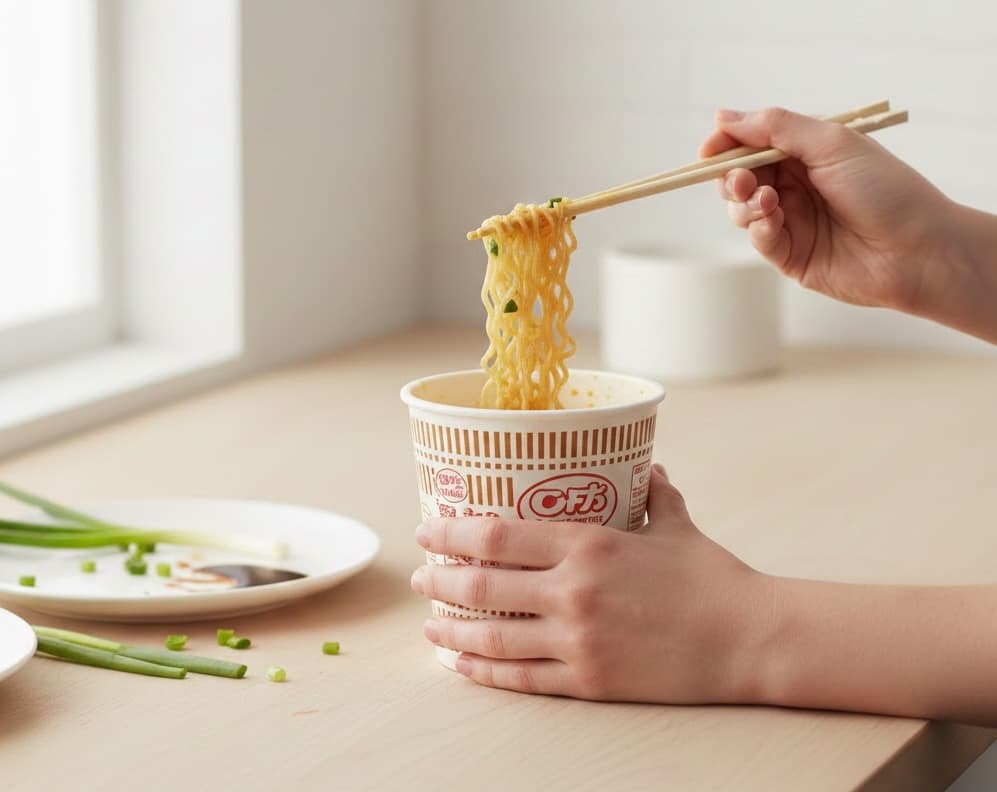
The global instant noodles market isn’t slowing down. Numbers keep climbing. The value of the instant noodles market stands approximately at around USD 64.65 Billion in 2025 and is expected to reach approximately USD 68.40 billion by 2026 through USD 113.61 billion by 2035, growing at a CAGR of around 5.8%.
Another projection from a different research places the market at USD 86.78 billion by 2030, with a CAGR of ~5.94%. Slightly different figures, but still the same trend which is stable growth.
For those involved in the supply chain, this only means something important: there is surely a consistent demand. It may not appear explosive, but it's very reliable. And reliability in FMCG often translates to repeat orders and predictable inventory movement.
Market Segmentation
Segmentation gives a clearer view of the opportunities.
By product type:
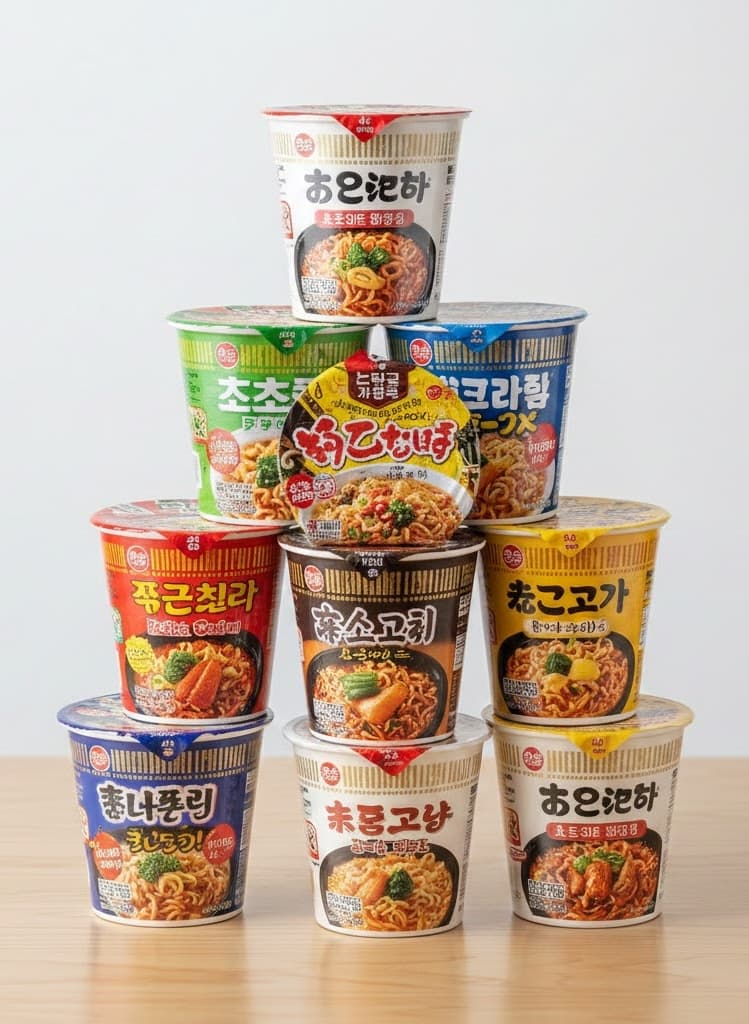
Packet and cup noodles still lead, yet premium and value-added formats are growing—like fortified noodles, protein options, or flavour-forward SKUs.
By distribution channel:
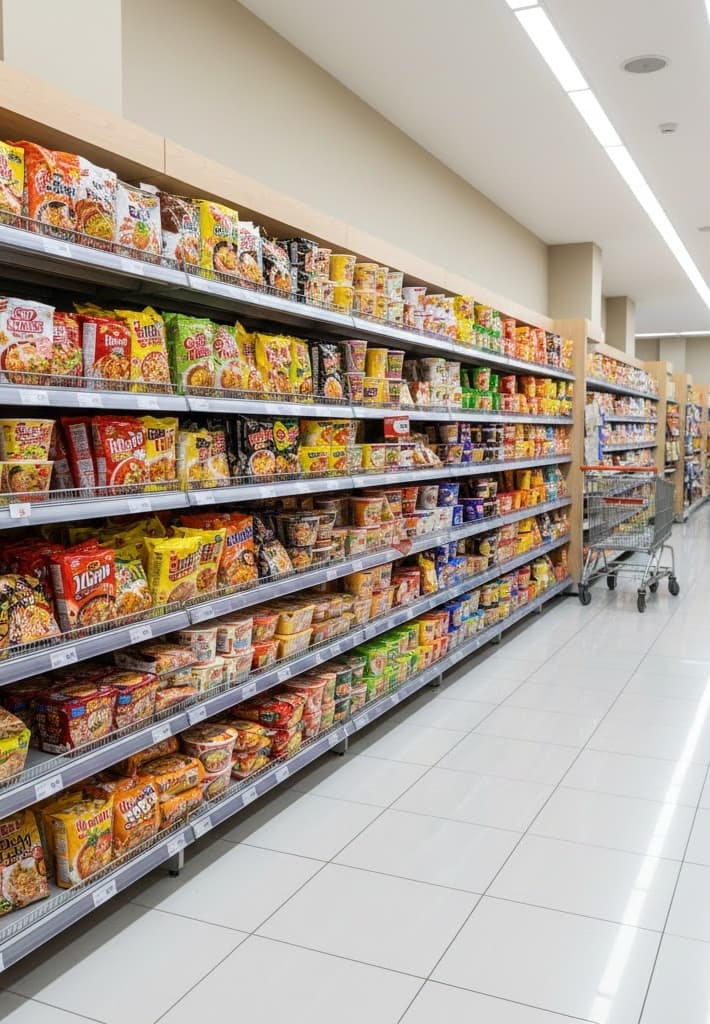
Supermarkets and hypermarkets remain strong, but online ordering is picking up speed in Asia-Pacific. Actually, e-commerce is becoming a serious sourcing and bulk-buy stream.
By geography:
Asia-Pacific is still the giant both in terms of volume and value. Data suggests that the region could hold a share of ~75.46% with an estimated CAGR of 11.27% (from 2025 though 2030).
By raw material / format:
There’s movement toward whole-grain, oat-based, and multicereal noodle options—basically expanding beyond wheat.
Regional Insights: Producers, Exporters & Importers
Asia-Pacific (APAC)
APAC still does the heavy lifting when it comes to your good ol' instant noodles or commonly known as "ramen". China/Hong Kong tops global consumption by servings, followed by Indonesia, India, Vietnam, Japan, South Korea, Thailand, and the Philippines.
The latest demand table from the World Instant Noodles Association (WINA) shows the demand rankings by country. And numbers don’t lie as China/HK has an estimate of 43.8 billion servings in 2024; Indonesia at 14.7b; India 8.3b; Vietnam 8.1b; Japan 5.9b; Philippines 4.5b; Korea 4.1b; Thailand 4.1b; Nigeria shows up in the global top-10 too.
- China
China is still the demand anchor in servings. For sourcing, it’s a mix of giant domestic makers and global brands with China-focused ranges. Pricing pressure is a thing, but so is premiumisation—especially in urban channels. For a buyer, that means you can actually run a two-tier strategy (value + premium cup/bowl) and still rotate fast. WINA demand confirms the scale. - Indonesia
Indonesia isn’t only a consumption hotspot; it’s a serious export base. Indofood CBP’s 1H-2025 filings and industry coverage show stable top-line and stronger profitability—signal for reliable supply, steady contract fulfilment, and ongoing international focus for Indomie. If you’re negotiating, ask about carton efficiency and regional flavour packs; they’ve kept formats nimble. - India
India keeps climbing the demand tables, which is why importers and modern trade buyers there keep nudging suppliers for localised flavours and better pack-price architecture. WINA puts 2024 consumption at 8.3b servings—evidently steady. If you’re exporting into India, watch labelling and sodium claims; retailers are somewhat touchy on “better-for-you” language. - Vietnam
Vietnam’s per-capita consumption is eye-opening (high frequency shoppers). For cross-border traders moving Vietnam-origin or Vietnam-style SKUs, the rotation can be fast in Asian diaspora channels. Again, WINA is your best quick source for recent totals. - Japan
Japan remains a premium innovation hub (cups dominate value share). Government-backed market intel pegs instant noodle cups at US$4.3b in 2023—nearly half of category sales—so if you’re importing, you can push higher-margin cups. Also noteworthy: the majors are testing protein-fortified and “better-for-you” lines for export markets. - South Korea
K-ramen exports continue to punch above their weight on brand heat and diaspora demand. Government data show “K-Food Plus” exports up 7.9% YoY in Q1-2025; ramen is a key hero product in that basket. Trade press and national media also report record ramen export values in 2024–2025. If you’re a North America or EU buyer, K-ramen still converts—just plan for periodic spikes on limited editions. - Philippines
Consumption stays resilient (WINA shows ~4.5b servings in 2024). For importers, the sweet spot has been value multi-packs and regionally familiar flavour sets. If you’re a wholesaler, you can actually test premium bowls in urban chains while keeping the bulk of volume in classic price points.
United States & Europe
These are import-heavy, variety-driven markets. U.S. retail favors Korean, Japanese, and Southeast Asian styles; EU is somewhat stricter on nutrition and claims but still leans into novelty. 2025 container-rate softness somewhat helps landed costs, but Red Sea insurance spikes complicate the math. For trade data granularity (HS 1902 pasta lines), lean on UN Comtrade when you need exact lane-by-lane history.
Africa (Nigeria focus)
Nigeria keeps inching up global rankings by servings—an opportunity if you can solve price points and manage inland logistics. Consider hub-and-spoke distribution from coastal warehouses plus protective secondary packaging for last-mile. WINA’s top-10 placement underscores demand potential.
Supply Chain & Trade Insights
The recent years have been a two-track story: freight rates eased for months (helpful), but maritime risks in the Red Sea and episodic canal constraints threw curveballs. Here are some recent supply chain and trade patterns you should look out for:
Container freight rates & bargaining power
- Analysts flagged falling spot rates into Q4, which shifted leverage toward shippers in many contracts. Then, late-October/early-November saw a small rebound from very low levels. That’s still buyer-friendly compared to the 2021–2022 peak.
Red Sea risk—insurance, rerouting, lead times
- The Red Sea corridor kept whipsawing the market in 2025. Insurance costs jumped after deadly attacks in July, and rerouting around the Cape added time and bunker costs—like, obviously. Some weeks were calmer; then risk flared again. If you’re planning APAC→EU lanes for noodles, build slack into ETAs and consider split-lanes or near-market co-packing.
Panama Canal—capacity and toll dynamics
- After the 2023–2024 drought, 2025 traffic recovered but stayed below full slot allocation for parts of the year; some shippers still chose alternate routes due to tolls and timing. For Asia-to-US East Coast noodles, keep a plan B, especially during peak replenishment cycles.
Tariffs and trade policy—watch the U.S. front
- Macro trade policy shifts matter for packaging inputs, seasonings, and finished goods. Drewry projects a 1% decline in global container port volume tied to U.S. tariff moves—translation: routing and supplier diversification will keep evolving. Indonesia even floated larger U.S. wheat purchases (noodles input) amid bilateral talks—relevant for Indonesian manufacturers’ flour costs and U.S. grain traders.
Key inputs—wheat, oils, and packaging
- Wheat: OECD-FAO notes prices eased into early 2025 versus 2024 highs, though volatility persists by origin. Good news for cost bids, but don’t assume a straight line.
- Vegetable oils: FAO shows a firm vegetable oils index through parts of 2025; palm oil saw periods of strength on biodiesel pull and supply constraints, though monthly prints moved around. For Asia-based manufacturers, this swings fryer and seasoning costs.
Trading Economics
- Packaging: Aluminum-based lids and laminated films remain sensitive to metal price cycles. The aluminum foil market outlook shows steady growth and cost pass-through potential—basically, build a buffer in your landed-cost models.
Why Do People Keep Reaching for Instant Noodles?
Some categories fade when trends shift. Instant noodles don’t. Demand keeps climbing, and buyers notice that reorder cycles are getting shorter. People keep treating noodles as a dependable staple while exploring new flavours or formats. Basically, the product fits into many eating habits without forcing lifestyle changes. Quick meal? Late shift? Road trip? Somehow, noodles just work.
Convenience Meets Value
Instant noodles hit a sweet spot. They’re cheap enough to buy without thinking twice, yet satisfying enough to replace a full meal. People like that they can eat them anywhere—office desk, dorm room, wherever. The value isn’t only price anymore. It’s the “just add water and go” simplicity, the portion control, and packaging that saves time.
Health and Better-For-You Alternatives
The old narrative of instant noodles being unhealthy is shifting. Suppliers now push lower-sodium options, whole-grain bases, and fortified SKUs. Consumers are actually reading labels. Some prefer protein-boosted bowls or rice-based noodles for dietary reasons. Knowledge Sourcing reports growth from nutrient-fortified noodles, showing people aren’t just buying cheap carbs—they’re choosing a smarter option.
Flavour Diversity & Regional Localisation
Flavour rotation keeps the category exciting. New variants appear fast: Korean spicy, Indonesian fried-style, Japanese broth-style, etc. openPR notes the rise of clean labels and functional ingredients. Importers and distributors use this to test novelty drops, limited editions or seasonal flavours. Variety gives you leverage: different SKUs for different markets without massive inventory risk.
Urbanisation, Single-Person Households, & Eating Patterns
Cities grow. People live alone. Schedules get messy. Instant noodles somehow fit into that rhythm. They don’t require planning, ingredients, or dishes. Perfect for late nights or “I honestly don’t want to cook” moments. Retailers who stock single-serve cups and multi-packs basically cover every buying motivation—from quick meals to pantry stocking.
Digital Channels & Direct-to-Consumer
E-commerce today changes noodle buying from impulse to discovery. Online stores bundle sampler kits, premium boxes, and regional flavours that may not reach physical supermarkets. Consumers click, try new SKUs, and share reviews. For wholesalers and distributors, digital demand means smaller MOQs, faster rotation, and more accurate demand forecasting based on real-time sales.
Where Instant Noodles Are Headed Next
The category keeps evolving faster than most buyers expect. New product lines appear, older SKUs get upgraded, and sourcing strategies shift with market demand. Basically, brands are no longer selling “just noodles.” They’re building experiences—premium flavours, smarter packaging, faster lead times. If you want to stay ahead, this is where the real movement happens.
Premium Formats Are No Longer Optional
Premium cups, thicker noodles, richer broths. Somehow, instant noodles are moving closer to restaurant quality. Limited drops—like pickle-inspired flavours mentioned in Food & Wine—sell out fast. Buyers see this as an easy margin upgrade. Consumers will pay more when the experience feels elevated. Basically, premium equals faster turnover and better shelf impact.
Social Content Drives Real Demand
Short videos on TikTok and YouTube keep pushing “ramen hacks,” leading to impulse purchases. The Guardian noted how noodles are being repositioned by creators instead of traditional ads. It’s wild. A flavour goes viral, and suddenly distributors are scrambling to restock. Brands that lean into content move inventory faster. Opportunity? Ride the hype intentionally.
Health-Forward SKUs Are Gaining Shelf Power
Whole-grain bases, lower sodium, oat or rice noodles—people notice. Some buyers thought the demand was a fad. Evidently, it’s not. These “better-for-you” SKUs attract new shoppers without losing existing ones. For retailers, the play is simple: keep value packs, then add a small percentage of fortified or protein-boosted variants to boost your average basket size.
Packaging + Sustainability = Negotiation Leverage
More suppliers now offer recyclable cups and regionally sourced packaging. It’s not about chasing perfection—it’s about reducing shipping costs and meeting retailer requirements. Sustainable packaging becomes a selling point in tenders. Buyers benefit because lighter packaging means cheaper freight. Actually, smoother negotiations happen when you show that eco packaging also improves carton efficiency.
Multi-Site Production Cuts Lead Times
A growing number of manufacturers are building facilities closer to export markets. Shorter shipping lanes mean fresher inventory and fewer stockouts. If you’re a wholesaler, this matters. You can negotiate shorter MOQs when factories operate in multiple regions. Basically, the closer the plant, the faster the replenishment cycle, which keeps your forecast tight and predictable.
Emerging Markets = Fresh Volume
Africa, Latin America and Southeast Asia continue to grow. When disposable income rises, noodles often become a “first convenience food.” With e-commerce expanding, people buy in multipacks or subscription-style bundles. For importers, the opportunity is straightforward: secure flavour variants tailored for regional taste, then launch combo SKUs to encourage repeat buying.
Torg’s Top Picks of Instant Noodles Suppliers
1. Indofood CBP Sukses Makmur — Indonesia
Indofood is basically the giant everyone knows because of Indomie. Their scale gives buyers consistent supply and shorter lead times for export. They offer huge flavour variety, including regional variants that sell fast in multicultural cities. Production is efficient, pricing stays competitive, and somehow they manage to balance volume with product quality—evidently why distributors keep coming back.
2. Ayoni Foods Pvt. Ltd. (Sloopy Noodles) — India
Ayoni Foods focuses on flavour-first instant noodles—masala, fusion, and regional profiles. The pricing works well for value-driven retail, yet the taste feels premium. They also offer condiments and vermicelli, so you can build full-category bundles. If you’re looking for flexible MOQ and quick communication, they’re easy to deal with. Basically, reliable for variety without complexity.
3. King David International Company Limited — China
King David specialises in organic and air-dried noodles—great for buyers who want a “cleaner label” product. They combine instant convenience with healthier positioning, plus they have sauces and soups for cross-selling. Actually, their strength is customisation: flavours, formats, and even packaging tweaks. For wholesalers who need differentiation, this supplier gives you something not everyone else has.
Conclusion
Instant noodles remain a category that refuses to slow down. The demand is stable and somehow still climbing, which gives buyers and distributors a predictable yet flexible product to work with. Growth now comes from smarter sourcing, as in mixing mass-market SKUs with premium flavours, healthier variants and regional twists. Basically, you win when you offer choice without overcomplicating your inventory. Pay attention to carton efficiency, lead times and supplier flexibility because those small details decide your margins. Digital channels open new opportunities, especially when flavours rotate fast. If you plan ahead and stay open to innovation, instant noodles shift from “just a commodity” into a high-velocity category that keeps delivering repeat orders.
Request a Bulk Order Quote
Simple ordering, transparent pricing, delivered straight to your door