



Green Procurement Guide: Policy, Process & Best Practices
A practical guide to green procurement, covering policy, process, sourcing, and best practices to build ethical, low-impact, and resilient supply chains.

200+ Käufer vertrauen Torg beim Sourcing







Green procurement has shifted from being a little eco-effort to a very serious business priority. For companies in all sorts of sectors — manufacturing, retail, construction, healthcare, and even the public sector — procurement is now a pretty big deal as a way to make a real difference to the environment and become more resilient in the long term. Every single purchasing decision sends out a signal to the market. It helps decide how goods get made, how resources get pulled in, and how to deal with waste. This guide has been put together for anyone who wants to take a closer look — procurement leaders, operations managers, sustainability teams, and business owners all need to know what green sourcing is really about, why it matters, and how to put policies and processes in place, along with some real-world best practices that actually work.
What Is Green Procurement?
Green procurement refers to purchasing of products and services that not only help in saving money but are also environment-friendly. It is a concept of responsible sourcing which is definitely more than just looking for the lowest price or fastest delivery options. You have to think about the production processes, source of materials, and the environmental impact of the suppliers on the planet.
In real life, this literally means selecting suppliers whose operations lead to the least air pollution, have controlled resource consumption, and use of sustainable materials. And the point is not only being nice to the earth since it is also about providing decent working conditions and making products that people can reuse or recycle without any problems.
If you do your purchasing decisions with green procurement in mind, you have sustainability as your leverage. So, it simply means that attention is being given to factory operations, methods of waste packaging, and the volume of carbon released through transportation.
The difference is that with the old-fashioned way of sourcing, you simply went for the cheapest option and never cared about anything else. Green procurement, simultaneously, can really become a long-term value creation strategy through which your company gains the qualities of resilience, transparency, and trustworthiness in the eyes of people. Besides, it gradually causes suppliers to innovate in cleaner, more creative ways of sourcing.
Why Green Procurement Is Important
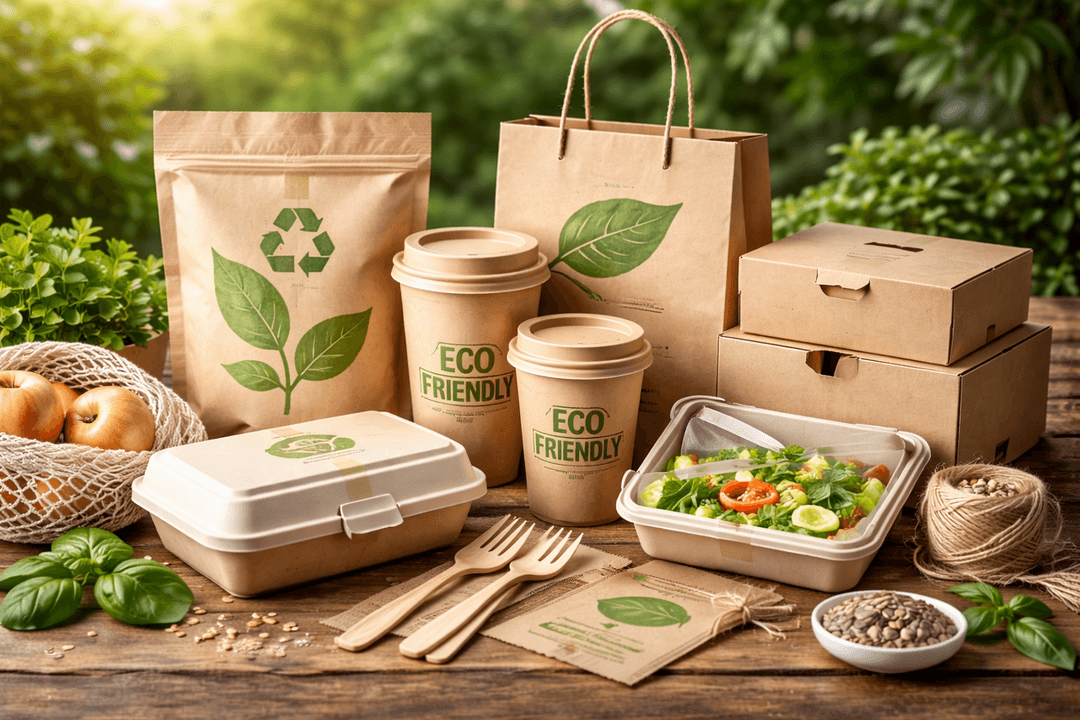
Green purchasing is all about giving organisations a fresh way of thinking about how they do things from start to finish — from planning and buying right through to getting the job done. When all these factors start to line up with what an organisation really wants to achieve in the long run, then you get a business that's on a more steady course, with stronger partnerships and a clearer idea of what it's all about on an end-to-end perspective.
Environmental Impact
Choose your purchases with care and they can make all the difference to your carbon footprint reduction by reducing emissions and cutting back on waste. When you make choices that are greener, suppliers are more likely to follow your lead, you get a more streamlined green logistics system, and a guarantee of looking after the planet for generations to come.
Risk Management
Having strict standards for your suppliers helps you source responsibly, which means you avoid getting into trouble with regulations, you stay in compliance with the law, and you don't damage your reputation. Being transparent with your partners really helps – it makes things clearer, makes complying with rules easier, and gives you a stronger sense of responsibility towards all the people you're working with. As a result, you get a clearer idea of what's going on, you can respond quicker to disruptions, and you can start to plan for the future a lot more easily.
Cost Stability
Predictability across product lifecycles is one of the benefits of green procurement. Durable materials, efficient energy use, and less waste disposal will bring down the costs after a certain period of time. Although there is a likelihood that upfront prices will be different, stable maintenance and operating costs will make budgeting easier, helping those in charge of the finances to make accurate forecasts and effectively allocate resources without the need to make frequent emergency budget cuts or being under unexpected financial stress.
Brand Reputation
When you make a public commitment to being environmentally-friendly, you're really showing off the advantages of green procurement. This shines a light on just how much of a difference it makes to do business in an eco-conscious way - and in turn helps shape the public's view of your brand. People love seeing companies that genuinely make an effort to be responsible. Investors and partners are also more likely to take notice too. Eventually, this kind of reputation can give you an edge in the market and help you build stronger relationships that ultimately fuel long-term business growth.
Long-Term Resilience
A diversified and eco-friendly supply chain is more versatile during disruption. Balanced sourcing limits dependency, spread risks, and it supports the continuity of operations. Sustainable supplier selection and supplier networks can make changes very quickly when the conditions shift, so they can let the production schedules, delivery times, and customer commitments stay intact even if global uncertainty, changes in regulation, and challenges in logistics are still evolving.
Core Principles of Green Procurement
Green procurement only really takes off when you start thinking of it as a way of life rather than a set of rules. What guides your buying decisions day in and day out are these core principles. They help teams strike a delicate balance between looking out for the environment, getting along with suppliers, and snagging some long-term savings that don't slow down operations or compromise standards.
Lifecycle Thinking
Rather than emphasizing the initial cost only, buyers should consider the usage performance of the product in the long run. An analysis of energy consumption, product life, and waste handling not only leads to the right choices of the green product certifications but also lessens the carbon footprint without interrupting the work efficiency or the availability of the supplier.
Supplier Accountability
You'd want you procurement teams to be tough but fair with the suppliers; to set clear expectations and work closely with them and to make sure they meet them. This approach helps to develop some real confidence in your suppliers and strengthens responsible sourcing — and it will get you a bit further in the long run by building real, trustworthy partnerships, rather than just going through the motions of ticking a few boxes to say you're complying with all the right rules.
Continuous Improvement
Since markets, regulations, and technologies change, procurement standards must change accordingly. Companies can through continual assessment of suppliers, products, and information raise their green procurement practices, shift their green sourcing strategies, and keep their eco friendly efforts going in both relevance and measurability.
Green Procurement Policies and Frameworks
Green procurement policies and frameworks take the goals of sustainability and make them a reality in what your team actually procures on a daily basis all the time. They help get everyone moving in the same direction at the same time, reduce all the confusing bits, and bring together the goal of being eco-friendly with the everyday acts of sourcing things, especially for places with a lot of different locations, many suppliers, and a whole host of regulatory environments all around the world.
International Standards and Guidelines
Global standards give everyone a shared idea of what environmental procurement is all about. By actually using the internationally recognized guidelines, organizations are able to get more credibility, make sure audits are consistent, and put their green procurement framework in terms that lots of other people can agree with and even follow.
Government Green Procurement Standards
Government-led procurement policies also play an important role in mobilizing markets through the establishment of more sustainable sourcing norms. Regulations that mandate the purchase of green products, energy efficiency thresholds, and reliance on reputable ecolabels are some of the means through which public standards exert a significant impact on suppliers. Additionally, they indirectly influence the private sector sourcing decisions over time in various industries worldwide.
Corporate Green Procurement Standards
Among organizations, internal standards are a way to transform the company's vision into clear buying rules. The green procurement policy, if well-defined, indicates not only the preferred types of materials but also the reporting and sustainable supplier selection duties, providing procurement teams with useful guidance and holding vendors responsible through measurable performance expectations and transparency.
Green Procurement Examples in Practice
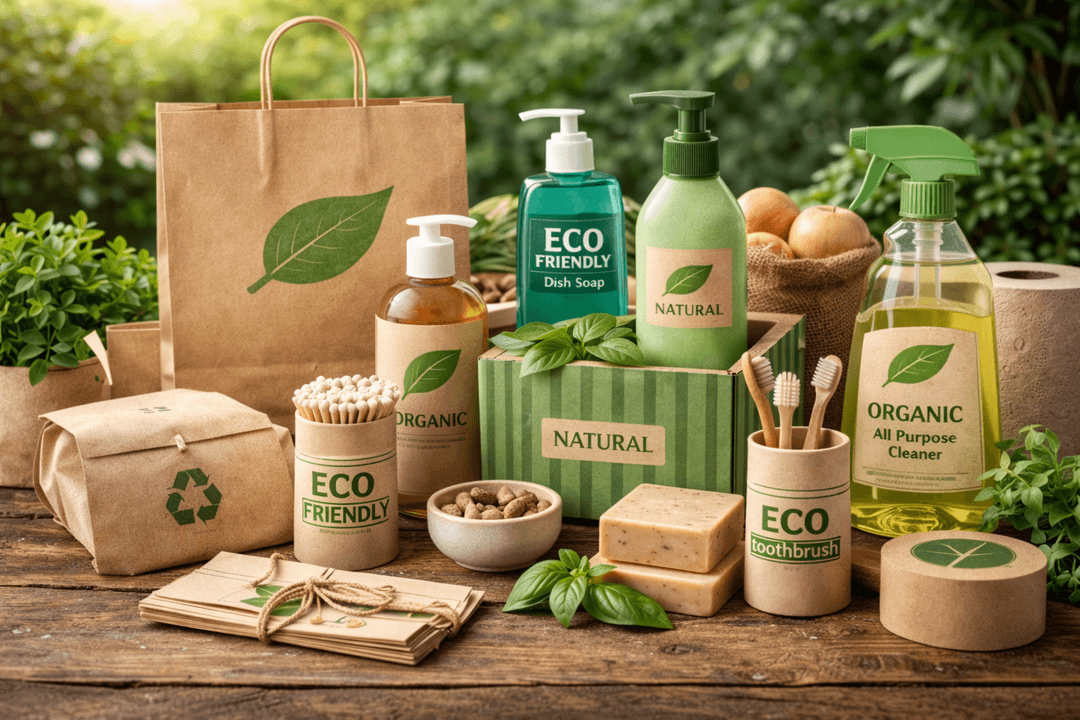
Some green procurement examples, when examined, will show you how your purchasing decisions can significantly influence the way your company operates, the people you collaborate with, and the lasting effect you are having. From one industry to the next, companies are actually getting to work with structured green sourcing strategies to cut back on waste, get better at what they do, & build green supply chains that last without compromising scale and performance.
Manufacturing and Industrial Sourcing
In manufacturing, green procurement is all about following the flow of materials and green energy procurement through production. Grupo Bimbo shows us a good example of this — they've actually got a whole system in place for getting sustainability right, from the things they source to the way they go about their day to day work. Also, the way they package their products to reduce emissions and increase efficiency across their global baking business is what sets them apart from their competitors.
Green procurement in manufacturing and industrial sourcing:
- Prioritises using sustainable materials - the less we rely on new or dodgy materials the better
- Encourages cleaner energy use in production to support carbon footprint reduction
- Applies environmental procurement standards to hold suppliers accountable
- Builds long-term resilience by lowering waste, regulatory risk, and supply disruptions
Retail and Consumer Goods
Retailers like Unilever shape upstream behavior by setting clear expectations for what they want to see. The company's Sustainable Living Plan helps responsible sourcing become a regular part of how they do business, which has a couple of big impacts. The first is that they're able to influence the kind of methods farmers use to grow crops, which is a win for the environment. The other is that they can now see pretty clearly what's going on all the way along their supply chain.
In retail and consumer goods, green procurement:
- Drives suppliers to provide certified, fully traceable raw materials by applying green purchasing criteria
- Measures and manages packaging waste to minimize it, and at the same time, makes the packaging easily recyclable and adds to the efficient use of materials
- Depends on green product certifications to back up the claims and prevent greenwashing
- Creates brand trust, ensures readiness for regulatory changes, and stabilizes costs thus, in the long run, it adds value
Construction and Infrastructure
When it comes to construction, the way people are making purchasing decisions is changing. Now more than ever, it seems like all the big players in the space are starting to use circular economy principles in their purchasing. A good example is Nestlé and their packaging commitments. By making these kinds of commitments, a big buyer like Nestlé can really push the needle on recycling and reuse in the supply chain — not just for food and beverage, but for all sorts of infrastructure and logistics too.
Overall, green procurement in this industry:
- Integrates recycled and low-impact materials into large-scale sourcing decisions
- Designs procurement requirements with reuse and recovery in mind
- Reduces environmental strain through smarter material planning and green logistics
- Creates durable assets with lower lifecycle costs and stronger sustainability outcomes
Green Sourcing Process: Step-by-Step
Breaking down the decision-making into clear, manageable stages makes it a lot more practical and gets organisations actually applying sustainable purchasing on a regular basis. It helps them line up their suppliers with their environmental goals and builds a process that they can keep coming back to in order to keep things running efficiently and accountably within the procurement teams.
Assessing the Current Impact of Your Procurement
The starting point of the green procurement process is getting a clear picture. Teams examine data on spending, supplier behaviors, and the biggest sources of emissions to figure out how the present purchases contribute to a green supply chain. This can show the areas where carbon footprint reduction and environmentally friendly procurement will be the most successful.
Define Your Sustainability Criteria
Once priorities and some gaps have been identified, teams turn their objectives into specific sourcing rules. Clear criteria help eco-friendly purchasing by maneuvering it towards less harmful materials, saving energy, and waste reduction while, at the same time, giving suppliers clear guidelines and maintaining consistent decisions on environmental procurement across different regions, categories, and sourcing cycles.
Integrate Sustainability into RFPs
Sustainability comes to life when it is included in the RFPs. Environmental criteria are placed next to price and quality, thus suppliers are prompted to provide data, certifications, and development plans that help green procurement practices and at the same time do not impede competitive sourcing processes.
Evaluate and Select Suppliers
At this phase, the selection of a certain sustainable supplier is a balancing act between performance and responsibility. The use of clear scoring models enables the teams to make a comparison between cost, reliability, and the environmental impact in a manner that is objective. This will ensure that the green sourcing strategies used will not be a compromise to the operational needs but rather a strengthening of the supply continuity.
Monitor Performance and Improve
Green sourcing is not a one-time activity that stops once the contract is signed. Frequent check-ups, recording, and inspecting can help to follow the progress, tighten the green procurement system, and find out new opportunities to improve the efficiency considering that the markets, regulations, and technologies are constantly changing.
Best Practices for Successful Green Procurement
Most green procurement best practices work well if the core values are reflected in the daily decisions taken. The actual implementation is a matter of having a clear leadership, working together, and basing decisions on facts that carry sustainability into the routine behaviour of purchasing rather than looking at it as a separate initiative or short-term campaign.
Leadership Commitment and Governance
Leadership and commitment to green procurement strategy result in raising the level of sustainability priorities among the different teams. Well-defined governance frameworks serve as the foundation of environmental procurement objectives that are tied to the overall business performance and that ensure accountability when policies are put into practice in terms of actual purchasing behavior.
Cross-Functional Collaboration
Green procurement is most effective when the teams are continuously communicating. If procurement is in sync with finance, operations, and sustainability, the organization can combine cost control with environmental results, thus making the eco friendly supply chain more robust without the creation of internal trade-offs or conflicting priorities.
Supplier Engagement and Partnership
Building solid supplier partnerships will greatly increase the effect of green procurement. Offering help to suppliers on sourcing sustainable materials, complying with ecolabels, and implementing circular economy procurement will not only allow them to keep on improving, but it will also gain their trust and ensure that the environmental goals are effectively and responsibly achieved along the supply chain.
Making Data-Driven Decisions
Having reliable data at your fingertips keeps green procurement grounded in and sensible. By tracking how suppliers are performing, the emissions they're producing, and the resources they're using, teams can make more informed decisions, refine them as they go along, and show the value of going green in some pretty tangible and measurable ways rather than just paying lip service to it.
Green Procurement Criteria and Metrics
Measurement acts as the backbone of green procurement. When companies set clear criteria and gather relevant data, they have the opportunity to turn their good intentions into concrete actions, back their choices in sourcing with proof, and keep getting better at striking the right balance between environmental performance and business value in their procurement activities.
Environmental Performance Indicators
Environmental metrics essentially measure the impact of sourcing decisions on emissions, resource consumption, and waste generation. Their monitoring is instrumental in facilitating reduction of carbon footprint and can serve as a decision-making tool for teams when selecting suppliers objectively. Besides, it is an effective way to ensure that all members are held accountable within the green supply chain.
Certification and Compliance Metrics
Certification-based metrics make it easier to evaluate by providing recognized standards. Keeping track of the conformity to green product certifications and ecolabels ensures consistency, lowers the complexity of audits, and strengthens trust in environmental procurement claims among both internal and external stakeholders.
Cost and Value Metrics
When organizations measure financial results together with environmental ones, green purchasing becomes more than just a concept. It becomes a way of working with tangible evidence and impact. Businesses that put numbers to the costs and savings have more convincing arguments for showing that sustainable procurement and lifecycle cost assessments not only create long-term viability but also help sourcing in a way that is socially responsible and raises value beyond just the price level.
Life‑Cycle Costing (LCC) formula (used in sustainable procurement evaluations):
Total Life‑Cycle Cost = Purchase Cost + Operating Costs + Maintenance Costs + End‑of‑Life Costs (recycling/disposal)
This approach is suggested by ISO as well as procurement guidance for the public sector. It involves capturing the total costs of an asset over its lifetime, instead of focusing only on the initial price.
Example: A public procurement guide presents how LCC aggregates the purchase price, energy consumption, maintenance and disposal to a total over the years in order to give a fair comparison of the options. Thus, the most sustainable and cost efficient alternative is exposed.
- Evaluates costs over the full product lifecycle rather than upfront price alone
- Shows trade‑offs between initial investment and long‑term operational savings
- Highlights risk exposure and supplier value through measurable economic and environmental data
- Supports transparent decisions that demonstrate the advantages of green procurement over time
Green Procurement and ESG Strategy
Green procurement and ESG strategy play different but still complementary roles in today's businesses. Green procurement is mainly concerned with the environment and therefore focuses on the supply chain having less carbon footprint, using responsibly sourced sustainable materials, etc. ESG strategy is a wider framework that combines environmental, social, and governance aspects into strategic planning, risk management, and disclosure.
What Each Does
- Green Procurement: Focuses on having environmentally-friendly products that are low-impact, energy efficient, and ethically sourced, thus directly cutting the environmental footprint.
- ESG Strategy: Provides governance, measurement and reporting tools for sustainability to track results, ensure responsibility and inform stakeholders about progress.
How They Work Together
Green procurement helps out by churning out real-life environmental data that can actually be used in your ESG reports and also helps guide purchasing decisions so that they're more in line with your bigger sustainability picture. ESG frameworks, on the other hand, give procurement some much-needed structure, by incorporating it into the company policies and long-term vision from the get-go.
Why It Actually Matters
- Risk Management: One of the ways this helps is by making sure you're not getting caught out by bad suppliers or changing regulations by sourcing responsibly.
- Performance Measurement: It lets you track how you're doing on your environmental and social goals.
- Value Creation: By linking your procurement decisions to the ESG outcomes, you get a better brand reputation, more efficient operations, and are more resilient.
Green Procurement Tools and Technologies
These days, digital tools are playing an increasingly important role in making sustainable purchasing a practical and doable thing for modern procurement operations. All these technologies are geared up to enable organisations to track how their suppliers are doing, make sure they're getting their materials responsibly, and figure out the most eco-friendly way of getting those materials to the end user — all of which adds up to a very transparent and efficient eco-friendly supply chain.
Supplier Management Platforms
Platforms that put all the supplier information in one place help to keep track of which suppliers are on the right track and which need a bit of prodding — all of which helps to support sustainable supplier selection, make environmentally-friendly purchasing decisions, and build trust across the supply chain.
Traceability & Transparency Tools
Traceability software — including blockchain — is the key to be able to see exactly where those raw materials are coming from and making sure that green sourcing strategies and product certifications are sticking all the way down the line. Also, that means you get less misinformation and more confidence that you're doing the right thing.
Analytics and Reporting Systems
When you're able to look at the data and see exactly what's going on with your procurement, you can see the impact it's having, work out where you can cut your carbon footprint, and make sure that there's some real value in all the money you're spending, which then helps to get you closer to achieving those green procurement goals and making sure you're aligned with your company's ESG targets.
Green vs. Sustainable Procurement
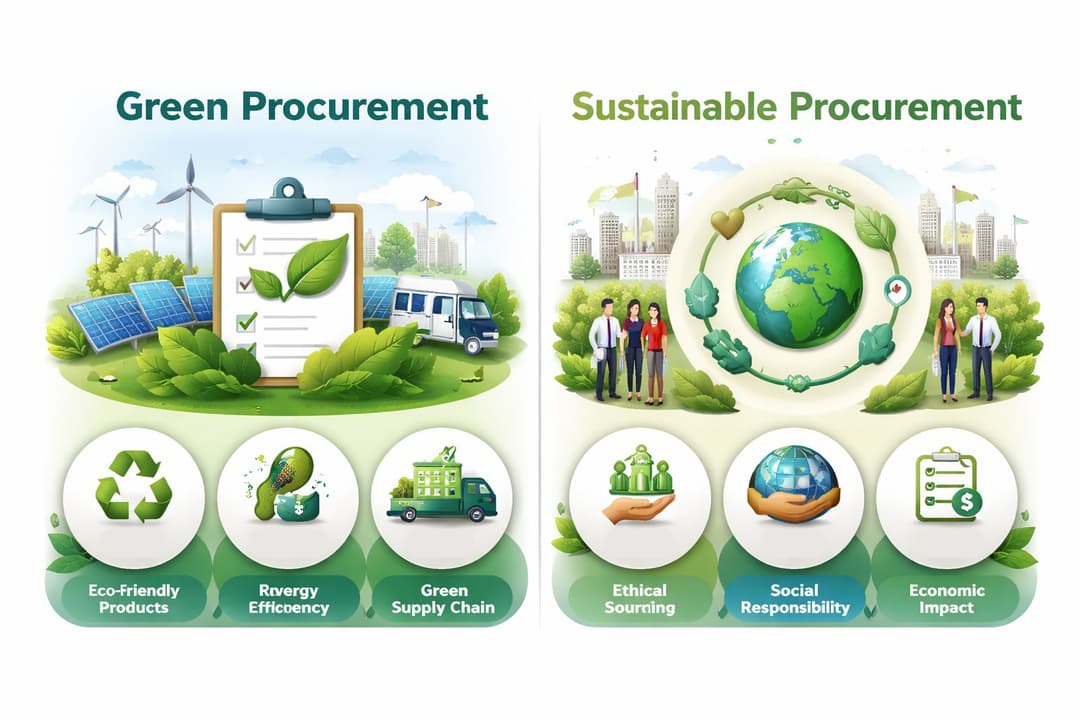
Green and Sustainable Procurement are terms that get thrown around but they actually have different focus areas. Green procurement, for the most part, is all about cutting down on the environmental impact of your purchasing decisions, so you end up with a reduction in the carbon footprint and running more eco-friendly supply chains. On the other hand, sustainable procurement is more of a "big picture" approach — covering the whole supply chain — and takes into account the environmental, social, and economic considerations.
Green Procurement
Green procurement is a kind of procurement that emphasizes lessening the negative impact on the environment, especially in the matter of making the sourcing decisions. It gives the highest priority to materials and products that are environmentally-friendly and energy efficient, as well as suppliers that have good environmental records. In short, the objective of green procurement is always to be in line with the most responsible way of sourcing, to bring down the amount of waste, and to enhance the environmental procurement practices and green logistics of a company.
Sustainable Procurement
Sustainable procurement is hugely more comprehensive by broadly integrating social, economic, and environmental issues as criteria of consideration. Besides green product certifications or carbon emissions, it considers suppliers' ethical procurement practices, labor standards, community impact, and the potential for long-term value creation for both the organization and society.
Key Differences Between Green and Sustainable Procurement
Feature | Green Procurement | Sustainable Procurement |
|---|---|---|
Focus | Environmental impact only | Environmental, social, and economic impact |
Scope | Eco-friendly supply chain and green sourcing | Broader ESG considerations, ethical and social impact |
Supplier Criteria | Green product certifications, emissions | Sustainability, ethics, labor, community, emissions |
Purpose | Carbon footprint reduction, responsible sourcing | Long-term value creation, ethical and environmental impact |
Metrics | Energy use, waste reduction, ecolabels | ESG performance, social compliance, lifecycle costs |
Green Procurement Policy Checklist
A well-defined policy gives a framework, responsibility, and uniformity to organizations that are willing to carry out green procurement in an efficient manner. This checklist assists the teams in making responsible sourcing decisions and, at the same time, fortifies the eco-friendly supply chain.
✅ Define environmental objectives
✅ Set supplier evaluation criteria
✅ Incorporate ESG alignment
✅ Embed sustainability in contracts
✅ Implement monitoring and reporting
✅ Support continuous improvement
✅ Train procurement teams
✅ Prioritize sustainable materials sourcing
✅ Require green product certifications
✅ Integrate circular economy procurement principles
✅ Optimize green logistics and supply chain
✅ Track lifecycle costs and environmental metrics
Conclusion
Green procurement isn't optional anymore — it's a business imperative that lets companies cut their environmental impact while making their supply chain far more resilient. By making responsible sourcing and picking suppliers that think sustainably, organisations can get the best of both worlds. In the coming years, the advances in analytics, tracking where things come from, and green tech for supply chains are going to make it far easier to measure how well companies are doing on the environmental front. Businesses that put circular economy procurement at the top of their list and choose products with green certifications, as well as making sure they're sourcing with their ESG goals in mind, will not only lessen their carbon footprint, but also end up gaining an edge over their competitors, improve their reputation, and just generally be more efficient.
FAQs
1. What is the main goal of green procurement?
Green procurement mainly targets reducing environmental impact by sourcing responsibly. It is about harmonizing green supply chain practices with operational efficiency, enabling organizations to meet their sustainability goals while at the same time reinforcing long-term resilience and ethical procurement practices.
2. Is green procurement more expensive?
The initial costs for green procurement might be higher for sustainable materials or energy efficient products. However, a series of long-term advantages such as lower operating costs, less waste, avoidance of compliance risks, and overall value creation in the supply chain, make it a cost effective choice in the end.
3. What certifications are important for green procurement?
Key certifications in this area would be ISO 14001, energy efficiency labels, and legitimate green product certifications. These are some of the standards that companies must align with to use environmentally friendly procurement operations. They also help to ensure the products coming from responsible sources and give measurable criteria for sustainable purchasing decisions.
Anfrage für Großbestellung
Einfache Bestellung, transparente Preise, direkt an Ihre Tür geliefert