



The Meat & Poultry Market Growth: Trends Reshaping Protein
The meat and poultry market is evolving, with strong protein demand, changing trade flows, and smarter sourcing driven by tech and global supply developments.
200+ buyers trust Torg for sourcing







Protein demand keeps climbing, and buyers can feel it. The meat market and poultry industry are shifting fast — driven by price sensitivity, trade policies, and a stronger push for traceable sourcing. In the retailers and distributors side, they now care not only about cost but also about reliability and supply chain stability. That only means the days of choosing a supplier based only on price are fading. Right now, the conversation has shifted. It’s no longer just about price. Companies are being measured on sustainability, how reliable their cold-chain execution is, and whether products stay available when demand spikes. If you're planning a big order and want a clear view before signing anything, keep reading. This guide breaks down what’s actually changing in the market, who’s pushing the growth, and the new ways sourcing is being handled.
What’s Happening in the Meat & Poultry Market
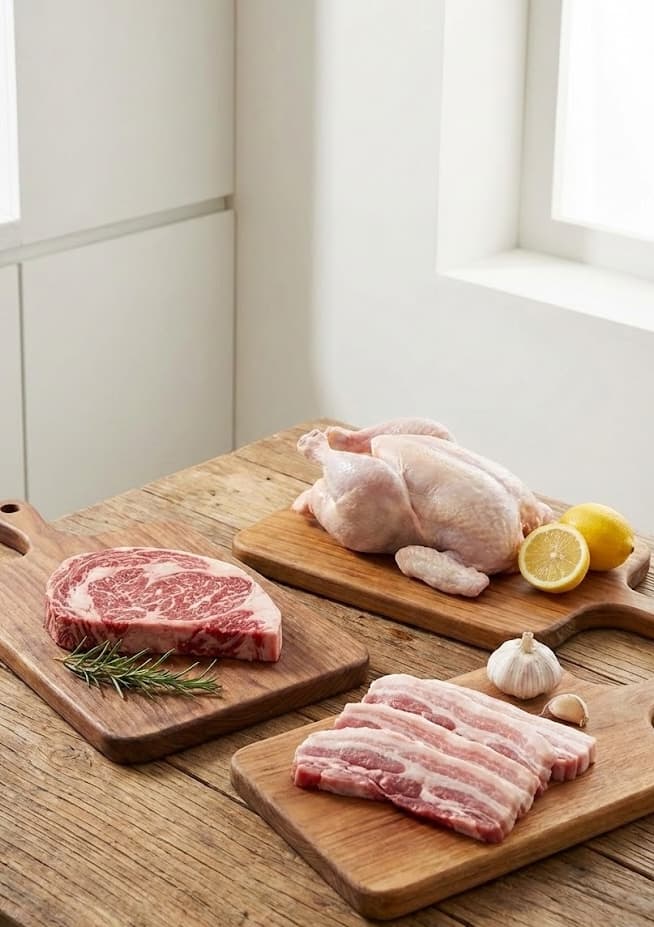
The worldwide demand for meat protein is still going up gradually. Even if an inflated price makes a household budget tight, consumers still decide to have beef, chicken, and pork as a part of their daily meals. According to USDA forecasts, the world will produce and consume more red meat and poultry in the short term as a result of the rise in the population and income in the developing countries.
- Poultry is the strongest mover of the market. Its relatively low production cost and ability to be used in different cuisines are the main factors that keep its consumption and exports going. The latest USDA outlook illustrates that although total meat exports increase until 2025, poultry exports will be on a continuous upward trend and are expected to hit their highest level ever in 2026. The availability of large exportable supplies from Brazil and China is the main support for this trend.
- While beef retains its status as a top-tier product, the limited availability is anticipated to put a downward trend on the price of the traded goods. The projection indicates that beef trade will be reduced in 2026 due to a lower output in major sources of supply like Oceania, Brazil, and the United States. Even with good demand, the shortage of supply impedes the increase of the volume.
- Pork’s trajectory depends on local capacity to produce. Following significant increases caused by a demand for products from China due to the ASF and production limitations in the EU, pork exports are similarly forecasted to fall in 2026.
So while global meat trade remains resilient, poultry clearly leads future expansion, making chicken a critical category for long-term growth strategies.
Market Segmentation
The meat and poultry market has categories that affect pricing, storage, logistics, and speed of inventory movement.
1. Fresh & Chilled Meat
This segment typically entails carcasses, primal cuts, sub-primals, and portioned cuts sold refrigerated rather than frozen. Also, this is usually the most preferred segment by retailers and restaurants when they require higher perceived quality and shorter lead times. Somehow, the demand tends to be stronger in mature markets like Europe, Singapore, and Japan, where customers associate "chilled" with freshness and superior taste.
But chilled products require tight cold-chain control, meaning better planning and predictable logistics. That's where inexperienced buyers usually get caught. One small delay at the port and the entire shipment becomes a financial loss.
2. Frozen Cuts & Carcasses
Frozen meat is basically the backbone of cross-border wholesale.
Importers choose frozen meat because:
- lead times are longer,
- pricing is more stable,
- and they can store inventory without panicking about expiration.
Large-volume buyers including supermarkets, trading companies, distributors like it because frozen products can be portioned or processed later. The flexibility helps maintain margins. Frozen poultry from Brazil, for example, dominates markets like the Middle East and Africa because shippers can load full containers without rushing.
3. Processed & Value-Added Products
This is where margins improve.
Value-added products include:
- marinated cuts
- seasoned portions
- breaded and coated products
- fully cooked or ready-to-cook meats
- deli meats, sausages, smoked meats
These products sell well because consumers want convenience. Grocers prefer them because:
- portions are consistent, reducing in-store prep
- profit margins are higher
- product waste is lower
Basically, this segment is growing because people are cooking more at home, but they still don’t want to spend 2 hours prepping dinner. If the SKU does half the work, it leaves the store faster.
4. Specialty & Premium Tiers
This is where brand positioning happens.
Specialty meat includes:
- free-range poultry
- organic meat with certification
- certified hormone-free or antibiotic-free beef
- grass-fed or grain-finished premium cuts
- traceable, farm-origin meat
These products attract higher-income households and health-focused consumers. They aren’t always bought for price. They’re bought for values like animal welfare, traceability, and perceived health benefits.
Interestingly, many mid-sized retailers are now creating private-label premium meat lines with QR codes that show farm origin. Traceability used to be optional. Now, it’s part of branding.
Regional Insights
Latin America
- Brazil continues to be a powerhouse within the global meat market, pretty much the country everyone looks toward in discussions of beef or poultry exports. Early in 2025, Brazil even reached an apex in beef and pork exports, while chicken shipments reached record levels as well.
- Brazil exported some 1.29 million tons of beef from January to June 2025, up 13%, and revenues reached approximately USD 6.56 billion.
- China continued to be Brazil's leading buyer, taking approximately 41% of Brazil's beef export revenue during early 2025.
- But then, there's the catch. Brazil now faces fresh tariff threats from the U.S. and other markets, adding risks to pricing and future trade volume.
- For buyers, this means something simple: if you need volume, Brazil is usually the safest bet. But keep an eye on trade policies — one new tariff can shift pricing overnight.
North America
- USDA data projects the export volume of pork at 7.02 billion pounds in 2026 which is at least 1% higher than the 6.97 billion pounds in 2025.
- For the beef side, the U.S. beef production is at about 26.7 billion pounds in 2025, although exports are expected to soften slightly. The 2026 forecast rises 335 million pounds to 25.725 billion, still 1% below 2025.
- For sourcing teams, U.S. suppliers are known for consistency and documentation. Expect high-quality processed beef, portioned meats, and premium cuts — but also expect firmer pricing.
Asia-Pacific
- The Asia-Pacific is where a huge chunk of the global demand for poultry sits. One such market report shows that the poultry segment in this region stands at USD 175.52 billion in 2025, growing to USD 187.60 billion by 2030. By mid-2026, India’s poultry processing capacity is projected to reach 267,800 birds per hour.
- Then there's China that continues to buy in big volumes. China is the world's largest beef importer by a significant margin, with its annual volume projected to grow from approximately 3 million metric tons in 2021 to 3.75 million metric tons by 2026.
- And then, there's also Southeast Asia that tells a different story. Countries like the Philippines see increased chicken meat imports in 2026. This is due to better disease control, tighter supply, resilient demand, and stronger food service performance.
Middle East
- The UAE, Saudi Arabia, and other Gulf countries are still heavily import-dependent for meat and poultry. These markets also require halal-certified and value-added products. Their shipments from Brazil and the U.S. fill the shelves.
- Shipment compliance really matters here. One missing document — or incorrect halal certification — and the shipment can be rejected. Importers in the region are particular for a reason: trust takes time to earn.
European Union
- Spain and Poland are still the top producers within the EU, especially for exports of pork and poultry. Recent industry listings place the EU as producing about 23 million metric tons of pork, and about 15 million metric tons of poultry in recent years.
- But then, EU producers face higher production costs due to labor, sustainability regulations, and stricter environmental standards. For this reason, some of the product categories are shifted toward outside imports, specifically value-oriented SKUs.
- For wholesalers operating in Europe, traceability, sustainability labeling, and private-label premium cuts are becoming just as important as price.
Supply Chain & Trade Insights
Now here’s where buyers really should pay attention: the supply chain is changing. Recently, we see:
- The poultry market is holding its balance. A recent Q4 2025 update shows confidence in continued growth, estimating about a 2.5% increase for 2025 and into early months of 2026. Cheaper feed costs are helping producers keep their footing.
- But the trade side isn’t always smooth. When bird flu surfaced in Brazil, several countries paused their poultry imports almost immediately. One outbreak can send ripple effects across borders.
- Countries increasing focus on value‐chain transparency and resilience. For example, policy documents highlight the need for “fairer, more competitive, and more resilient meat and poultry supply chain.”
- Export policy shifts: National champion policies in meat supply chains (especially in BRICS countries) are changing governance structures in global meat processing markets.
So, if you’re sourcing large volumes, you cannot ignore the risk of trade bans, logistics delays, production shifts, regulatory changes. These directly impact cost, availability, and supplier options.
Why Consumers Are Eating More Protein
Protein demand keeps rising, but not for flashy reasons. People are simplifying their meals. They want food that is filling, practical, and worth the money. Instead of chasing trends, they are choosing products that make sense — financially and nutritionally. When buying teams understand these micro-shifts, it becomes easier to decide which SKUs deserve shelf space or bulk ordering.
The Rising Focus on Affordable Protein
Chicken is turning into the “everyday protein.” When prices go up, consumers don’t stop buying protein. They usually just switch to poultry. It’s very versatile, cooks quickly, and works for both simple meals and value-added dishes. Basically, it stretches the budget. Buyers love it because poultry demand stays stable even during inflation, which means faster sell-through and fewer dead stocks.
Premiumization — High-Income Consumers Trading Up
Premium buyers behave differently. They want quality, traceability, and reassurance. And instead of scanning price tags, they scan for labels like grass-fed, hormone-free, or farm-origin verification. These shoppers don’t mind spending more, as long as the product aligns with their values. For distributors, premium SKUs offer stronger margins without needing massive volume. The strategy becomes: sell smarter, not harder.
Frozen and Shelf-Stable Protein — Convenience Wins
Frozen and ready-to-cook proteins are winning because they eliminate decision fatigue. No trimming. No marinating. No stress. Consumers want something they can pull out of the freezer and cook without planning ahead. Retailers benefit too — frozen cuts reduce spoilage and give them more flexibility with storage. It’s practical inventory, especially when demand fluctuates week to week.
Health and Fitness Consumers Fuel Protein Demand
Younger shoppers — especially fitness-focused groups — treat protein as fuel. Meat becomes part of a routine: meal prep, macros, portion control. Beef, poultry, and even lean pork fit into this pattern. Prices may fluctuate, but demand from this segment stays somewhat steady because these buyers aren’t just shopping for dinner, they’re shopping for results.
Innovation & Disruption: What’s New in Meat and Poultry in 2026
Technology finally caught up with the meat market. And the shifts from technology-driven developments change margins, delivery speeds, and buyer confidence.
Automation in Slaughterhouses and Processing Plants
More and more slaughterhouses now employ robotics and AI-assisted inspection systems. According to the USDA, processing plants increased automation to save on labor costs and reduce the risk of contamination. Automation also quickens grading and portioning. Buyers feel the impact through more consistent sizing and fewer shipment delays. Basically, machines don’t get tired, and that stability shows up in the final product.
Expansion of Cold Chain Infrastructure
In sourcing decisions, cold-chain investment is the "now". New refrigerated warehouses in Southeast Asia and the UAE are being built by logistics companies to manage the rising frozen meat imports. This is huge for smaller distributors, as they are now able to store inventory without committing to long-term facility leases. Cold chain improvements mean fewer temperature breaks, fewer rejected shipments, and somehow, more confidence in ordering larger volumes.
DNA Traceability and Blockchain Tracking
Traceability is no longer a gimmick. Retailers in the EU are already using blockchain to verify meat origin “from farm to shelf.” DNA tracking ensures that the product matches what the label promises. Consumers like transparency, but buyers like documentation even more. It just reduces risk. If something goes wrong, blockchain gives a clear record of the supply chain trail.
Sustainability — From Optional to Mandatory
Exporters, particularly those in Brazil, are increasingly implementing carbon-reduction reporting in a way that matches more stringent EU import requirements. Sustainability used to be a bonus feature; it's now affecting the selection of suppliers. Suppliers with proof of traceability, ethical practices, and emissions transparency garner favor from buyers. It’s not about looking good on paper — it’s about keeping trade doors open. Without compliance, shipments stop. Simple as that.
Torg's Top Picks of Meat & Poultry Supplier
LP EXPORT – Brazil
When buyers need frozen poultry or beef in large volumes, LP Export steps in. Their strength isn’t just exporting — it’s coordinating shipments smoothly so buyers don’t chase suppliers. With teams in Brazil, UAE, and Hong Kong, they handle paperwork, loading schedules, and port timing. Basically, they remove the friction of sourcing from Brazil, which is why repeat business keeps happening.
THE DORSET MEAT COMPANY – United Kingdom
The Dorset Meat Company answers a different demand: retailers wanting grass-fed beef and free-range poultry with real farm stories. Instead of mass production, they work with small farms and trace every product. They appeal to buyers serving premium markets that value ethics and transparency. If customers want “clean protein,” Dorset makes that sourcing decision feel surprisingly straightforward.
FRIGORSA – Spain
Frigorsa focuses on frozen poultry and meat for buyers who need stable stock and predictable arrivals. They’ve been doing this for decades, so they understand cold chain risks and how to avoid them. Retailers and foodservice distributors choose Frigorsa because shipments arrive consistently and on time. Somehow, reliability becomes the differentiator — and it keeps customers coming back.
Conclusion
The meat and poultry market rewards timing. Prices shift. Supply changes. Consumer demand jumps from value to premium overnight. And suddenly, the buyer who reacted early owns the shelf space — or the contract. In this industry, you don’t need to predict the future; you just need to stay close to the market and choose suppliers who deliver on the small things: steady volumes, clean paperwork, and honest lead times. Protein demand will continue. What separates winners isn’t volume or budget — it’s how quickly they adapt when the market moves. Basically, agility becomes the real competitive advantage.
Request a Bulk Order Quote
Simple ordering, transparent pricing, delivered straight to your door