



Che cos'è D2C? Modello di business Direct-to-Consumer spiegato
Scopri il significato di D2C, come funzionano i modelli di business direct-to-consumer, i vantaggi, le sfide, le strategie e le tendenze di crescita.
200+ acquirenti si fidano di Torg per l'approvvigionamento






Molti marchi vogliono raggiungere i clienti senza il solito labirinto della vendita al dettaglio. Le persone scorrono, confrontano e acquistano online in modi che sembrano diversi rispetto a qualche anno fa. Quindi, molte aziende si chiedono: "Cos'è il D2C?" Il significato di D2C indica un modello diretto al consumatore in cui i marchi vendono attraverso i propri canali, e non tramite grandi negozi o marketplace. Questo offre loro spazio per dialogare con il proprio pubblico, raccogliere feedback e raccontare la propria storia.
Questa guida aiuta chiunque operi nell'ecommerce, nella supply chain, nel marketing o nella produzione di prodotti a comprendere come funziona il modello di business diretto al consumatore. Esamineremo la definizione di D2C, come crescono i marchi ecommerce D2C e perché il controllo sui dati, sui prezzi e sull'esperienza del cliente D2C può cambiare il modo in cui un'azienda si espande. Se gestisci una startup o un marchio per consumatori, scoprirai cosa conta e come pianificare la tua prossima mossa.
Che cos'è D2C (Direct-to-Consumer)?
D2C, o Direct-to-Consumer, è un modello di business in cui i marchi vendono prodotti direttamente ai clienti senza affidarsi a intermediari come grossisti, distributori o rivenditori.
Un marchio produce o acquisisce un prodotto e poi lo vende attraverso i propri mezzi. Un sito web, un'app o un negozio temporaneo potrebbero essere i canali attraverso cui il marchio comunica direttamente con il cliente. Utilizzando questo modello di business direct-to-consumer, le aziende hanno il potere di decidere come mostrare la propria immagine di marca, come consegnare e come raccogliere i dati dei clienti.
Perché è importante? Perché il modello di vendita al dettaglio tradizionale toglie la maggior parte del controllo. Con l'ecommerce D2C, i marchi possono apprendere più rapidamente, testare nuove idee, gestire i propri margini e costruire un'esperienza cliente d2c solida fin dal primo giorno. È più flessibile e personale, esattamente ciò che cercano i consumatori moderni.
Come funziona il modello di business D2C
D2C semplifica il modo in cui i brand raggiungono le persone. Meno intermediari, più controllo e una connessione più stretta con il cliente. Tutto inizia con il possesso delle parti chiave del business e l'apprendimento diretto dai veri acquirenti.
1. Il brand crea e controlla il prodotto
Tutto parte dal prodotto. Un brand D2C lo realizza da zero o collabora strettamente con i fornitori, mantenendo il controllo sulla qualità e sul design. Nessun altro decide cosa rimane o cosa cambia. Questa libertà aiuta il brand a mantenere le promesse. Quando i clienti ordinano, vogliono qualcosa che sembri intenzionale, con un prezzo equo e fedele ai valori del brand.
🚀 Torg facilita ai brand la ricerca dei fornitori giusti, la gestione della produzione e la consegna dei prodotti direttamente ai clienti. Semplifica l'approvvigionamento, mantieni la qualità e concentrati sulla crescita del tuo brand. 👉 Inizia a scalare il tuo business D2C con Torg oggi.
2. Il brand crea una vetrina digitale
Generalmente, i brand creano un sito nuovo per andare online e scelgono principalmente piattaforme come Shopify, WooCommerce o sviluppano un sito personalizzato. È il luogo dove il brand mostra come il suo prodotto possa far parte della tua vita. Le pagine devono caricarsi velocemente, comunicare chiaramente e guidare i clienti con facilità. Pop-up o piccoli spazi di vendita possono aiutare, ma la vetrina digitale rimane il luogo principale dove inizia la relazione.
3. Il marketing genera domanda diretta
Poiché non c'è un rivenditore che aiuta con la promozione, i brand si fanno avanti e generano la loro domanda. Pubblicano sui social, condividono storie autentiche e collaborano con creatori che hanno una voce reale. Gli annunci attirano l'attenzione, mentre SEO, email e SMS mantengono la crescita. Ogni messaggio, ogni immagine, ogni offerta crea slancio. È un approccio diretto che mantiene il brand vicino al suo pubblico.
4. Gli ordini vengono spediti direttamente al cliente
Dopo il checkout, entra in gioco la supply chain D2C. Gli articoli passano dallo stoccaggio al confezionamento, poi direttamente alla porta del cliente. Le persone si aspettano un tracciamento fluido, tempi di attesa brevi e spedizioni economiche. Se qualcosa nella transazione non va, si aspettano un reso semplice. Il servizio sta diventando una parte integrante dell'esperienza, piuttosto che qualcosa aggiunto casualmente. Quando un pacco arriva in sicurezza e puntuale, la fiducia aumenta senza bisogno di un grande coinvolgimento dei rivenditori.
5. Il brand possiede la relazione con il cliente
Ogni interazione arriva direttamente al brand. Riceve feedback reali, non rapporti filtrati. Messaggi, aggiornamenti sugli ordini e vantaggi di fidelizzazione aiutano a mantenere i clienti coinvolti. Le intuizioni derivanti dalle recensioni e dagli acquisti ripetuti guidano le decisioni future. Sembra una conversazione continua, dove entrambe le parti imparano. Questa vicinanza è uno dei maggiori vantaggi del D2C, perché i clienti fedeli diventano i più grandi sostenitori.
D2C vs. B2C
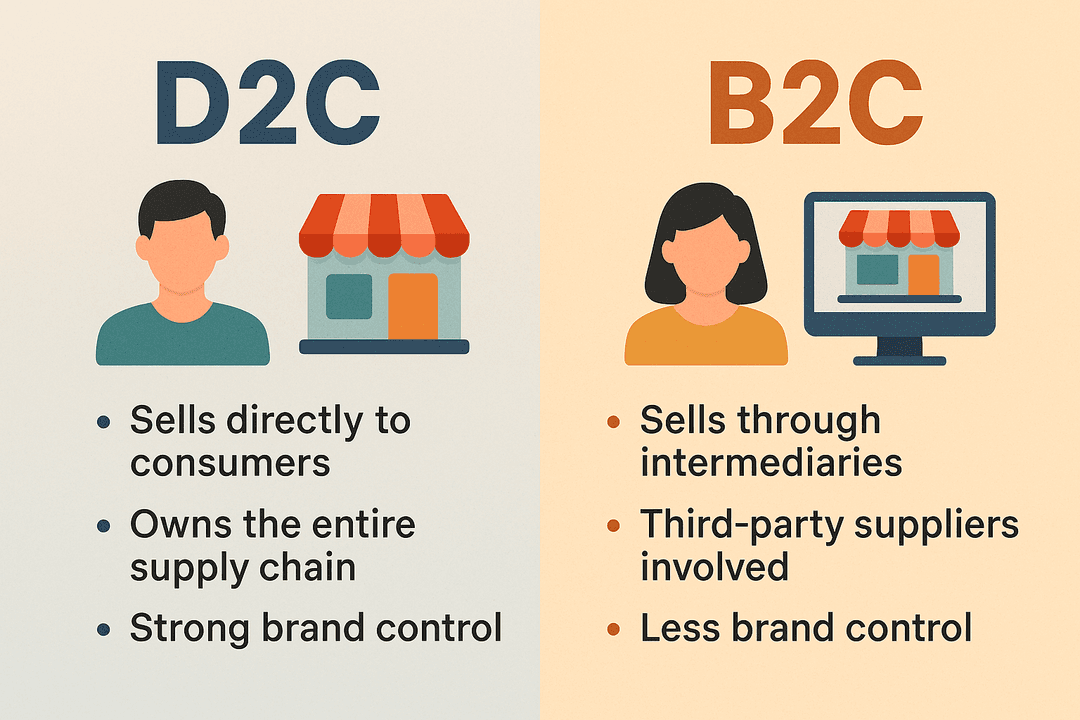
Ciò che le persone vedono principalmente quando confrontano D2C e B2C è il percorso che un prodotto compie prima di arrivare al consumatore. D2C significa "diretto al consumatore", mentre B2C significa che il marchio vende ai consumatori, ma può passare attraverso rivenditori o marketplace online. D2C mantiene tutto nelle mani del marchio. B2C utilizza intermediari. Questa è la principale differenza, e influenza tutto il resto, inclusi prezzi, relazioni, dati e controllo.
Cosa Definisce il D2C?
Un modello di distribuzione diretto al consumatore elimina il livello del retail. In questo modo, i clienti vengono portati direttamente al marchio stesso.
Caratteristiche principali:
- Il marchio controlla l'intero percorso
- La personalizzazione sembra più raggiungibile
- Più responsabilità sulla logistica, il servizio clienti e il storytelling
- Maggiore proprietà dei dati dei clienti
- Rischio più alto, ma anche ricompensa più alta
Quando un acquirente clicca "ordina ora" sul sito di un marchio, l'azienda riceve la vendita, confeziona il prodotto e lo spedisce. Semplice. Ma anche impegnativo.
Cosa Definisce il B2C?
B2C sta per Business to Consumer, e non vincola un marchio a un solo canale di distribuzione. Retail, marketplace, supermercati — contano tutti. Il marchio raggiunge comunque i consumatori, solo attraverso spazi condivisi sugli scaffali.
Caratteristiche principali:
- I rivenditori gestiscono la vendita e l'esperienza in negozio
- Esposizione rapida a un pubblico più ampio
- Maggiore potenziale di volume in categorie consolidate
- Dati, feedback e controllo limitati sui clienti
- Il prezzo al dettaglio non è completamente deciso dal marchio
I marchi che scelgono il B2C a volte si sentono come passeggeri. Sono all'interno delle regole del negozio di qualcun altro. Ma beneficiano anche del traffico e della fiducia del rivenditore.
Difference between D2C and B2C
Feature | D2C (Direct-to-Consumer) | B2C (Business-to-Consumer) |
|---|---|---|
Who owns the customer relationship? | Brand owns it | Shared or retailer-owned |
Brand control | High control over pricing, branding, and experience | Medium control, influenced by retailers |
Customer data access | Full, detailed data | Limited visibility |
Profit margins | Higher margins | Margins reduced by retailer cuts |
Speed of scaling | Slower at first | Faster in established retail networks |
D2C supply chain involvement | Very hands-on | Retailers share selling and distribution load |
Marketing approach | Direct conversations with customers, D2C marketing strategies | Broader awareness through retailer presence |
D2C vs. B2B
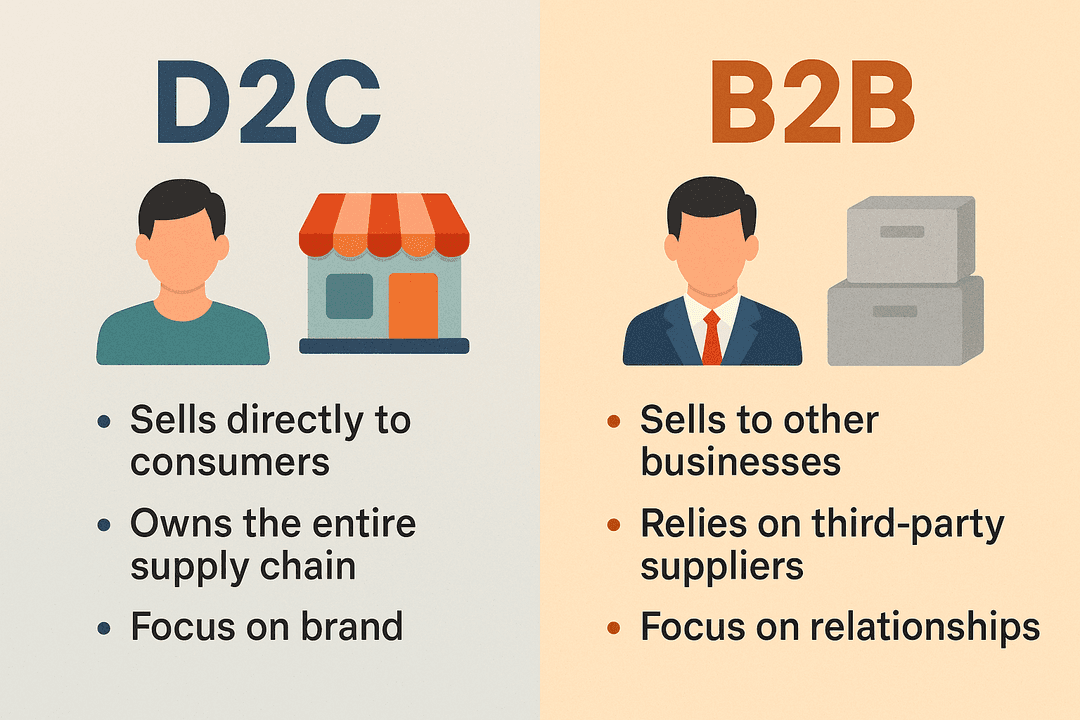
D2C si riferisce alla comunicazione diretta con i consumatori abituali, d'altra parte, B2B si occupa di aziende che richiedono prodotti per le loro operazioni o per servire i loro clienti. Uno sembra personale e veloce. L'altro tende verso struttura, ordini in grandi quantità e accordi che richiedono tempo. Potrebbero essere nella stessa categoria di prodotto, ma con una mentalità d'acquisto completamente diversa.
Tuttavia, molte marche si muovono tra entrambi. Una compagnia di integratori potrebbe spedire una bottiglia a un consumatore questa settimana, e la settimana successiva consegnare casse dello stesso prodotto a palestre o cliniche. Ecco come i due modelli possono funzionare nello stesso spazio.
Cosa rende il B2B diverso?
La vendita B2B avviene dietro le quinte. Si lavora con acquirenti aziendali che monitorano i budget, confrontano i fornitori e pensano a lungo termine. Vogliono prove che tu possa consegnare costantemente e si aspettano supporto quando sorgono problemi. È meno una questione di clamore e più di prestazioni, fiducia e risultati.
Caratteristiche principali del B2B:
- I cicli di vendita richiedono più tempo perché sono coinvolte negoziazioni e approvazioni.
- Gli ordini sono generalmente grandi, a volte ricorrenti sotto contratto.
- Il branding si concentra su prove, funzionalità e risultati misurabili.
- I prezzi variano in base al volume degli ordini o a accordi speciali.
- La fiducia si guadagna attraverso il supporto, le prestazioni di consegna e la coerenza del prodotto.
Difference between D2C and B2B
Feature | D2C (Direct-to-Consumer) | B2B (Business-to-Business) |
|---|---|---|
Target buyer | Individual consumers | Businesses, distributors, organizations |
Buying motivation | Personal wants, emotion, convenience | Operational needs, ROI, compliance |
Order size | Small, single-item purchases | Bulk orders, recurring contracts |
Sales cycle | Short and fast | Longer, approval-driven |
Marketing focus | Personal connection, branding, storytelling | Case studies, demos, negotiations |
Customer data | First-party data from online sales | Data from CRM and account management |
Pricing | Fixed retail pricing | Tiered or negotiated pricing |
Relationship style | Community-focused | Partnership-focused |
D2C contro Retail
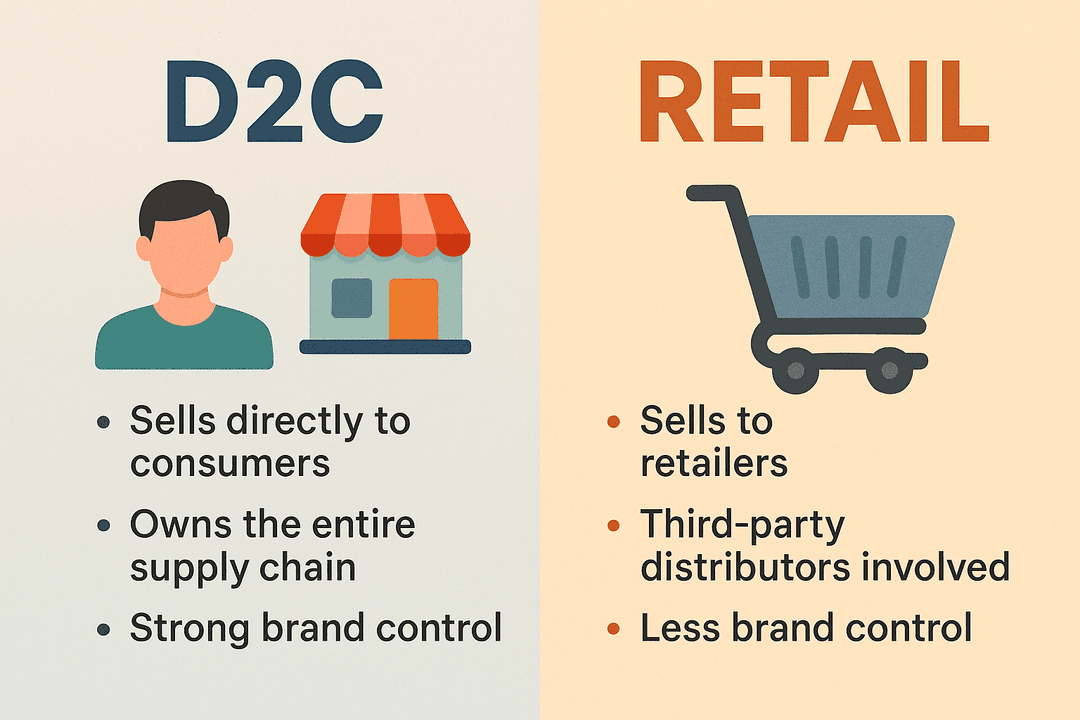
D2C o direct-to-consumer è un modello di business che richiede al brand di avere il controllo sui propri canali di vendita. Il retail comprende negozi e marketplace online dove qualcun altro gestisce gli scaffali, le esposizioni e parte della relazione con il cliente. Uno è diretto mentre l'altro introduce un passaggio intermedio. Questa è la differenza principale, e da essa derivano il controllo sui prezzi, l'accesso ai dati e l'intera esperienza del cliente. Sono quasi due mondi diversi, anche se il prodotto è lo stesso.
Alcuni brand iniziano con il D2C per rimanere vicini ai propri acquirenti, mentre altri si lanciano nel retail per raggiungere più persone. Molti brand combinano entrambi perché i clienti acquistano dove è più conveniente, semplice e veloce.
Cosa Definisce il Retail?
Il retail è la distribuzione di prodotti attraverso canali di terze parti. Ad esempio, supermercati, grandi magazzini, centri commerciali e marketplace come Amazon. In questo modello, i clienti vengono a conoscenza prima del nome del negozio e non del brand. I rivenditori gestiscono il traffico e decidono come i prodotti vengono esposti, prezzati o promossi. Questo dà ai brand accesso a un flusso consolidato di visitatori e fiducia. Sebbene i brand perdano comunque parte del controllo, i dati diventano limitati e, se un cliente ha una brutta esperienza in negozio, questa si riflette comunque sul prodotto.
Difference between D2C and Retail
Feature | D2C (Direct-to-Consumer) | Retail (Traditional and Marketplace Sales) |
|---|---|---|
Control over customer experience | Full control | Shared with retailer |
Pricing flexibility | Brand sets prices | Retail margins and promotions may apply |
Data and insights | Detailed first-party data | Limited or delayed data |
Speed to reach large audiences | Slower alone | Faster through retailer traffic |
Brand storytelling | Direct communication | Competes with many brands on the same shelf |
Supply chain responsibility | Brand handles fulfillment | Retail shares selling and distribution |
Relationship with buyers | Personal, and consistent | Harder to track and nurture |
Vantaggi del modello D2C
Il modello D2C ha letteralmente cambiato il modo in cui i brand espandono la loro portata, poiché porta il marchio direttamente alle persone che utilizzano il prodotto. Questa vicinanza si traduce in decisioni più efficienti, risposte più rapide e una relazione più profonda. Di seguito sono riportati alcuni dei vantaggi del modello D2C:
Margini di profitto più elevati
Pensa al D2C come alla rimozione di intermediari dal percorso del denaro. Quando un prodotto passa dal marchio al consumatore, il ricavo non viene suddiviso tra distributori e rivenditori. Il marchio sceglie il proprio prezzo e mantiene il valore aggiunto per sé. Quel margine extra alimenta l'innovazione dei prodotti e supporta l'espansione futura. Non c'è bisogno di affidarsi ai ricarichi dei negozi quando la vendita è diretta.
Migliori informazioni sui clienti
Con l'ecommerce diretto al consumatore, i brand non devono indovinare chi siano i loro clienti. Possono tracciare il comportamento reale di navigazione, la cronologia degli acquisti e i modelli di ripetizione. Diventa più facile capire cosa motiva un acquisto e cosa lo impedisce. Questi approfondimenti migliorano lo sviluppo del prodotto, i miglioramenti del servizio e le strategie di fidelizzazione. Dati migliori. Esperienza migliore. Risultati migliori.
Controllo sul branding e sull'esperienza
Gli scaffali dei negozi creano rumore. Il D2C elimina quel rumore. I brand raccontano la loro storia attraverso i propri canali e con la propria voce. Il tono appare familiare e coerente. Imballaggio, tracciamento degli ordini, unboxing, supporto clienti — tutto riflette l'identità che il marchio ha costruito. La relazione diventa più chiara perché non c'è un intermediario a interrompere il messaggio.
Tempi di commercializzazione più rapidi
I tempi del retail possono rallentare le idee. Il modello diretto al consumatore si muove diversamente. Quando un nuovo prodotto è pronto, lo lanci. Nessuna fila di approvazioni. Nessuna negoziazione sullo spazio sugli scaffali. Solo test rapidi, reazioni reali e miglioramenti veloci. È utile per i brand in categorie in rapida evoluzione che devono agire mentre la domanda è fresca.
Capacità di personalizzare prodotti e marketing
Ogni cliente lascia una piccola traccia di preferenze. I brand D2C possono utilizzare quei segnali per creare un'interazione più personale. Pensa a pacchetti di prodotti su misura, offerte di compleanno, lanci anticipati e raccomandazioni che sembrano perfette. I tocchi personali fanno sentire i clienti compresi, il che aiuta a elevare la fedeltà. Il retail tradizionale raramente offre quel livello di attenzione personalizzata.
Sfide comuni di un'azienda D2C
La crescita D2C sembra entusiasmante in superficie, ma gestire tutto da soli comporta decisioni difficili. I costi aumentano, la logistica diventa complicata e la concorrenza può essere serrata e impegnativa. Per i brand, è un vero atto di equilibrio.
Alti costi di acquisizione clienti (CAC)
Raggiungere nuovi acquirenti costa più che mai. Gli annunci a pagamento richiedono budget più elevati e le conversioni non sempre seguono. I brand devono sperimentare strategie di marketing D2C più economiche come SEO, email e partnership. Il CAC può determinare il successo o il fallimento della crescita se il valore del cliente nel tempo non è abbastanza forte. Un targeting intelligente è importante, sì, ma lo è anche la fidelizzazione.
Problemi di logistica, spedizione e gestione degli ordini
I clienti richiedono consegne rapide ed economiche. Questo implica un controllo dell'inventario più rigoroso, una gestione degli ordini più veloce e un numero inferiore di errori. È il brand che viene incolpato quando i prodotti vengono consegnati in ritardo, non il corriere. Una catena di fornitura D2C dipende dall'avere un piano, partner affidabili e sistemi che monitorano ogni fase. Se c'è un problema, i clienti sono i primi a notarlo.
Concorrenza e saturazione del mercato
Molte categorie di ecommerce D2C come abbigliamento, bellezza e integratori sembrano già affollate. Nuovi brand emergono ogni giorno e tutti vogliono attenzione. Distinguersi diventa più difficile senza una storia chiara o un forte valore, senza contare che il mercato lascia poco spazio ai copiatori. La differenziazione deve emergere attraverso la qualità del prodotto, la presentazione e l'esperienza del cliente.
Dipendenza dalla pubblicità a pagamento
Affidare tutta la crescita delle vendite agli annunci su Meta o Google è rischioso perché gli algoritmi cambiano e i costi aumentano improvvisamente. Quando il traffico proviene principalmente dagli annunci, i ricavi potrebbero dipendere troppo dalle spese. I brand D2C devono trovare un equilibrio e far crescere canali proprietari come liste email, SMS e ricerca organica per proteggere i profitti futuri.
Scalare oltre le vendite esclusivamente online
Molti brand raggiungono un limite online. È allora che le partnership con i rivenditori, i pop-up o gli accordi all'ingrosso aiutano ad ampliare la portata. Diventare omnicanale richiede nuove competenze, maggiore coordinazione e adattamenti della fornitura. La crescita diventa possibile, ma la complessità si moltiplica. La mossa può avere successo quando il brand mantiene forte la sua esperienza D2C per il cliente su ogni canale.
Esempi di marchi D2C di successo
La crescita del D2C ha creato alcune aziende eccezionali. Hanno trovato un messaggio chiaro, gestito la loro distribuzione e costruito comunità solide. Ogni brand dimostra come un modello di business direct-to-consumer possa aprire nuovi mercati e trasformare quelli tradizionali.
Warby Parker
Warby Parker è nata con un'idea semplice: gli occhiali da vista non dovrebbero prosciugare i risparmi. Hanno combinato gli ordini online con le prove a casa e offerto prezzi equi senza rincari al dettaglio. Il brand ha utilizzato canali di vendita D2C forti e le intuizioni dei clienti per migliorare i design. Successivamente si sono espansi in showroom, dimostrando come online e offline possano lavorare insieme.
Glossier
Glossier ha costruito prima una comunità. I prodotti sono arrivati dopo. Le loro strategie di marketing D2C si sono concentrate sui fan e sulle voci quotidiane, e il loro branding è amichevole e accessibile, tanto che il feedback dei veri acquirenti influenza i nuovi lanci. Lo storytelling social-first ha aiutato l'azienda a prendere il controllo della propria identità e a crescere nel retail fisico una volta che la domanda è diventata troppo grande per essere ignorata.
Gymshark
Gymshark ha utilizzato influencer e creatori di fitness su YouTube molto prima che tutti gli altri se ne accorgessero. Il loro approccio basato sui contenuti ha attirato le persone direttamente sul loro sito ecommerce D2C. Inoltre, i loro lanci limitati hanno creato hype. La loro rapida evasione degli ordini e il design pulito hanno trasformato gli acquirenti occasionali in clienti fedeli. Ecco perché la comunità non è una nota a margine per Gymshark. È il motore.
Allbirds
Allbirds ha trasformato comfort e sostenibilità in un movimento di brand. Il loro modello di distribuzione direct-to-consumer consente loro di condividere quel messaggio senza il rumore del retail. Si concentrano su materiali semplici, storytelling pulito e miglioramenti continui dei prodotti. Le intuizioni dei clienti li aiutano a perfezionare ogni aggiornamento e il risultato è una crescita tramite passaparola in una categoria di calzature molto competitiva.
Dollar Shave Club
Dollar Shave Club ha rivoluzionato il grooming con convenienza e umorismo. Il loro marketing virale D2C ha fatto ripensare alle persone i rasoi troppo costosi sugli scaffali dei negozi. I loro abbonamenti hanno anche risolto un problema reale, ovvero rimanere senza nel momento peggiore. Controllare l'esperienza del cliente D2C e i prezzi ha dato loro un vantaggio contro i giganti, e quell'approccio ha portato a una grande acquisizione.
Strategie di marketing D2C che funzionano
I marchi D2C di successo guidati dai dati non considerano mai il marketing come un evento singolo. Sperimentano. Comprendono. Raffinano. Il loro obiettivo è ridurre il costo di acquisizione di nuovi clienti e aumentare il loro valore nel tempo offrendo un'esperienza ideale per il cliente D2C.
Campagne guidate da influencer e creatori
I creatori suscitano curiosità più velocemente rispetto agli annunci display perché le persone spesso si fidano di qualcuno che seguono. Sembra un amico che consiglia qualcosa, non un marchio che spinge i suoi prodotti online. Buone collaborazioni portano narrazione, dimostrazioni di prodotto e opinioni autentiche che spingono i clienti verso un canale di vendita D2C. Quando i creatori amano il prodotto, il loro pubblico presta attenzione e le conversioni migliorano.
Marketing social-first
Il marketing D2C prospera dove le persone scorrono. TikTok, Meta e YouTube possono introdurre prodotti in pochi secondi. I video brevi mostrano casi d'uso reali e si immergono nella cultura. Un momento virale può spostare la domanda da un giorno all'altro. I marchi monitorano le risposte e regolano rapidamente i messaggi. Le piattaforme social rendono anche più facile collegare i contenuti direttamente al carrello.
Email e SMS marketing per la crescita del LTV
I canali di proprietà proteggono i marchi dall'aumento dei costi pubblicitari. Ecco perché email e SMS raggiungono gli acquirenti che già si interessano. Promemoria, consigli, promozioni esclusive e lanci di prodotti aiutano a incrementare gli ordini ripetuti poiché l'ecommerce D2C diventa più forte quando gli acquirenti abituali superano quelli nuovi. La comunicazione sembra diretta e a basso costo, il che aiuta a migliorare i ricavi a lungo termine.
Crescita guidata da SEO e contenuti
Posizionarsi per i termini giusti porta traffico costante senza pagare per clic. Blog, guide e pagine di prodotto rispondono a domande reali. I clienti scoprono il marchio tramite la ricerca e la fiducia può crescere quando il contenuto sembra utile. La SEO potrebbe essere lenta, ma è costante. È una soluzione intelligente quando gli annunci a pagamento diventano costosi o imprevedibili.
Abbonamenti, fedeltà, membership
I ricavi ricorrenti riducono la pressione dell'acquisizione costante. Questo è il motivo per cui gli abbonamenti hanno senso per gli articoli che le persone usano quotidianamente come integratori o caffè. I premi fedeltà e i vantaggi di accesso anticipato mantengono anche i clienti coinvolti. Questi programmi aumentano il valore medio nel tempo e migliorano le previsioni perché quando gli acquirenti si sentono apprezzati, rimangono.
Ottimizzazione delle conversioni per negozi D2C
Generare traffico è solo metà del gioco. Un sito fluido migliora i risultati dato che c'è un caricamento più veloce, pagine di prodotto pulite, checkout facile, informazioni di spedizione chiare e recensioni affidabili che possono aumentare le conversioni. Inoltre, piccoli aggiustamenti spesso portano a guadagni significativi. Ecco perché i marchi utilizzano test, registrazioni e feedback dei clienti per migliorare continuamente l'esperienza.
Come avviare un marchio D2C
Lanciare un modello di business diretto al consumatore significa mantenere il cliente vicino e imparare rapidamente. Prendi il controllo del prodotto, della supply chain D2C, dell'esperienza e della crescita. È gratificante e impegnativo allo stesso tempo.
Passo 1. Identifica la tua nicchia e valida la domanda
Inizia con le persone, non con i prodotti. Quali sono le loro difficoltà? Cosa desiderano che esista? Il tuo primo compito dovrebbe essere trascorrere del tempo ascoltando gli acquirenti che desideri. Inoltre, verifica chi altro sta vendendo articoli simili e come li prezzano. Se non riesci a spiegare perché qualcuno dovrebbe scegliere il tuo prodotto rispetto a un altro, la nicchia potrebbe non essere pronta.
Passo 2. Crea il tuo prodotto o trova fornitori
Prodotti di qualità stimolano ordini ripetuti. E gli ordini ripetuti migliorano il valore nel tempo. Quindi collabora con fornitori che condividono i tuoi standard di qualità e aspettative di consegna. Campioni, revisioni, trasparenza — queste cose contano. Che tu produca o esternalizzi, assicurati che il prodotto supporti la storia che intendi raccontare nel tuo marketing D2C.
Passo 3. Configura il tuo negozio D2C
Il tuo negozio online diventa il principale canale di vendita D2C. Shopify, WooCommerce, BigCommerce o una soluzione personalizzata possono funzionare purché l'esperienza sia fluida. Rendi la navigazione semplice e il checkout rapido. Inoltre, cerca di dare priorità agli utenti mobili e offri opzioni di pagamento affidabili perché, alla fine, le prime impressioni spesso decidono se un nuovo visitatore diventa un cliente.
Passo 4. Crea una strategia completa di go-to-market D2C
Comprendi il pubblico target per il tuo prodotto e il messaggio che potrebbe attirarlo. Crea la storia del tuo brand, seleziona i canali che il tuo cliente probabilmente utilizzerà e procedi con un'offerta definita. Inoltre, puoi sperimentare con alcuni pubblici e poi adattare la tua strategia di conseguenza. Il piano dovrebbe essere reattivo man mano che emergono nuovi insight e i concorrenti si adattano.
Passo 5. Crea un piano di logistica e adempimento
Una supply chain D2C dovrebbe essere efficiente ed efficace. È anche sostanzialmente possibile spedire direttamente da casa, utilizzare partner 3PL o persino un mix di entrambi. Oltre a ciò, dovresti sempre ricordare le tre cose più importanti: velocità, costo e imballaggio. I clienti valutano il brand in base all'intero processo dal checkout alla consegna a domicilio, quindi più faciliti quel percorso, più rafforzerai la tua reputazione e la fedeltà dei clienti.
Passo 6. Lancia il marketing e ottimizza CAC/LTV
Dopo il lancio, inizia il vero lavoro. È il momento in cui monitori i costi di acquisizione, gli ordini ripetuti, il valore medio degli ordini e la soddisfazione dei clienti. È anche il momento in cui migliori costantemente le pagine dei prodotti, le email e il supporto. Continua a perfezionare. Inoltre, riduci il CAC, aumenta il LTV e mantieni l'autenticità. Un brand D2C cresce quando le persone tornano, raccontano agli amici e sentono che l'esperienza vale la pena di essere vissuta.
Conclusione
Se guardi ai marchi D2C che stanno avendo successo, non sono stati quelli che hanno iniziato gridando più forte. In realtà hanno cominciato ascoltando persone autentiche con bisogni autentici. Se stabilisci una connessione diretta con i clienti, non faranno semplicemente un acquisto una tantum e spariranno. Invece, ti faranno sapere quali cose riparare, quali prodotti rilasciare successivamente e cosa vorrebbero di più. Questo è il modo in cui un modello di business diretto al consumatore si espande.
È anche inevitabile incontrare le tipiche sfide D2C così come la pressione di seguire le nuove tendenze D2C. Tuttavia, se prodotto, servizio e tempistica sono tutti allineati, i benefici sembrano superare il lavoro. I clienti diventano ambasciatori del tuo marchio non solo promuovendolo ai loro amici, ma anche con la loro fedeltà. Questo è il punto in cui il D2C non è più semplicemente un mezzo di distribuzione, ma piuttosto il tuo vantaggio unico.
Richiedi preventivo per ordine all'ingrosso
Ordine semplice, prezzi trasparenti, consegnato direttamente a casa tua