



Les 10 principaux pays producteurs de vin dans le monde
Explorez les principaux pays producteurs de vin, aperçu du marché, évolutions de la consommation, pratiques durables et opportunités d'approvisionnement dans l'industrie mondiale du vin.

200+ acheteurs font confiance à Torg pour l'approvisionnement







Les gens du monde entier ne boivent pas seulement du vin parce qu'il a bon goût ou à cause de la cérémonie qui accompagne sa consommation, mais aussi parce que chaque bouteille est le résultat de nombreux facteurs du passé et du présent tels que la géographie, la tradition, le climat, le savoir-faire humain et l'économie. Donc, si vous êtes un voyageur intéressé, un propriétaire d'une entreprise de vin, ou simplement un amateur des notes subtiles d'un bon rouge ou d'un blanc rafraîchissant, connaître le paysage des pays producteurs de vin reste important.
Cet article est un voyage vers les origines régionales du vin, l'impact de la production sur la culture et les économies mondiales, et l'avenir de la vinification. À la fin, vous comprendrez non seulement quels pays produisent le plus de vin, mais aussi comment le vin est lié au commerce mondial, au tourisme, à la culture et aux défis à venir.
Aperçu mondial de la production de vin
Le vin est un produit qui atteint presque toutes les parties du globe. Il existe des régions qui cultivent des raisins depuis des milliers d'années, et d'autres qui viennent tout juste de rejoindre l'histoire. Cependant, elles ont toutes un point commun : des vignobles qui sont non seulement une source d'emploi local mais qui contribuent également au commerce mondial.
Une industrie mondiale en pleine croissance
Le secteur mondial du vin est largement capable de produire près de 250 millions d'hectolitres par an. Néanmoins, en raison des variations climatiques et de la demande, les chiffres ne sont pas toujours prévisibles. Une grande partie de ce volume provient des six plus grands pays producteurs de vin, à savoir l'Italie, la France, l'Espagne, les États-Unis, l'Argentine et l'Australie.
Les six leaders définissent non seulement les exportations, les destinations du tourisme viticole et même les habitudes culinaires internationales, mais ils détiennent également la majorité des régions viticoles les plus célèbres au monde comme Bordeaux et Napa Valley, qui sont idéales pour le tourisme. Ce qui est surprenant, c'est la manière dont le terrain et l'impact économique de l'industrie du vin continuent d'évoluer.
Il existe de nouveaux vignobles en Asie, en Europe de l'Est et en Amérique du Sud, qui montent rapidement et investissent dans des technologies de pointe et une qualité élevée. Même un pays qui produit peu de vin Muscat peut être puissant dans d'autres cépages. Les classements des principaux pays producteurs de vin sont très volatils en raison du changement climatique qui oblige les vignobles à s'adapter ou à se déplacer.
Un paysage en constante évolution
La durabilité devient de plus en plus importante. Les consommateurs s'intéressent à la manière dont les vignobles prennent soin de la planète, soutiennent les travailleurs et réduisent leurs émissions de carbone. Bon nombre de producteurs ont adopté l'agriculture biologique, l'irrigation goutte à goutte, les emballages recyclés et des variétés de raisins plus résistantes à la chaleur en réponse à cette tendance.
En général, connaître les principaux pays producteurs de vin est comme une clé pour comprendre le commerce mondial, la culture et même le tourisme. Cette bouteille que quelqu'un ouvre chez lui peut être le produit d'un vignoble très éloigné, influencé par la tradition, l'innovation et un climat imprévisible pour tout le monde.
Importance du vin dans la culture et l'économie mondiales

Le vin n'est pas qu'une simple boisson. Dans de nombreux endroits, il est profondément intégré à des aspects tels que les rituels, les célébrations, les repas, l'art et l'histoire. Un verre de vin peut être présent lors d'un toast de mariage, d'un festin de fête, d'un dîner tranquille ou même d'une négociation commerciale. En général, le vin porte une grande identité culturelle avec lui, et les vignobles de certaines régions peuvent être le patrimoine de ces régions, transmis de génération en génération.
En fait, le vin est un moteur majeur de l'économie mondiale, avec une valeur économique qui s'étend encore plus loin :
- Moyens de subsistance agricoles — Les raisins qui poussent sur les vignes fournissent les moyens de subsistance de milliers de viticulteurs, travailleurs de vignobles, équipes de récolte et leurs familles dans les vastes zones rurales. De plus, les meilleures régions viticoles à visiter sont des endroits où les gens dépendent du vignoble comme principale source d'agriculture.
- Industrie et commerce — Outre la production de vin qui implique la culture des raisins, la phase de production inclut la fermentation, la mise en bouteille, l'étiquetage, le stockage, la distribution ainsi que l'exportation. Cela suit une chaîne économique de consommation qui s'étend des vendeurs de niveau inférieur du marché aux grandes maisons d'exportation.
- Tourisme et destinations œnotouristiques — La majorité des « régions viticoles célèbres » sont les principales sources de revenus grâce au tourisme. Les zones auparavant considérées comme éloignées et isolées peuvent désormais accueillir des visites et des événements de dégustation chez les producteurs de vin ou offrir des services de location et de chambres d'hôtes, ainsi qu'organiser des festivals - tout cela apportant des revenus aux invités et aux entreprises locales.
- Exportation culturelle et identité — Le vin est l'un des éléments utilisés pour promouvoir les produits nationaux ou régionaux. Une nation produisant d'excellents vins augmente considérablement son pouvoir d'influence mondial et, par conséquent, peut affecter la perception des pays étrangers à son égard.
- Dynamique du marché mondial — Le vin est en concurrence avec d'autres boissons pour le choix des consommateurs, mais il est également en compétition avec d'autres produits agricoles pour des ressources telles que la terre et la main-d'œuvre. Les changements dans la demande de vin entraînent des modifications dans la façon dont les agriculteurs décident des cultures à planter, des politiques à réglementer et même des prix des terres à ajuster.
En d'autres termes, le vin est l'intersection de l'agriculture, de la culture et du commerce. Dans la plupart des cas, l'industrie du vin n'a pas été une voie secondaire pour les régions, mais plutôt le cœur de leur identité, de leur vie et de leurs liens avec le reste du monde.
10 plus grands pays producteurs de vin

Ces principaux pays producteurs de vin continuent de façonner la consommation, l'achat et la dégustation de vin à l'échelle mondiale. Chacun d'eux apporte un caractère différent au marché mondial du vin.
1. Italie
L'Italie est toujours considérée comme le plus grand pays producteur de vin au monde, avec une production annuelle atteignant fréquemment 45-50 millions d'hectolitres. Les régions les plus connues comme la Toscane, la Vénétie, le Piémont et la Sicile envoient leurs vins aux quatre coins du monde. Avec plus de 350 cépages autochtones, l'Italie est capable de fournir tous les styles imaginables, du Prosecco au Chianti et au Barolo. La pérennité de l'industrie est garantie par les petites exploitations viticoles, le tourisme viticole populaire et le riche patrimoine culturel.
2. France
La France est à l'origine de la majorité des réglementations pour les célèbres régions viticoles, mais elle continue d'évoluer. Elle reste l'un des principaux pays producteurs de vin, souvent classée presque au sommet année après année. Le monde se tourne vers la France pour ses rouges raffinés, ses blancs élégants et son Champagne expressif. Le marché d'exportation le plus dynamique en France est ce qui maintient les petits villages des zones viticoles en vie et contribue à pérenniser ces méthodes traditionnelles de production de vins axés sur le terroir, qui deviennent progressivement la norme mondiale pour les vins haut de gamme.
3. Espagne
L'Espagne s'étend largement avec des vignobles qui semblent sans fin, ce qui explique pourquoi elle se classe parmi les plus grands pays producteurs de vin. Le pays combine accessibilité, saveur et hospitalité. Rioja et Cava attirent l'attention mondiale, mais de nombreuses régions restent encore des trésors cachés. Les vins espagnols se marient naturellement avec la nourriture, les rassemblements quotidiens et le climat chaud, tandis que les chiffres d'exportation augmentent régulièrement, maintenant l'Espagne importante dans le commerce mondial du vin.
4. États-Unis
Les États-Unis, principalement la Californie, étonnent le monde par leur puissance impressionnante sur le marché mondial du vin. Napa et Sonoma ressemblent désormais à des destinations luxueuses, tandis que l'Oregon et Washington mettent en avant leur caractère et leur fraîcheur. Les États-Unis rivalisent fortement parmi les principaux pays producteurs de vin car la consommation nationale de vin reste élevée, tandis que la créativité et la technologie aident les vignobles à s'adapter aux nouvelles tendances du marché.
5. Argentine
L'Argentine est le plus grand producteur de vin d'Amérique du Sud et produit près de 12-15 millions d'hectolitres par an. Le Malbec de Mendoza est exceptionnellement bon grâce au bon climat et aux vignobles situés en altitude. Les exportations ont augmenté rapidement au cours des dix dernières années, ce qui a été très instrumental dans la montée de l'Argentine parmi les principaux pays producteurs de vin.
6. Australie
L'Australie a gagné sa place parmi les plus grands pays producteurs de vin en se concentrant sur des saveurs audacieuses et une identité variétale claire. C'est principalement le Shiraz qui attire l'attention du monde, néanmoins, des régions comme Barossa et Margaret River produisent également d'excellents vins de Chardonnay et de Cabernet. Leur production dépasse souvent les 10 millions d'hectolitres. La force de l'Australie dans les exportations, le branding judicieux et la confiance dans la vinification contemporaine sont les principales raisons pour lesquelles le pays peut influencer les tendances mondiales dans les statistiques de l'industrie du vin.
7. Chili
Avec une forme allongée, le Chili est un refuge pour une région de production de vin qui est l'une des plus diversifiées au monde et est naturellement protégée par les Andes et le Pacifique. Les principaux contributeurs aux exportations du pays sont le Cabernet Sauvignon et le Carménère, qui sont également soutenus par de bonnes récoltes de plus de 12 millions d'hectolitres. Le pays figure parmi les principaux producteurs de vin et est une excellente source de vins de bonne qualité avec une qualité constante. De plus, il attire de plus en plus de consommateurs à la recherche de vins expressifs et fiables à des prix raisonnables.
8. Afrique du Sud
L'Afrique du Sud est l'un des principaux pays producteurs de vin, où les vignobles autour du Cap-Occidental sont la principale source de puissance. La région produit environ 10 millions d'hectolitres chaque année. Le Pinotage et le Chenin Blanc sont les représentants de l'identité du pays, tandis que la durabilité et le commerce équitable sont les valeurs que le pays tient en haute estime. Le tourisme viticole en fait également partie, avec des endroits comme Stellenbosch attirant des personnes en quête de nature et de dégustations mémorables.
9. Allemagne
L'Allemagne prouve que les climats plus frais peuvent encore figurer parmi les plus grands pays producteurs de vin. La production est d'environ 8 à 9 millions d'hectolitres par an, et la principale force du pays réside dans la production de blancs très précis. Le Riesling est le leader mondial, mais le Pinot Noir gagne en popularité. Des régions comme la Moselle et le Rheingau se concentrent sur des vignobles escarpés, une acidité marquée et un terroir pur, et ce sont les facteurs qui permettent à l'Allemagne de rester compétitive sur le marché mondial du vin.
10. Portugal
Le Portugal rejoint le classement des principaux pays producteurs de vin non pas par sa taille, mais par sa personnalité. La vallée du Douro a donné au monde le Porto, tandis que les rouges de Vinho Verde et d'Alentejo mettent en valeur le plaisir quotidien. La production reste souvent autour de 6 à 7 millions d'hectolitres. Les cépages locaux, la forte valeur d'exportation et un patrimoine fier maintiennent le Portugal respecté dans le monde entier, en particulier parmi les voyageurs à la recherche de destinations uniques pour le tourisme viticole.
Marchés émergents du vin : pays à surveiller
La production de vin s'étend au-delà des bastions traditionnels. Plusieurs « marchés émergents du vin » attirent l'attention, souvent grâce à des climats favorables, des investissements et une demande croissante tant au niveau local qu'international.
Chine
La Chine a rapidement augmenté la plantation de vignobles et la vinification au cours des dernières décennies. Avec une demande domestique croissante et un intérêt grandissant de la part des producteurs, la Chine devient un sérieux prétendant parmi les pays producteurs de vin. Bien que historiquement mieux connue pour le thé et les vins de riz, l'industrie viticole chinoise vise désormais les vins rouges et blancs de table, avec des efforts régionaux diversifiés. Des investissements continus pourraient propulser la Chine sur de nombreuses listes des « principaux pays producteurs » avant longtemps.
Inde
Certaines régions de l'Inde, en particulier les zones plus fraîches comme les collines de l'Himachal Pradesh et les Nilgiris, expérimentent les vignobles et les vins. Étant donné la vaste population de l'Inde, même une production de vin modeste a un potentiel pour des marchés domestiques importants. Les réglementations, la distribution et les préférences locales restent des défis pour une croissance rapide. Pourtant, de petites caves et des producteurs artisanaux commencent à créer des vins qui reflètent le terroir et le climat locaux.
Pays d'Europe de l'Est (Bulgarie, Géorgie, Moldavie, Roumanie)
Une poignée de nations d'Europe de l'Est retournent aux traditions vinicoles du passé. Elles mélangent d'anciennes variétés de raisins avec une qualité de marque renouvelée. Par exemple, des endroits comme la Géorgie — un pays souvent considéré comme l'un des berceaux de la production de vin — attirent l'attention du monde grâce à ses techniques de vinification traditionnelles, ses cépages rares et une orientation croissante vers l'exportation. La Moldavie et la Roumanie se frayent également un chemin sur le marché en mettant en place de nouvelles caves au milieu de vignobles qui ont résisté à la transition économique pendant des décennies.
Corée du Sud, Japon et régions d'Asie du Sud-Est
Bien que relativement petites par rapport aux grands producteurs, certaines parties de l'Asie de l'Est et du Sud-Est voient une production de vin artisanale, souvent orientée vers les consommateurs locaux. Les défis climatiques persistent, mais l'expérimentation avec des raisins hybrides et des techniques modernes de vinification, parfois combinées avec le « tourisme viticole », offre des potentiels intéressants.
Canada et régions viticoles du Nord
Les régions aux climats plus frais, autrefois considérées comme inadaptées aux raisins, expérimentent désormais des vignes résistantes au froid, une viticulture de style serre ou des cépages hybrides. Certaines initiatives sont situées au Canada, dans le nord des États-Unis ou même dans le nord de l'Europe. Bien qu'elles ne puissent pas encore être comparées aux géants traditionnels du vin, ces marchés émergents sont le résultat de l'adaptation climatique, de l'innovation et de la curiosité des consommateurs qui redéfinissent l'industrie mondiale du vin.
Vins du Vieux Monde contre Vins du Nouveau Monde

Une des différences les plus durables dans le monde du vin est la distinction entre « Vieux Monde » et « Nouveau Monde ». La séparation englobe non seulement l'histoire, la tradition et la philosophie de la vinification, mais aussi le goût attendu.
- Vins du Vieux Monde : Les vins du Vieux Monde sont ceux qui proviennent des régions ayant une longue histoire de tradition viticole, principalement en Europe et autour de la Méditerranée. Ce sont des pays comme l'Italie, la France, l'Espagne, l'Allemagne, le Portugal — pour mentionner les plus grands producteurs de vin — qui sont le berceau de ces vins. Ils représentent les concepts de terroir, de délicatesse, d'harmonie, de cépages indigènes et de méthodes ancestrales. Les vins du Vieux Monde attribuent fréquemment ces quatre facteurs : la terre, le climat, la tradition et l'héritage viticole au plus haut niveau.
- Vins du Nouveau Monde : Ceux-ci proviennent de régions où la vinification est arrivée plus récemment, généralement associée à la colonisation, la migration ou à une nouvelle expansion agricole. La liste de ces lieux comprend les États-Unis, l'Argentine, le Chili, l'Australie, l'Afrique du Sud, certaines parties de l'Europe de l'Est et de l'Asie. Les vignerons du Nouveau Monde mettent principalement en avant la clarté des cépages, l'innovation et autres, tout en étant en phase avec les marchés modernes en s'adaptant. Leur approche est caractéristiquement plus adaptable, orientée vers le marché et le consommateur.
La séparation ne signifie pas que « l'un est meilleur que l'autre ». Ils représentent plutôt des philosophies différentes. Une bouteille de vin provenant d'un vignoble qui existe depuis des siècles en Toscane ou à Bordeaux est imprégnée de tradition et d'histoire — tandis qu'un Malbec d'altitude des vignobles de Mendoza, ou un Sauvignon Blanc frais de Marlborough, peut symboliser le processus de vinification moderne et la facilité d'utilisation.
Pour les amateurs de vin, connaître la différence est utile en tant que référence : lorsqu'un Shiraz du Nouveau Monde est mentionné, vous êtes immédiatement informé de son style, peut-être de son intensité, de son caractère fruité, etc. Lorsque le Bordeaux français est qualifié de « terroir-driven », les gens reconnaissent la dépendance du vin au sol, au climat et à la tradition.
Plusieurs producteurs de vin modernes sont également moins rigides entre l'un et l'autre — en utilisant la technologie du « Vieux Monde » avec la retenue du « Nouveau Monde » ou vice versa. L'industrie mondiale du vin est comme une roue qui ne cesse de tourner ; ce qui compte vraiment, c'est la façon dont ces racines et innovations se rejoignent dans votre verre.
Consommation de vin par pays
À l'échelle mondiale, la consommation de vin évolue plus rapidement que les vignobles du monde entier ne peuvent croître. En 2023, la consommation mondiale totale de vin était estimée à environ 221 millions d'hectolitres — une baisse de 2,6 % par rapport à 2022. Pourtant, certains pays continuent de verser remarquablement plus dans leurs verres, que ce soit par personne ou en volume total.
Qui boit le plus
- Le Portugal est en tête si l'on mesure par habitant. Selon des données récentes, la consommation a atteint entre 52 et 61 litres par adulte par an. Le vin fait partie de la vie quotidienne là-bas — souvent apprécié avec le déjeuner ou le dîner.
- L'Italie et la France continuent de figurer en haut du classement. Historiquement, les Italiens consomment en moyenne près de 46–47 litres par personne chaque année ; les valeurs françaises sont similaires.
- Certains pays plus petits ou moins évidents — par exemple la Suisse ou l'Autriche — apparaissent également dans les classements par habitant, bien que les données varient selon les sources.
Ces statistiques par personne reflètent des habitudes culturelles : là où le vin accompagne les repas, les événements sociaux ou les réunions de famille.
Les grands consommateurs en volume
Quand la population est importante, même une consommation modeste par personne s'additionne.
- Les États-Unis sont les plus grands consommateurs de vin de la planète en volume. Le marché américain représentait environ 15,6 % de la consommation mondiale totale de vin en 2024, soit plus que tout autre pays.
- En Europe, l'Allemagne et des pays similaires continuent d'avoir un impact majeur, principalement en raison de leur grande population et de leurs marchés du vin bien établis.
Mais le volume total n'est pas synonyme de plaisir par habitant. Les États-Unis consomment globalement de grandes quantités, mais par habitant, ils restent derrière les nations européennes où le vin est très présent.
Tendances et changements à noter
- En 2023, les pays de l'UE étaient responsables de presque la moitié de la consommation mondiale de vin — environ 107 millions d'hectolitres consommés en Europe. Cependant, la consommation reste un peu inférieure à celle d'il y a dix ans, ce qui peut être attribué aux changements dans les préférences des gens, à la situation économique et aux évolutions du mode de vie.
- Dans certains pays, la production nationale de vin est importante, mais une grande partie est exportée — réduisant ainsi la consommation nationale de vin. Pendant ce temps, les pays axés sur l'exportation peuvent ne consommer qu'une fraction de ce qu'ils produisent. Cela crée un décalage entre être un grand pays producteur de vin et être un grand consommateur.
- Les marchés émergents du vin et les pays non traditionnels en matière de vin ont souvent une faible consommation de vin par habitant, mais une demande croissante. Par exemple, en 2024 la Chine a rapporté une consommation de vin par habitant d'environ 0,5 litre — très modeste. Avec l'augmentation des revenus et la disponibilité accrue du vin, ces nations pourraient modifier l'équilibre mondial dans les années à venir.
Meilleures pratiques pour une production de vin durable
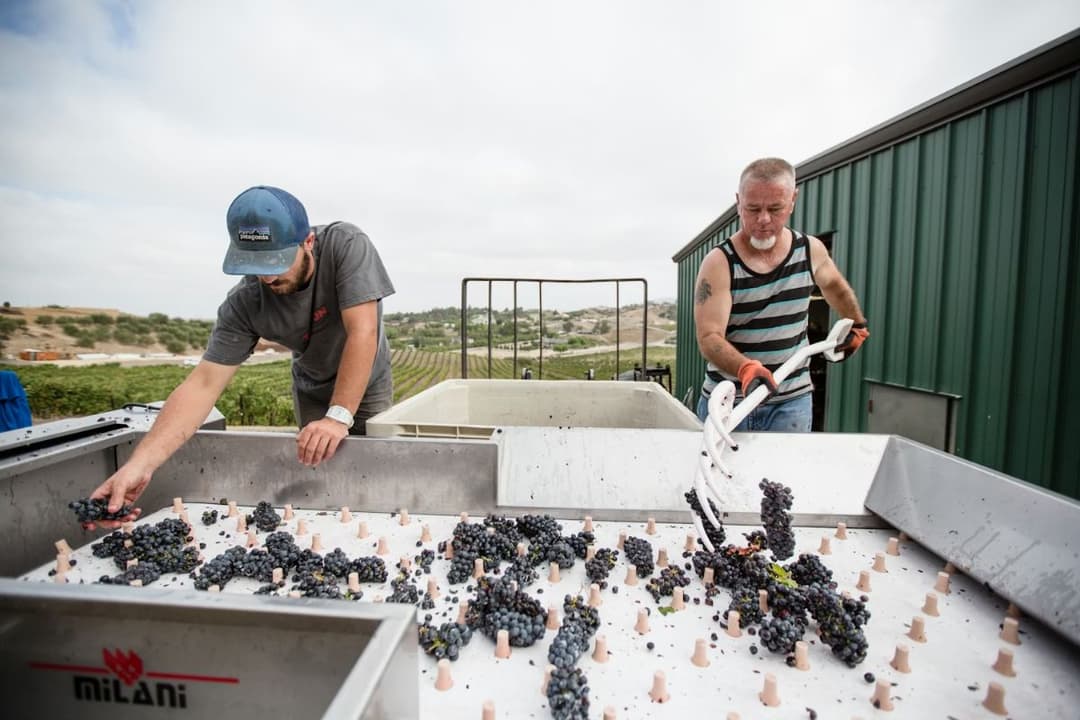
Une des plus grandes tendances de la production de vin sur le marché international est le passage à des pratiques durables. Les vignobles rencontrent des difficultés en raison de la demande croissante, des changements climatiques et de la pénurie de ressources naturelles. En préservant la santé de la planète, les producteurs de vin protègent en réalité la source de l'unicité de chaque bouteille — le sol, le climat et la communauté. C'est ainsi que la production de vin durable a évolué.
Viticulture biologique et biodynamique
Presque tous les vignobles passent à la viticulture biologique et biodynamique afin de maintenir la santé de leurs vignes à long terme. L'utilisation de compost naturel, la gestion des ravageurs mise en œuvre avec plus de soin et des engrais plus écologiques facilitent la régénération du sol. Des sols sains sont la source de raisins sains, et les agriculteurs évitent d'utiliser des produits chimiques synthétiques qui pourraient nuire à leurs récoltes à l'avenir.
Conservation de l'eau et irrigation efficace
Dans le cas des régions productrices de vin sec, les producteurs durables déploient de grands efforts pour s'assurer que l'eau est utilisée de manière la plus efficace possible. Parmi leurs pratiques figurent l'irrigation goutte à goutte, la récupération des eaux de pluie et le recyclage des eaux usées, lorsque cela est possible. Cela permet de réduire la pression sur les sources d'eau locales et d'assurer la survie des pratiques agricoles et des méthodes sur le long terme.
Réduction de l'empreinte carbone dans le traitement et la distribution
Des efforts sont réalisés, par exemple, par des vignobles équipés de panneaux solaires ou de systèmes de refroidissement efficaces pour réduire les émissions de carbone. Certains vignobles participent à la réduction des émissions en optant pour des bouteilles plus légères (réduisant ainsi le poids du verre pour le transport). Ainsi, les décisions d'exportation, l'emballage et la logistique sont de plus en plus envisagés sous un angle environnemental.
Approvisionnement local et soutien aux communautés rurales
Presque tous les petits vignobles ou vignobles familiaux dépendent fortement de la main-d'œuvre locale et soutiennent les économies rurales. De plus, ils contribuent à préserver le patrimoine culturel en respectant les coutumes et en protégeant les terres patrimoniales. La production de vin durable peut devenir une sorte de système de soutien pour la durabilité écologique, économique et sociale.
Transparence et certifications
De nombreux producteurs relèvent le défi de passer au biologique, biodynamique ou "cultivé de manière durable" et étiquettent ainsi leurs produits en conséquence. Une telle étiquetage offre aux consommateurs de meilleures options de choix concernant le caractère écologique des produits, tout en motivant les vignobles à maintenir leurs standards.
Viticulture adaptative
Certains vignobles achètent ou plantent des variétés de raisins plus tolérantes à un climat qui se réchauffe et/ou des vignes hybrides résistantes aux maladies et nécessitant moins de ressources. Les autres peuvent simplement modifier leur période de récolte, effectuer une gestion de la canopée ou couvrir leur sol de manière à s'adapter aux changements des conditions météorologiques.
Comment le changement climatique affecte la production de vin
Le changement climatique n'est pas un partenaire de négociation. Les vignobles sont les premiers à ressentir le changement - ils signalent la chaleur, les tempêtes soudaines, les calendriers de récolte modifiés ou les raisins ayant un goût différent de celui attendu. Étant donné que tous les pays producteurs de vin dépendent du terroir, chaque degré compte. Les vignerons demandent maintenant : « Que doit-on changer l'année prochaine ? »
Régions plus chaudes — Terroir en mutation et viabilité des cépages
La chaleur fait mûrir les raisins plus rapidement, ils ont une teneur en sucre plus élevée, une acidité plus faible, et le style du vin change. Cela affecte les principaux pays producteurs de vin dans les climats méridionaux, où l'équilibre venait naturellement autrefois. Certaines caves passent à des vignes résistantes à la sécheresse, ajustent l'ombre des canopées ou récoltent plus tôt. Une région célèbre pour ses rouges éclatants pourrait plus tard être connue pour des rouges plus lourds. Les profils de saveurs évoluent, et le terroir se redéfinit sans demander la permission.
Nouvelles régions propices à la viticulture
Les zones plus froides autrefois ignorées par les investisseurs viticoles semblent désormais prometteuses. Les latitudes plus élevées, les collines côtières et les régions de production de vin plus fraîches en Europe du Nord ou en Asie commencent à planter des raisins. De nouveaux marchés émergents pour le vin apparaissent lorsque les températures augmentent juste assez pour que les vignes survivent à l'hiver. Ce changement modifie la géographie, le tourisme et, finalement, les lieux qui rivalisent pour entrer dans le classement des principaux pays producteurs de vin.
Augmentation des extrêmes météorologiques et des risques
Les tempêtes arrivent au mauvais moment. Les sécheresses durent plus longtemps. Le gel apparaît au printemps et ruine le travail d'une année en une nuit. Les tempêtes de grêle détruisent des vignobles qui existaient depuis des générations. Les producteurs investissent dans des filets, une irrigation plus intelligente et de nouvelles méthodes de protection des sols. Mais les petites caves, en particulier dans les régions rurales de production de vin, peuvent avoir du mal à se reconstruire. Les événements climatiques frappent rapidement, et la récupération est plus lente.
Pression sur la durabilité et l'adaptation
Le climat pousse les caves à repenser tout. Elles testent de nouveaux cépages, réduisent leur consommation d'eau, explorent la production de vin durable et restaurent la biodiversité pour maintenir les sols vivants. Certains vignobles se déplacent vers des altitudes plus élevées. D'autres plantent des arbres pour l'ombre ou ajustent la taille. Les leaders du marché mondial du vin planifient désormais pour la prochaine décennie, et non seulement pour le prochain millésime. L'adaptation n'est pas optionnelle si le vin doit rester du vin.
Conclusion
Les entreprises qui opèrent dans le secteur du vin, telles que les distributeurs, les détaillants, les exportateurs et les partenaires commerciaux, ont un avenir prometteur devant elles. Les 10 principaux pays producteurs de vin continuent de se transformer et, d'autre part, de nouveaux marchés du vin offrent de nouvelles variétés, des prix plus bas et de nouvelles histoires que les acheteurs peuvent présenter aux clients. Les pratiques durables deviennent de plus en plus importantes chaque année, ce qui soutient non seulement un approvisionnement stable mais aussi la durabilité à long terme des vignobles. L'adaptation au climat peut entraîner le déplacement des zones où les raisins destinés à la vinification sont cultivés, mais elle ouvre également de nouvelles régions pour l'investissement, les partenariats touristiques et la diversification de l'approvisionnement.
Ceux qui discernent les tendances de production, la consommation de vin par différents pays et les préférences changeantes des consommateurs seront plus aptes à établir des relations rentables. L'industrie mondiale du vin reste solide, et les dix prochaines années s'annoncent favorables pour les acteurs B2B prêts à collaborer au-delà des frontières.
FAQ
1. Quels sont les principaux pays producteurs de vin dans le monde ?
L'Italie, la France et l'Espagne restent les principaux pays producteurs de vin, tandis que les États-Unis et l'Argentine viennent après eux. L'Australie, le Chili, l'Afrique du Sud, l'Allemagne et le Portugal maintiennent leur compétitivité grâce à des exportations solides et une production de vignobles constante. Ces pays réunis sont responsables de la majorité de l'offre mondiale et ont un impact significatif sur les prix du marché international du vin.
2. Quel pays produit le meilleur vin rouge ?
Cela dépend toujours. La France et l'Italie sont en tête avec leurs rouges élégants et intemporels, tandis que l'Espagne propose d'excellents choix comme le Rioja. Ensuite, il y a des styles puissants et fruités provenant de vignobles du Nouveau Monde comme les États-Unis, l'Argentine et l'Australie. Le vin parfait dépend simplement de vos préférences.
3. Quel est le plus grand producteur de vin en Europe ?
La couronne de la production européenne se déplace généralement entre l'Italie et la France. Les deux nations gèrent de vastes zones de vignobles, exportent à l'échelle mondiale et établissent des normes pour la catégorie des plus grands pays producteurs de vin. Leur capacité à combiner patrimoine, technologie et demande du marché les maintient en tête non seulement en Europe, mais aussi dans les classements mondiaux et les décisions de distribution du vin.
4. Quels pays viticoles offrent le meilleur rapport qualité-prix ?
En termes de valeur, l'Espagne, le Portugal, le Chili et l'Afrique du Sud ont été très constants au fil du temps. L'une de leurs principales stratégies est de mettre en avant des cépages indigènes, associés à des prix raisonnables et une bonne qualité, ce qui attire les acheteurs professionnels. Les rayons des détaillants, importateurs et distributeurs restent compétitivement approvisionnés grâce à ces pays producteurs de vin.
Demander un devis de commande en vrac
Commande simple, tarification transparente, livrée directement à votre porte