



¿Qué es D2C? Modelo de negocio Directo al Consumidor explicado
Aprende el significado de D2C, cómo funcionan los modelos de negocio directos al consumidor, los beneficios, desafíos, estrategias y tendencias de crecimiento.
200+ compradores confían en Torg para el sourcing






Muchas marcas quieren llegar a los clientes sin el laberinto habitual del comercio minorista. Las personas navegan, comparan y compran en línea de maneras que se sienten diferentes a hace unos años. Por eso, muchas empresas se preguntan: "¿Qué es D2C?" El significado de D2C apunta a un modelo directo al consumidor donde las marcas venden a través de sus propios canales, y no a través de grandes tiendas o mercados. Les da espacio para hablar con su audiencia, recopilar comentarios y contar su propia historia.
Esta guía ayuda a cualquier persona en comercio electrónico, cadena de suministro, marketing o fabricación de productos a entender cómo funciona el modelo de negocio directo al consumidor. Analizaremos la definición de D2C, cómo crecen las marcas de comercio electrónico D2C y por qué el control sobre los datos, los precios y la experiencia del cliente D2C puede cambiar la forma en que un negocio escala. Si diriges una startup o una marca de consumo, aprenderás qué importa y cómo pensar en tu próximo movimiento.
¿Qué es D2C (Directo al Consumidor)?
D2C, o Directo al Consumidor, es un modelo de negocio donde las marcas venden productos directamente a los clientes sin depender de intermediarios como mayoristas, distribuidores o minoristas.
Una marca fabrica o adquiere un producto y luego lo vende por sus propios medios. Un sitio web, una aplicación o una tienda temporal podrían ser los canales donde la marca se comunica directamente con el cliente. Al utilizar este modelo de negocio directo al consumidor, las empresas tienen el poder de decidir cómo muestran la imagen de su marca, cómo entregan sus productos y cómo recopilan datos de los clientes.
¿Por qué es importante? Porque el modelo minorista tradicional quita la mayor parte del control. Con el comercio electrónico D2C, las marcas pueden aprender más rápido, probar nuevas ideas, gestionar sus propios márgenes y construir una sólida experiencia de cliente D2C desde el primer día. Se siente más flexible y más personal, que es exactamente lo que buscan los compradores modernos.
Cómo funciona el modelo de negocio D2C
D2C simplifica cómo las marcas llegan a las personas. Menos capas, más control y una conexión más cercana con el cliente. Todo comienza con poseer las partes clave del negocio y aprender directamente de los compradores reales.
1. La marca crea y controla el producto
Todo comienza con el producto. Una marca D2C lo fabrica desde cero o trabaja estrechamente con los proveedores, mientras mantiene el control sobre la calidad y el diseño. Nadie más decide qué se queda o qué cambia. Esta libertad ayuda a la marca a cumplir lo que promete. Cuando los clientes hacen un pedido, quieren algo que se sienta intencionado, con un precio justo y fiel a lo que representa la marca.
🚀 Torg facilita a las marcas encontrar los proveedores adecuados, gestionar la producción y llevar los productos directamente a tus clientes. Simplifica el abastecimiento, mantén la calidad y céntrate en hacer crecer tu marca. 👉 Comienza a escalar tu negocio D2C con Torg hoy.
2. La marca establece una tienda digital
Generalmente, las marcas crean un sitio completamente nuevo para estar en línea y, en su mayoría, seleccionan plataformas como Shopify, WooCommerce o desarrollan un sitio personalizado. Es el lugar donde la marca demuestra cómo su producto puede ser parte de tu vida. Las páginas deben cargarse rápido, hablar claramente y guiar a los clientes con facilidad. Los pop-ups o pequeñas ubicaciones de tienda pueden ayudar, pero la tienda digital sigue siendo el lugar central donde comienza la relación.
3. El marketing impulsa la demanda directa
Dado que no hay un minorista que ayude con la promoción, las marcas toman la iniciativa y generan su propia demanda. Publican en plataformas sociales, comparten historias honestas y trabajan con creadores que tienen una voz auténtica. Los anuncios atraen atención, mientras que el SEO, el correo electrónico y los SMS mantienen el crecimiento. Cada mensaje, cada imagen, cada oferta genera impulso. Es práctico y mantiene a la marca cerca de su audiencia.
4. Los pedidos se envían directamente al cliente
Después del pago, la cadena de suministro D2C entra en acción. Los artículos se mueven desde el almacenamiento al embalaje, y luego directamente a la puerta del cliente. Las personas esperan un seguimiento fluido, tiempos de espera cortos y envíos asequibles. Si algo en la transacción no está bien, esperan una devolución sencilla. El servicio se está convirtiendo en una parte integral de la experiencia, en lugar de algo que simplemente se incluye. Cuando un paquete llega de manera segura y a tiempo, la confianza aumenta sin necesidad de una gran participación minorista.
5. La marca posee la relación con el cliente
Cada interacción va directamente a la marca. Ve comentarios reales, no informes filtrados. Los mensajes, actualizaciones de pedidos y beneficios de fidelidad ayudan a mantener a los clientes comprometidos. Las ideas obtenidas de las reseñas y las compras repetidas guían las decisiones futuras. Se siente como una conversación continua, donde ambas partes aprenden. Esa cercanía es una de las mayores ventajas de D2C, porque los clientes leales se convierten en los defensores más entusiastas.
D2C frente a B2C
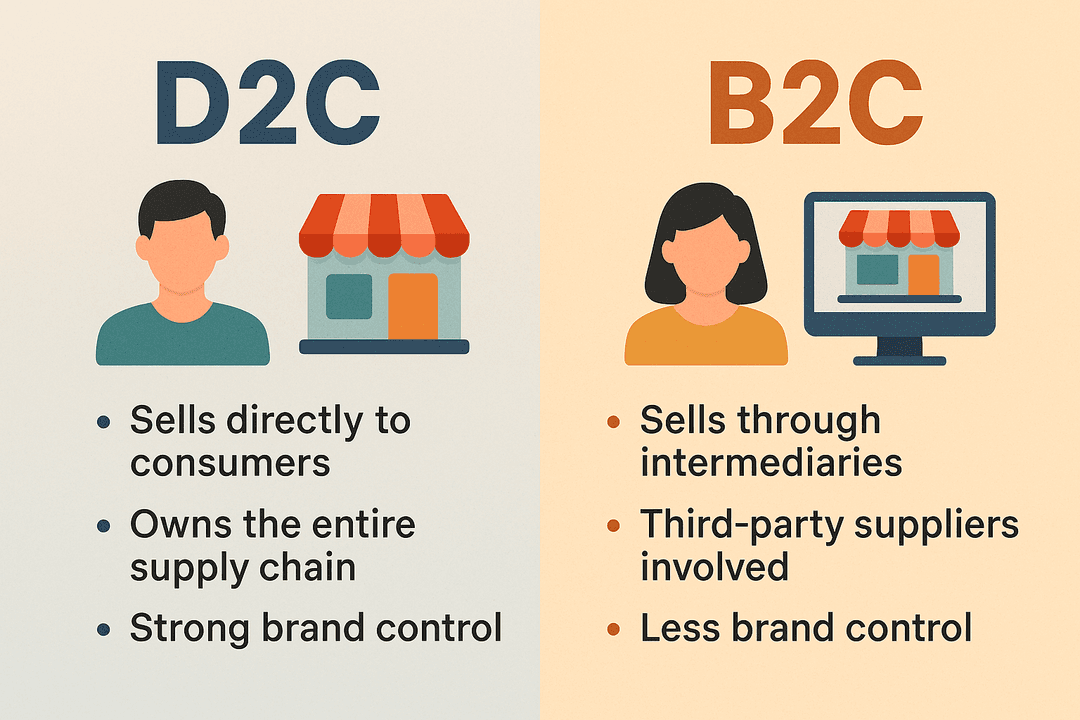
Lo que la gente suele ver primero cuando compara D2C y B2C es la forma en que un producto viaja antes de llegar al consumidor. D2C significa "directo al consumidor", mientras que B2C significa que la marca vende a los consumidores, pero puede pasar por minoristas o mercados en línea. D2C mantiene las cosas en manos de la marca. B2C utiliza intermediarios. Esa es la principal diferencia, y da forma a todo lo demás, incluyendo precios, relaciones, datos y control.
¿Qué define D2C?
Un modelo de distribución directo al consumidor elimina la capa minorista. De esta manera, los clientes son llevados directamente a la marca.
Características clave:
- La marca controla todo el recorrido
- La personalización se siente más alcanzable
- Mayor responsabilidad en logística, servicio al cliente y narración
- Mayor propiedad de los datos del cliente
- Mayor riesgo, pero también mayor recompensa
Cuando un comprador hace clic en "ordenar ahora" en el sitio de una marca, la empresa recibe la venta, empaca el producto y lo envía. Simple. Pero también exigente.
¿Qué define B2C?
B2C significa Business to Consumer, y no encierra a una marca en un único canal de distribución. Minoristas, mercados, supermercados: todos cuentan. La marca aún llega a los consumidores, solo que a través de espacio compartido en estanterías.
Características clave:
- Los minoristas manejan la venta y la experiencia en la tienda
- Exposición rápida a una audiencia más amplia
- Mayor potencial de volumen en categorías establecidas
- Datos, comentarios y control del cliente limitados
- Los precios minoristas no son completamente decisión de la marca
Las marcas que optan por B2C a veces se sienten como pasajeros. Están dentro de las reglas de la tienda de otra persona. Pero también se benefician del tráfico y la confianza del minorista.
Difference between D2C and B2C
Feature | D2C (Direct-to-Consumer) | B2C (Business-to-Consumer) |
|---|---|---|
Who owns the customer relationship? | Brand owns it | Shared or retailer-owned |
Brand control | High control over pricing, branding, and experience | Medium control, influenced by retailers |
Customer data access | Full, detailed data | Limited visibility |
Profit margins | Higher margins | Margins reduced by retailer cuts |
Speed of scaling | Slower at first | Faster in established retail networks |
D2C supply chain involvement | Very hands-on | Retailers share selling and distribution load |
Marketing approach | Direct conversations with customers, D2C marketing strategies | Broader awareness through retailer presence |
D2C frente a B2B
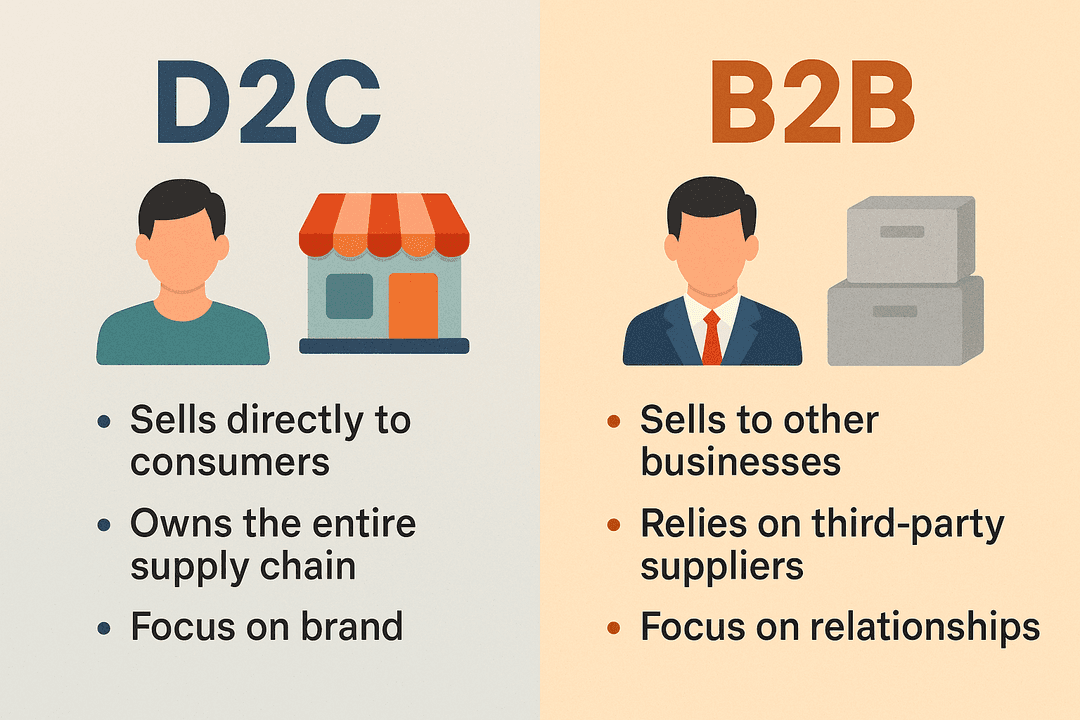
D2C se refiere a la comunicación directa con los consumidores habituales, por otro lado, B2B trata con empresas que requieren productos para sus operaciones o para atender a sus clientes. Uno se siente personal y rápido. El otro se inclina hacia la estructura, pedidos al por mayor y acuerdos que toman tiempo. Podrían estar en la misma categoría de producto, pero con una mentalidad de compra completamente diferente.
Aunque, muchas marcas se mueven entre ambos. Una empresa de suplementos podría enviar una botella a un consumidor esta semana, y la próxima semana entregar cajas del mismo producto a gimnasios o clínicas. Así es como los dos modelos pueden funcionar dentro del mismo espacio.
¿Qué hace diferente al B2B?
La venta B2B ocurre detrás de escena. Estás trabajando con compradores empresariales que controlan presupuestos, comparan proveedores y piensan a largo plazo. Quieren pruebas de que puedes entregar de manera constante, y esperan apoyo cuando surgen problemas. Se trata menos de publicidad y más de rendimiento, confianza y resultados.
Características clave del B2B:
- Los ciclos de ventas son más largos porque implican negociaciones y aprobaciones.
- Los pedidos suelen ser grandes, a veces recurrentes bajo contrato.
- La marca se centra en pruebas, funcionalidad y resultados medibles.
- Los precios varían según el volumen del pedido o acuerdos especiales.
- La confianza se gana a través del soporte, el rendimiento de entrega y la consistencia del producto.
Difference between D2C and B2B
Feature | D2C (Direct-to-Consumer) | B2B (Business-to-Business) |
|---|---|---|
Target buyer | Individual consumers | Businesses, distributors, organizations |
Buying motivation | Personal wants, emotion, convenience | Operational needs, ROI, compliance |
Order size | Small, single-item purchases | Bulk orders, recurring contracts |
Sales cycle | Short and fast | Longer, approval-driven |
Marketing focus | Personal connection, branding, storytelling | Case studies, demos, negotiations |
Customer data | First-party data from online sales | Data from CRM and account management |
Pricing | Fixed retail pricing | Tiered or negotiated pricing |
Relationship style | Community-focused | Partnership-focused |
D2C frente a minorista
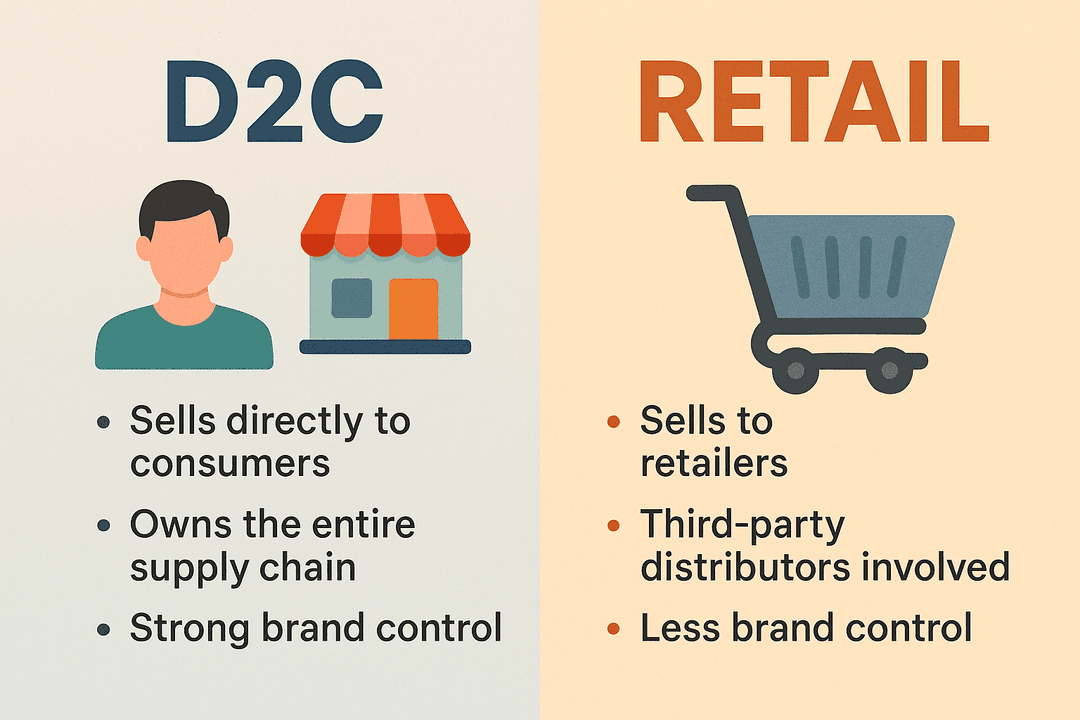
D2C o directo al consumidor es un modelo de negocio que requiere que la marca tenga control sobre sus canales de venta. El comercio minorista incluye tiendas y mercados en línea donde alguien más se encarga de los estantes, las exhibiciones y parte de la relación con el cliente. Uno es directo mientras que el otro introduce un paso intermedio. Esa es la diferencia clave, y el resto se deriva de ello, incluyendo el control de precios, el acceso a datos y toda la experiencia del cliente. Son casi dos mundos diferentes, incluso si el producto es el mismo.
Algunas marcas comienzan D2C para mantenerse cerca de sus compradores, y otras se lanzan al comercio minorista para alcanzar mayor alcance. Muchas marcas incluso combinan ambos porque los clientes compran donde les resulta conveniente, simple y rápido.
¿Qué define el comercio minorista?
El comercio minorista es la distribución de productos a través de canales de terceros. Por ejemplo, supermercados, grandes almacenes, centros comerciales y mercados como Amazon. En este modelo, los clientes primero conocen el nombre de la tienda y no el de la marca. Los minoristas tienen el tráfico y deciden cómo se exhiben, se fijan los precios o se promocionan los productos. Esto da a las marcas acceso a un flujo de clientes establecido y confianza. Aunque las marcas pierden algo de control, los datos se vuelven limitados, y si un comprador tiene una mala experiencia en la tienda, esto aún se refleja en el producto.
Difference between D2C and Retail
Feature | D2C (Direct-to-Consumer) | Retail (Traditional and Marketplace Sales) |
|---|---|---|
Control over customer experience | Full control | Shared with retailer |
Pricing flexibility | Brand sets prices | Retail margins and promotions may apply |
Data and insights | Detailed first-party data | Limited or delayed data |
Speed to reach large audiences | Slower alone | Faster through retailer traffic |
Brand storytelling | Direct communication | Competes with many brands on the same shelf |
Supply chain responsibility | Brand handles fulfillment | Retail shares selling and distribution |
Relationship with buyers | Personal, and consistent | Harder to track and nurture |
Beneficios del modelo D2C
D2C literalmente cambió la forma en que las marcas expanden su alcance, ya que lleva la marca directamente a las personas que usan el producto. Esa proximidad resulta en decisiones más eficientes, respuestas más rápidas y una relación más profunda. A continuación, algunos de los beneficios del modelo D2C:
Mayores márgenes de beneficio
Piensa en D2C como eliminar manos adicionales del recorrido del dinero. Cuando un producto va de la marca al consumidor, los ingresos no se dividen entre distribuidores y minoristas. La marca elige su precio y conserva el valor añadido para sí misma. Ese margen adicional impulsa la innovación de productos y respalda la expansión futura. No hay necesidad de depender de los márgenes de las tiendas cuando la venta es directa.
Mejores conocimientos del cliente
Con el comercio electrónico directo al consumidor, las marcas no tienen que adivinar quiénes son sus clientes. Pueden rastrear el comportamiento real de navegación, el historial de compras y los patrones repetidos. Se vuelve más fácil aprender qué motiva una compra y qué la detiene. Estos conocimientos mejoran el desarrollo de productos, las mejoras en el servicio y las estrategias de retención. Mejores datos. Mejor experiencia. Mejores resultados.
Control sobre la marca y la experiencia
Los estantes minoristas crean ruido. D2C elimina ese ruido. Las marcas transmiten su historia a través de sus propios canales y con su propia voz. El tono se siente familiar y consistente. El embalaje, el seguimiento de pedidos, el unboxing, el soporte al cliente: todo refleja la identidad que la marca construyó. La relación se vuelve más clara porque no hay intermediarios que interrumpan el mensaje.
Mayor rapidez en el lanzamiento al mercado
Los plazos minoristas pueden ralentizar las ideas. El modelo directo al consumidor se mueve de manera diferente. Cuando un nuevo producto está listo, lo lanzas. Sin filas de aprobaciones. Sin negociaciones sobre espacio en los estantes. Solo pruebas rápidas, reacciones reales y mejoras rápidas. Es útil para marcas en categorías de rápido movimiento que necesitan aprovechar la demanda mientras está fresca.
Capacidad para personalizar productos y marketing
Cada cliente deja un pequeño rastro de preferencias. Las marcas D2C pueden usar esas señales para crear una interacción más personal. Piensa en paquetes de productos personalizados, ofertas de cumpleaños, lanzamientos de acceso anticipado y recomendaciones que parecen perfectas. Los toques personales hacen que los clientes se sientan comprendidos, lo que ayuda a elevar la lealtad. El comercio minorista tradicional rara vez ofrece ese nivel de atención personalizada.
Desafíos comunes de un negocio D2C
El crecimiento D2C parece emocionante a primera vista, pero manejar todo por tu cuenta conlleva decisiones difíciles. Los costos aumentan, la logística se complica y la competencia puede ser ajustada y desafiante. Para las marcas, es un verdadero acto de equilibrio.
Altos Costos de Adquisición de Clientes (CAC)
Llegar a nuevos compradores cuesta más que nunca. Los anuncios pagados requieren presupuestos más grandes y las conversiones no siempre siguen. Las marcas deben experimentar con estrategias de marketing D2C más económicas como SEO, correo electrónico y asociaciones. El CAC puede hacer o deshacer el crecimiento si el valor de vida del cliente no es lo suficientemente fuerte. Sí, la segmentación inteligente importa, pero también la retención.
Problemas de Logística, Envíos y Cumplimiento
Los clientes exigen entregas rápidas y económicas. Esto implica que debería haber un control de inventario más estricto, un cumplimiento más rápido y un menor número de errores. La marca es la que recibe la culpa cuando los productos se entregan tarde, no el mensajero. Una cadena de suministro D2C depende de tener un plan, socios confiables y sistemas que monitoreen cada paso. Si hay un fallo, los clientes son los primeros en notarlo.
Competencia y Saturación del Mercado
Muchas categorías de comercio electrónico D2C como ropa, belleza y suplementos ya se sienten saturadas. Nuevas marcas aparecen diariamente y todos quieren atención. Destacarse se vuelve más difícil sin una historia clara o un valor sólido, sin mencionar que el mercado deja poco espacio para imitadores. La diferenciación debe brillar a través de la calidad del producto, la presentación y la experiencia del cliente.
Dependencia de la Publicidad Pagada
Poner todo el crecimiento de ventas en anuncios de Meta o Google es arriesgado porque los algoritmos cambian y los costos suben de la noche a la mañana. Cuando el tráfico proviene principalmente de anuncios, los ingresos pueden depender demasiado del gasto. Las marcas D2C necesitan equilibrio y deben hacer crecer canales propios como listas de correo electrónico, SMS y búsqueda orgánica para proteger las ganancias futuras.
Escalar Más Allá de las Ventas Exclusivamente Online
Muchas marcas alcanzan un techo en línea. Es entonces cuando las asociaciones con minoristas, las tiendas temporales o los acuerdos de venta al por mayor ayudan a ampliar el alcance. Ir omnicanal requiere nuevas habilidades, más coordinación y ajustes en el suministro. El crecimiento se vuelve posible, pero la complejidad se multiplica. El movimiento puede tener éxito cuando la marca mantiene su experiencia D2C fuerte en todos los canales.
Ejemplos de marcas D2C exitosas
El crecimiento D2C ha creado algunas empresas destacadas. Encontraron un mensaje claro, se apropiaron de su distribución y construyeron comunidades sólidas. Cada marca demuestra cómo un modelo de negocio directo al consumidor puede desbloquear nuevos mercados y remodelar los antiguos.
Warby Parker
Warby Parker comenzó con una idea simple: las gafas de prescripción no deberían vaciar tus ahorros. Mezclaron pedidos en línea con pruebas en casa y ofrecieron precios justos sin márgenes de venta al por menor. La marca utilizó fuertes canales de ventas D2C e información de los clientes para mejorar los diseños. Más tarde se expandieron a salas de exhibición, demostrando cómo lo online y lo offline pueden trabajar juntos.
Glossier
Glossier construyó primero una comunidad. Los productos vinieron después. Sus estrategias de marketing D2C se centraron en los fans y las voces cotidianas, y su marca se siente amigable y relatable, tanto que los comentarios de los compradores reales influyen en los nuevos lanzamientos. Las narrativas sociales ayudaron a la empresa a tomar control de su identidad y crecer en el comercio físico una vez que la demanda se volvió demasiado grande para ignorar.
Gymshark
Gymshark utilizó influencers y creadores de contenido de fitness en YouTube mucho antes de que todos los demás se dieran cuenta. Su enfoque basado en contenido atrajo directamente a las personas a su sitio de comercio electrónico D2C. Además, sus lanzamientos limitados crearon expectativa. Su rápida entrega y diseño limpio convirtieron a los compradores casuales en clientes leales. Por eso la comunidad no es una nota al margen para Gymshark. Es el motor.
Allbirds
Allbirds convirtió la comodidad y la sostenibilidad en un movimiento de marca. Su modelo de distribución directo al consumidor les permite compartir ese mensaje sin ruido minorista. Se centran en materiales simples, narrativas claras y mejoras continuas de productos. La información de los clientes les ayuda a perfeccionar cada actualización y el resultado es un crecimiento de boca en boca en una categoría de calzado muy ruidosa.
Dollar Shave Club
Dollar Shave Club revolucionó el cuidado personal con conveniencia y humor. Su marketing viral D2C hizo que la gente reconsiderara las cuchillas de afeitar sobrevaloradas en las estanterías minoristas. Sus suscripciones también resolvieron un problema real, que es quedarse sin productos en el peor momento. Controlar la experiencia y los precios D2C les dio ventaja frente a los gigantes, y ese enfoque llevó a una adquisición importante.
Estrategias de marketing D2C que funcionan
Las marcas D2C exitosas que son impulsadas por datos nunca consideran el marketing como un evento único. Experimentan. Comprenden. Refinan. Su objetivo es reducir el costo de adquisición de nuevos clientes y aumentar su valor a largo plazo al ofrecer una experiencia D2C ideal.
Campañas lideradas por influencers y creadores
Los creadores generan curiosidad más rápido que los anuncios gráficos porque las personas suelen confiar en alguien a quien siguen. Se siente como un amigo recomendando algo, no como una marca empujando sus productos en línea. Las buenas asociaciones aportan narrativas, demostraciones de productos y opiniones auténticas que impulsan a los clientes hacia un canal de ventas D2C. Cuando los creadores aman el producto, su audiencia presta atención y las conversiones mejoran.
Marketing orientado a redes sociales
El marketing D2C prospera donde las personas navegan. TikTok, Meta y YouTube pueden presentar productos en segundos. Los videos cortos muestran casos de uso reales y se conectan con la cultura. Un momento viral puede cambiar la demanda de la noche a la mañana. Las marcas rastrean las respuestas y ajustan rápidamente los mensajes. Las plataformas sociales también facilitan vincular contenido directamente al carrito.
Marketing por correo electrónico y SMS para el crecimiento del LTV
Los canales propios protegen a las marcas de los crecientes costos publicitarios. Es por eso que el correo electrónico y los SMS llegan a los compradores que ya están interesados. Recordatorios, consejos, promociones exclusivas y lanzamientos de productos ayudan a aumentar los pedidos repetidos, ya que el comercio electrónico D2C se fortalece cuando los compradores recurrentes superan a los nuevos. La comunicación se siente directa y de bajo costo, lo que ayuda a mejorar los ingresos a largo plazo.
SEO y crecimiento impulsado por contenido
Posicionarse para los términos correctos atrae tráfico constante sin pagar por clic. Blogs, guías y páginas de productos responden preguntas reales. Los clientes descubren la marca a través de la búsqueda y la confianza puede crecer cuando el contenido resulta útil. El SEO puede ser lento, pero es constante. Es una opción inteligente cuando los anuncios pagados se vuelven costosos o impredecibles.
Suscripciones, fidelidad, membresías
Los ingresos recurrentes alivian la presión de la adquisición constante. Por esta razón, las suscripciones tienen sentido para artículos que las personas usan a diario, como suplementos o café. Las recompensas de fidelidad y los beneficios de acceso anticipado también mantienen a los clientes comprometidos. Estos programas aumentan el valor promedio a largo plazo y mejoran las previsiones porque cuando los compradores se sienten valorados, permanecen.
Optimización de conversiones para tiendas D2C
Generar tráfico es solo la mitad del juego. Un sitio fluido mejora los resultados, dado que hay una carga más rápida, páginas de productos limpias, un proceso de pago sencillo, información clara sobre envíos y reseñas confiables que pueden aumentar las conversiones. Además, pequeños ajustes suelen generar ganancias significativas. Es por eso que las marcas utilizan pruebas, grabaciones y comentarios de clientes para mejorar continuamente la experiencia.
Cómo iniciar una marca D2C
Lanzar un modelo de negocio directo al consumidor significa mantener al cliente cerca y aprender rápido. Tomas el control del producto, la cadena de suministro D2C, la experiencia y el crecimiento. Es gratificante y exigente al mismo tiempo.
Paso 1. Identifica tu nicho y valida la demanda
Comienza con las personas, no con los productos. ¿Con qué están luchando? ¿Qué desearían que existiera? Tu primera tarea debería ser pasar tiempo escuchando a los compradores que deseas. Además, verifica quién más está vendiendo artículos similares y cómo los están valorando. Si no puedes explicar por qué alguien elegiría tu producto sobre otro, el nicho podría no estar listo.
Paso 2. Construye tu producto o busca proveedores
Los productos fuertes generan pedidos repetidos. Y los pedidos repetidos mejoran el valor de vida del cliente. Por lo tanto, trabaja con proveedores que compartan tus estándares de calidad y expectativas de entrega. Muestras, revisiones, transparencia: estas cosas importan. Ya sea que fabriques o externalices, asegúrate de que el producto respalde la historia que planeas contar en tu marketing D2C.
Paso 3. Configura tu escaparate D2C
Tu tienda en línea se convierte en el principal canal de ventas D2C. Shopify, WooCommerce, BigCommerce o una solución personalizada pueden funcionar siempre que la experiencia sea fluida. Haz que la navegación sea simple y el proceso de pago rápido. Además, intenta priorizar a los usuarios móviles y ofrece opciones de pago confiables, porque al final del día, las primeras impresiones suelen decidir si un nuevo visitante se convierte en cliente.
Paso 4. Crea una estrategia completa de entrada al mercado D2C
Entiende al público objetivo de tu producto y el mensaje que les resultaría atractivo. Crea la historia de tu marca, selecciona los canales que probablemente usaría tu cliente y avanza con una oferta definida. Además, puedes experimentar con algunos públicos y luego ajustar tu estrategia en consecuencia. El plan debe ser reactivo a medida que se disponga de más información y los competidores se ajusten.
Paso 5. Construye un plan de logística y cumplimiento
Una cadena de suministro D2C debe ser eficiente y eficaz. También es esencialmente posible enviar directamente desde tu hogar, utilizar socios 3PL o incluso una combinación de ambos. Además de eso, siempre debes recordar las tres cosas más importantes: velocidad, costo y embalaje. Los clientes evalúan la marca en función de todo el proceso desde el pago hasta la entrega en la puerta, por lo tanto, cuanto más facilites ese camino, más fortalecerás tu reputación y la lealtad del cliente.
Paso 6. Lanza el marketing y optimiza CAC/LTV
Después del lanzamiento, comienza el verdadero trabajo. Es cuando rastreas los costos de adquisición, los pedidos repetidos, el valor promedio de los pedidos y la satisfacción del cliente. También es cuando mejoras constantemente las páginas de productos, los correos electrónicos y el soporte. Solo sigue refinando. Además, reduce el CAC, aumenta el LTV y mantén la autenticidad. Una marca D2C crece cuando las personas regresan, cuentan a sus amigos y sienten que la experiencia vale la pena.
Conclusión
Si observas las marcas D2C que están teniendo éxito, no fueron las que comenzaron gritando más fuerte. De hecho, empezaron escuchando a personas genuinas con necesidades genuinas. Si estableces una conexión directa con los clientes, no harán simplemente una compra única y desaparecerán. En cambio, te informarán qué cosas reparar, qué productos lanzar a continuación y qué les haría más felices si tuvieras más de ello. Así es como un modelo de negocio directo al consumidor se hace más grande.
También es inevitable que enfrentes los desafíos típicos de D2C, así como la presión de seguir las nuevas tendencias de D2C. Sin embargo, si el producto, el servicio y el momento están alineados, los beneficios parecen superar el esfuerzo. Los clientes se convierten en embajadores de tu marca, no solo promocionándola entre sus amigos, sino también por su lealtad. Este es el punto en el que D2C no es simplemente un medio de distribución, sino más bien tu ventaja única.
Solicitar cotización de pedido al por mayor
Pedido simple, precios transparentes, entregado directamente a su puerta